Department of Basic Medicine, School of Medicine, Qinghai University, Xining, Qinghai Province, China.
Braz J Med Biol Res. 2024 Mar 4;57:e13218. doi: 10.1590/1414-431X2023e13218. eCollection 2024.
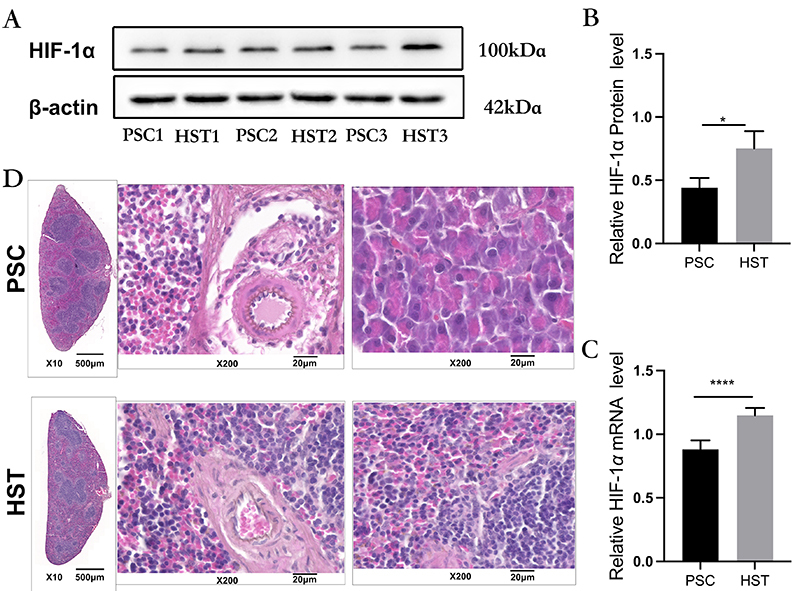
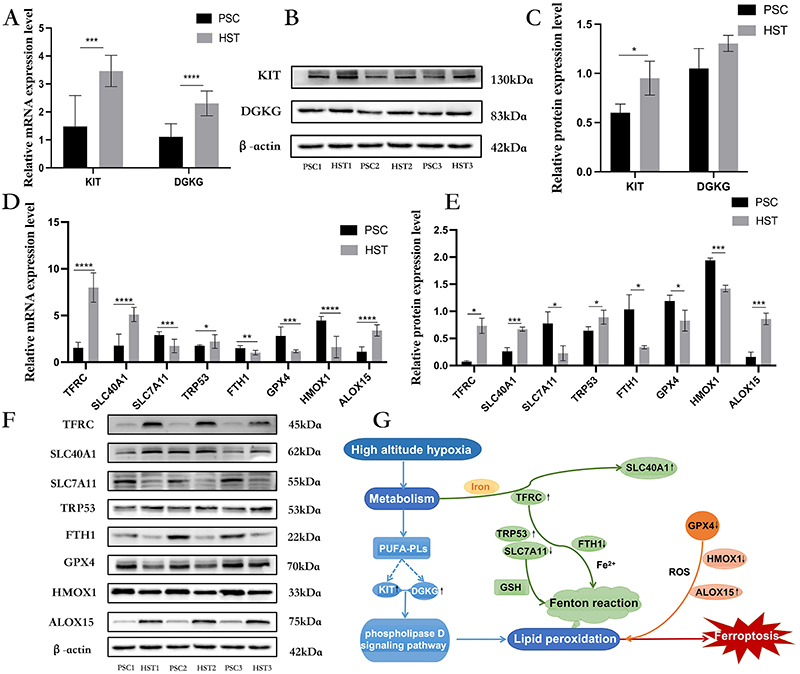
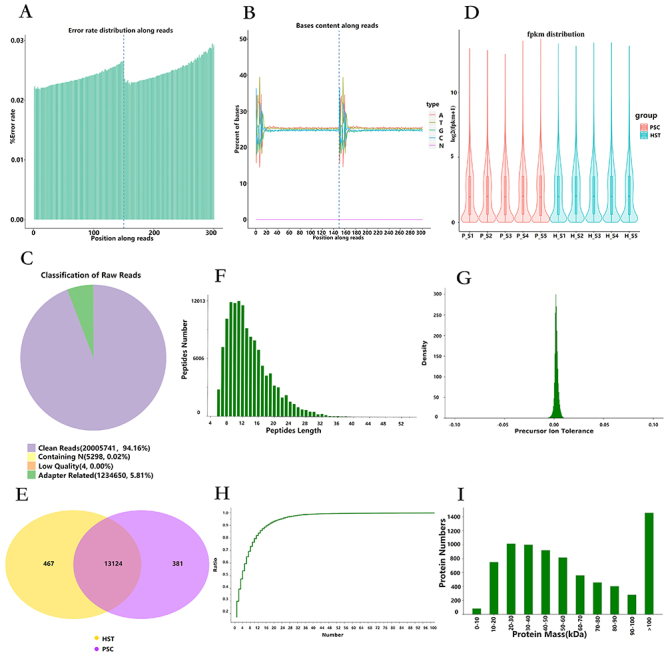
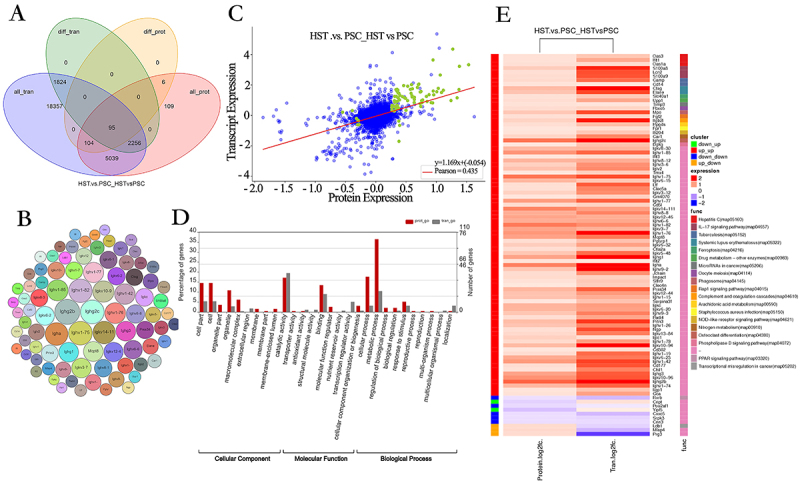
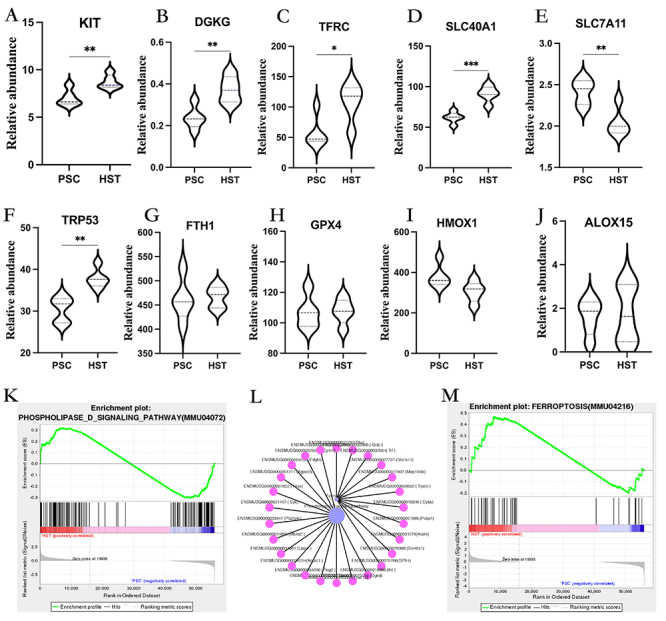
High-altitude hypoxia exposure can lead to phospholipase D-mediated lipid metabolism disorder in spleen tissues and induce ferroptosis. Nonetheless, the key genes underlying hypoxia-induced splenic phospholipase D and the ferroptosis pathway remain unclear. This study aimed to establish a hypoxia animal model. Combined transcriptomic and proteomic analyses showed that 95 predicted target genes (proteins) were significantly differentially expressed under hypoxic conditions. Key genes in phospholipase D and ferroptosis pathways under hypoxic exposure were identified by combining Gene Ontology (GO) and Kyoto Encyclopedia of Genes and Genomes (KEGG) enrichment analysis techniques. Gene set enrichment analysis (GSEA) showed that the differential gene sets of the phospholipase D and ferroptosis signaling pathways were upregulated in the high-altitude hypoxia group. The genes in the phospholipase D signalling pathway were verified, and the expression levels of KIT and DGKG were upregulated in spleen tissues under hypoxic exposure. Subsequently, the mRNA and protein expression levels of genes from the exogenous pathway such as TFRC, SLC40A1, SLC7A11, TRP53, and FTH1 and those from the endogenous pathway such as GPX4, HMOX1, and ALOX15 differentials in the ferroptosis signalling pathway were verified, and the results indicated significant differential expression. In summary, exposure to high-altitude hypoxia mediated phospholipid metabolism disturbance through the phospholipase D signalling pathway and further induced ferroptosis, leading to splenic injury.
高原缺氧暴露可导致脾组织中磷脂酶 D 介导的脂质代谢紊乱,并诱导铁死亡。然而,缺氧诱导脾磷脂酶 D 和铁死亡途径的关键基因尚不清楚。本研究旨在建立缺氧动物模型。转录组学和蛋白质组学联合分析显示,95 个预测靶基因(蛋白)在缺氧条件下显著差异表达。通过基因本体论(GO)和京都基因与基因组百科全书(KEGG)富集分析技术,结合鉴定缺氧暴露下磷脂酶 D 和铁死亡途径中的关键基因。基因集富集分析(GSEA)显示,磷脂酶 D 和铁死亡信号通路的差异基因集在高原缺氧组中上调。验证了磷脂酶 D 信号通路中的基因,在缺氧暴露下,脾组织中 KIT 和 DGKG 的表达水平上调。随后,验证了外源性途径(如 TFRC、SLC40A1、SLC7A11、TRP53 和 FTH1)和内源性途径(如 GPX4、HMOX1 和 ALOX15)中基因的 mRNA 和蛋白表达水平差异,结果表明差异显著。综上所述,高原缺氧暴露通过磷脂酶 D 信号通路介导磷脂代谢紊乱,进而诱导铁死亡,导致脾脏损伤。