The Jackson Laboratory, Bar Harbor, ME, United States of America.
Tufts University Graduate School of Biomedical Sciences, Boston, MA, United States of America.
PLoS One. 2024 Mar 7;19(3):e0299595. doi: 10.1371/journal.pone.0299595. eCollection 2024.
Glycolytic inhibition via 2-deoxy-D-glucose (2DG) has potential therapeutic benefits for a range of diseases, including cancer, epilepsy, systemic lupus erythematosus (SLE), and rheumatoid arthritis (RA), and COVID-19, but the systemic effects of 2DG on gene function across different tissues are unclear.
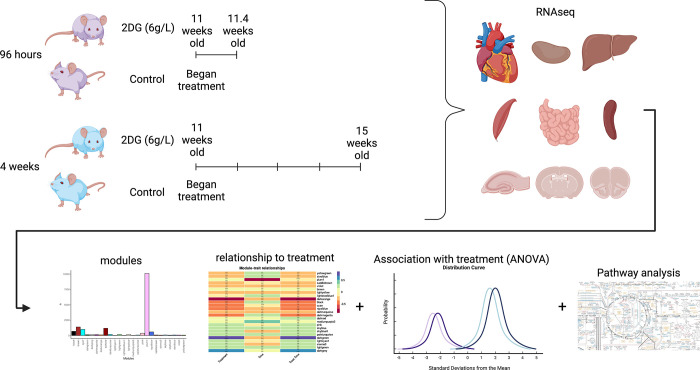
This study analyzed the transcriptional profiles of nine tissues from C57BL/6J mice treated with 2DG to understand how it modulates pathways systemically. Principal component analysis (PCA), weighted gene co-network analysis (WGCNA), analysis of variance, and pathway analysis were all performed to identify modules altered by 2DG treatment.
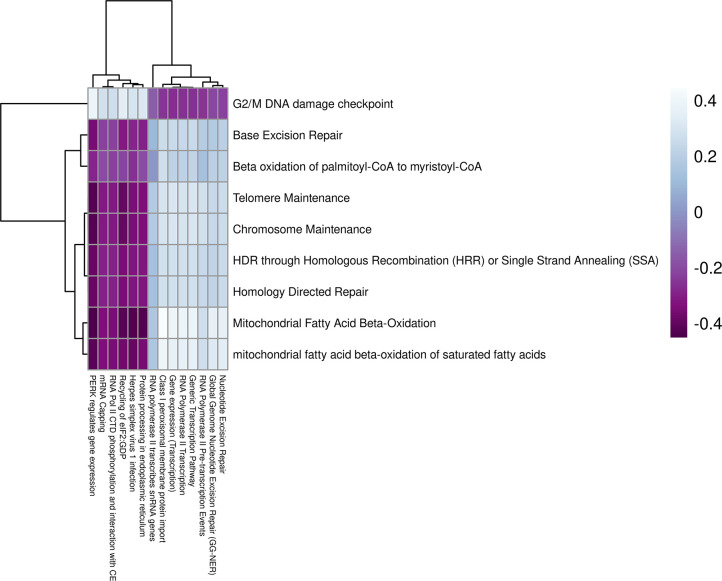
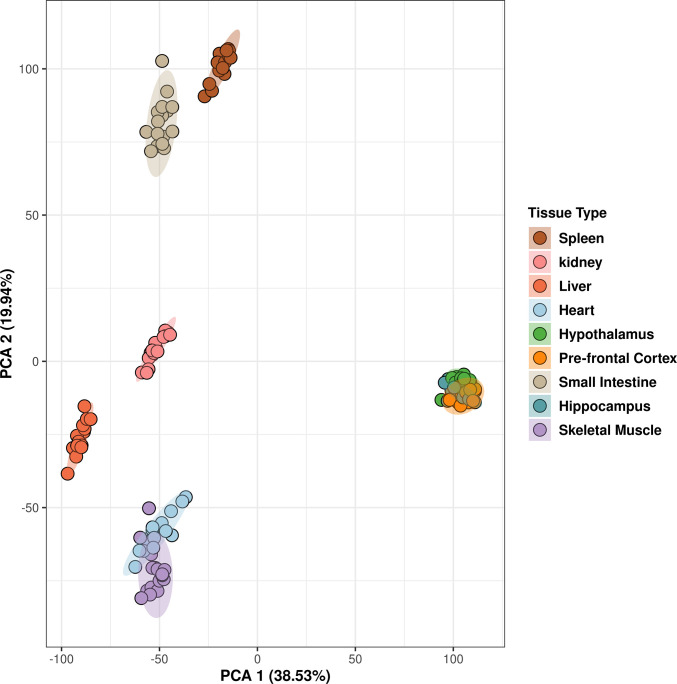
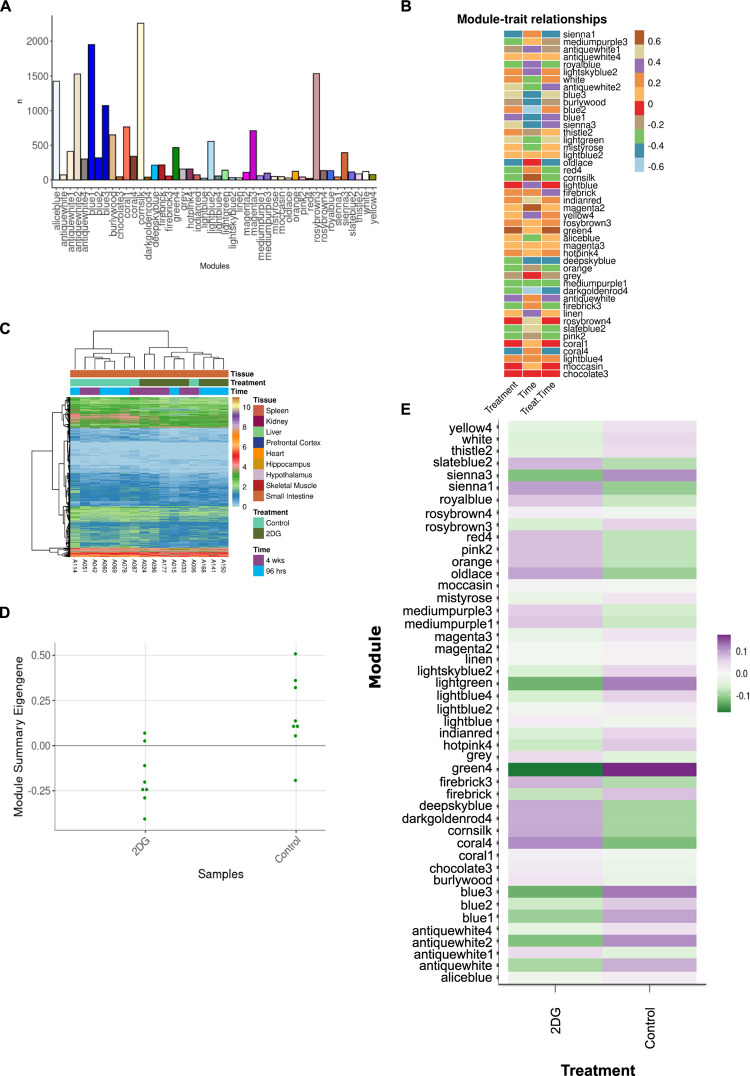
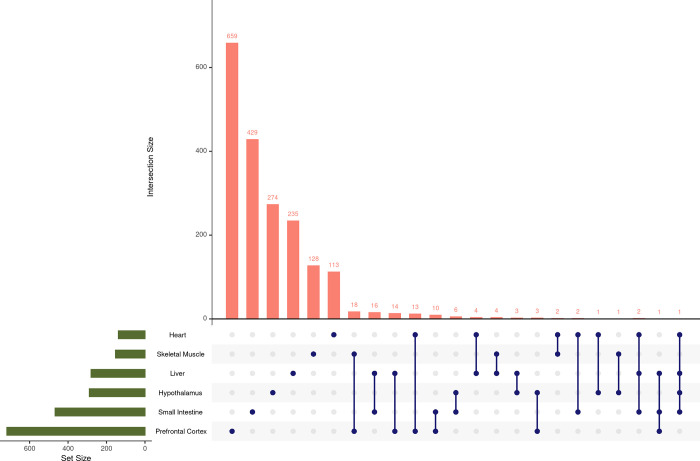
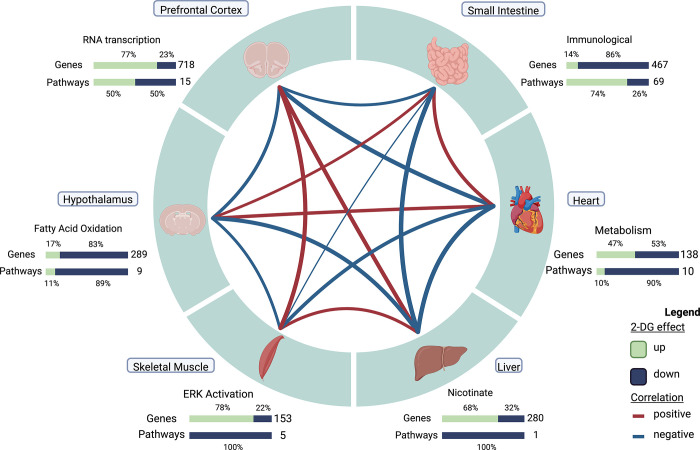
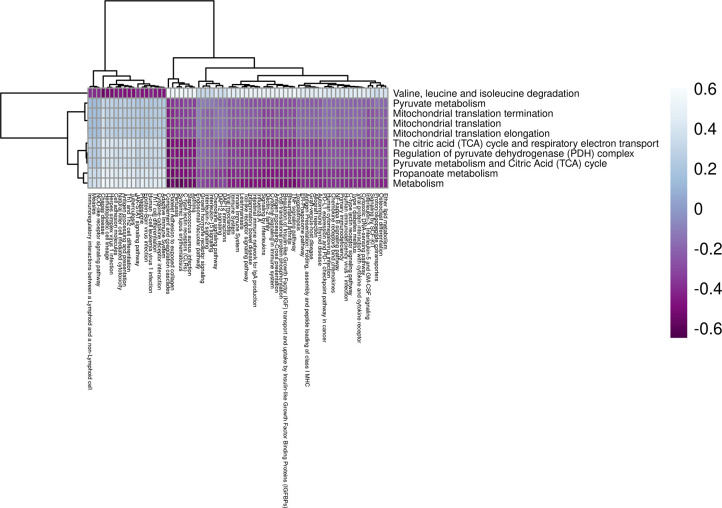
PCA revealed that samples clustered predominantly by tissue, suggesting that 2DG affects each tissue uniquely. Unsupervised clustering and WGCNA revealed six distinct tissue-specific modules significantly affected by 2DG, each with unique key pathways and genes. 2DG predominantly affected mitochondrial metabolism in the heart, while in the small intestine, it affected immunological pathways.
These findings suggest that 2DG has a systemic impact that varies across organs, potentially affecting multiple pathways and functions. The study provides insights into the potential therapeutic benefits of 2DG across different diseases and highlights the importance of understanding its systemic effects for future research and clinical applications.
通过 2-脱氧-D-葡萄糖(2DG)抑制糖酵解对一系列疾病具有潜在的治疗益处,包括癌症、癫痫、系统性红斑狼疮(SLE)和类风湿关节炎(RA)以及 COVID-19,但 2DG 对不同组织中基因功能的全身影响尚不清楚。
本研究分析了用 2DG 处理的 C57BL/6J 小鼠的 9 种组织的转录谱,以了解其如何系统地调节途径。进行了主成分分析(PCA)、加权基因共网络分析(WGCNA)、方差分析和途径分析,以鉴定受 2DG 治疗改变的模块。
PCA 表明,样本主要按组织聚类,表明 2DG 对每种组织的影响是独特的。无监督聚类和 WGCNA 揭示了六个明显受 2DG 影响的组织特异性模块,每个模块都有独特的关键途径和基因。2DG 主要影响心脏中的线粒体代谢,而在小肠中,它影响免疫途径。
这些发现表明 2DG 对器官具有全身性影响,可能影响多种途径和功能。该研究为 2DG 在不同疾病中的潜在治疗益处提供了见解,并强调了了解其全身作用对于未来的研究和临床应用的重要性。