Sharma Neha, Chen Alex, Heinen Leah, Liu Ruth, Dwivedi Dhruva J, Zhou Ji, Lalu Manoj M, Mendelson Asher A, McDonald Braedon, Kretz Colin A, Fox-Robichaud Alison E, Liaw Patricia C
Thrombosis and Atherosclerosis Research Institute (TaARI), 237 Barton St E., Room C5-107, Hamilton, ON, L8L 2X2, Canada.
Department of Medical Sciences, McMaster University, Hamilton, ON, Canada.
Intensive Care Med Exp. 2024 Mar 8;12(1):28. doi: 10.1186/s40635-024-00609-8.
Despite older adults being more vulnerable to sepsis, most preclinical research on sepsis has been conducted using young animals. This results in decreased scientific validity since age is an independent predictor of poor outcome. In this study, we explored the impact of aging on the host response to sepsis using the fecal-induced peritonitis (FIP) model developed by the National Preclinical Sepsis Platform (NPSP).
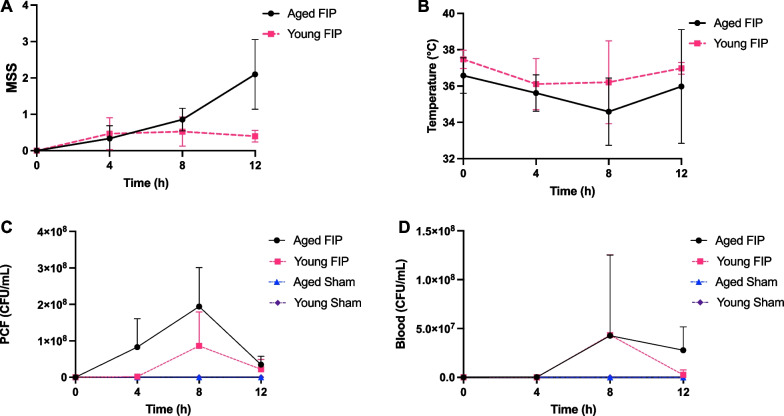
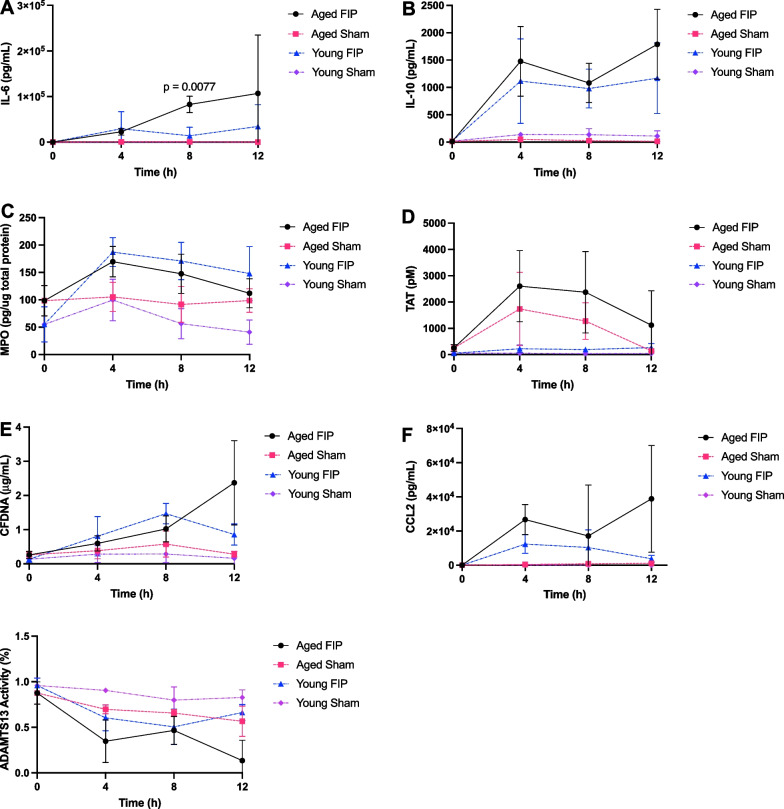
C57BL/6 mice (3 or 12 months old) were injected intraperitoneally with rat fecal slurry (0.75 mg/g) or a control vehicle. To investigate the early stage of sepsis, mice were culled at 4 h, 8 h, or 12 h to investigate disease severity, immunothrombosis biomarkers, and organ injury. Mice received buprenorphine at 4 h post-FIP. A separate cohort of FIP mice were studied for 72 h (with buprenorphine given at 4 h, 12 h, and then every 12 h post-FIP and antibiotics/fluids starting at 12 h post-FIP). Organs were harvested, plasma levels of Interleukin (IL)-6, IL-10, monocyte chemoattract protein (MCP-1)/CCL2, thrombin-antithrombin (TAT) complexes, cell-free DNA (CFDNA), and ADAMTS13 activity were quantified, and bacterial loads were measured.
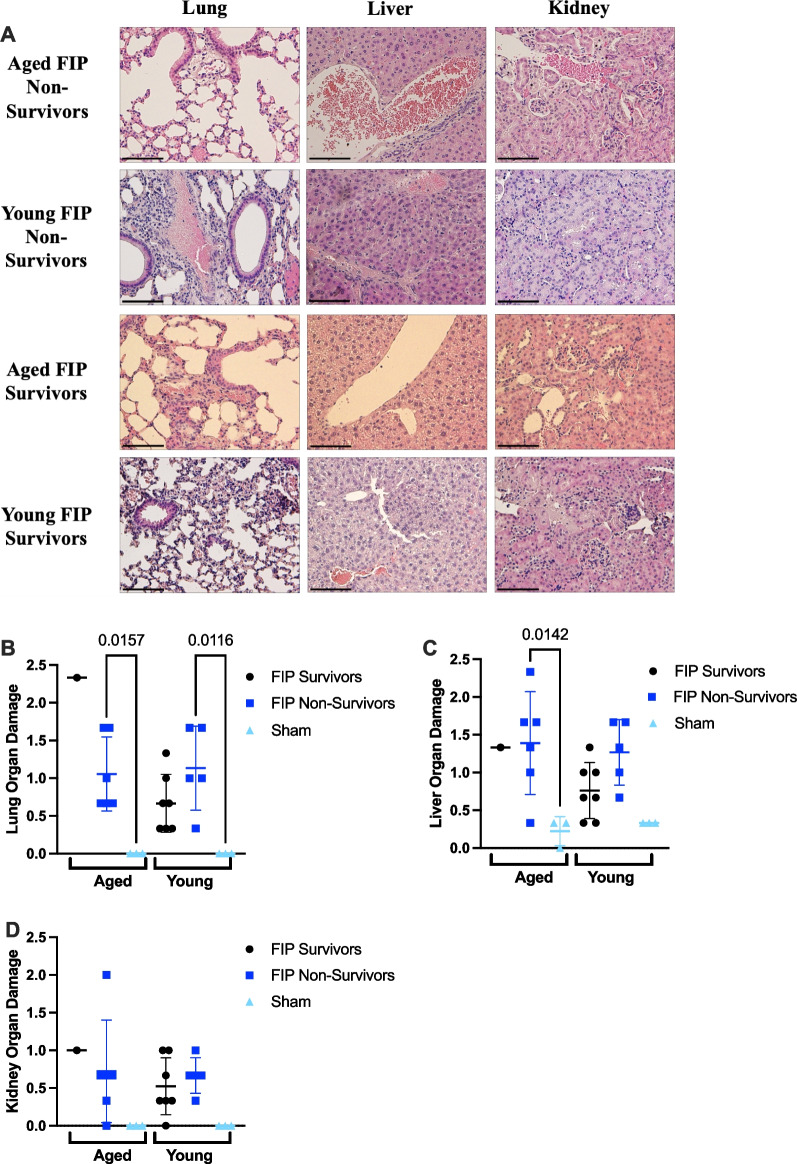
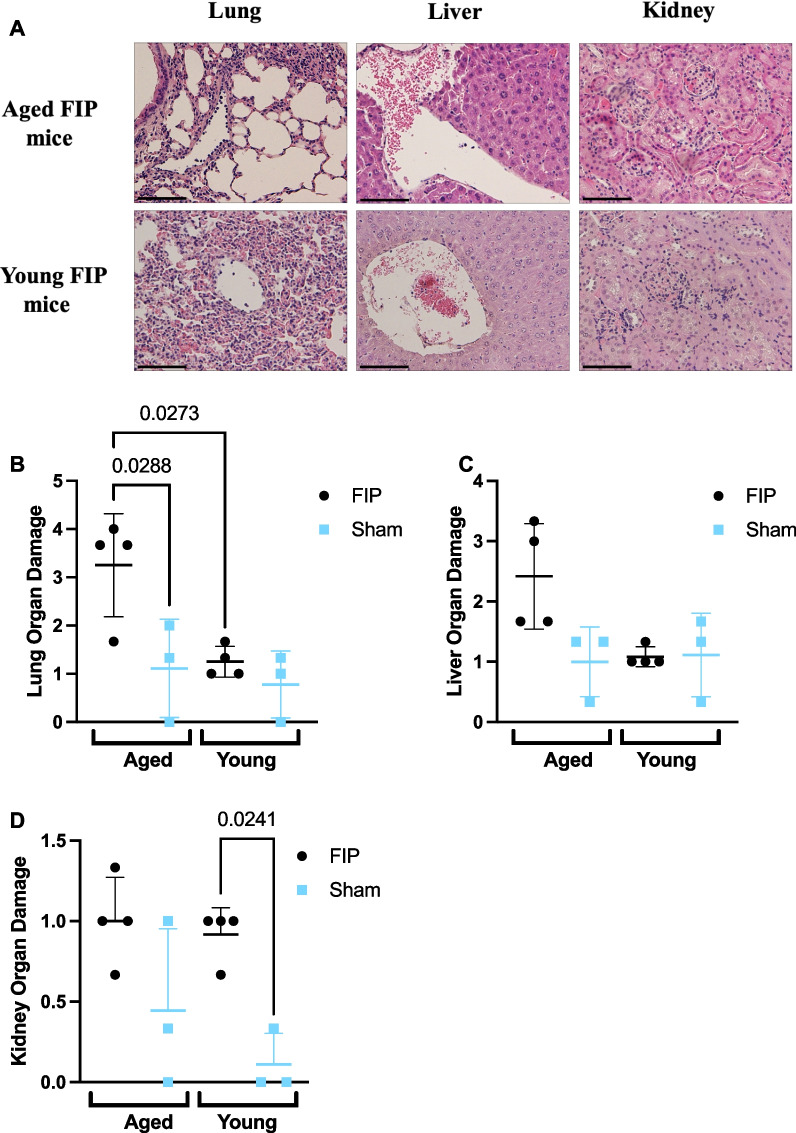
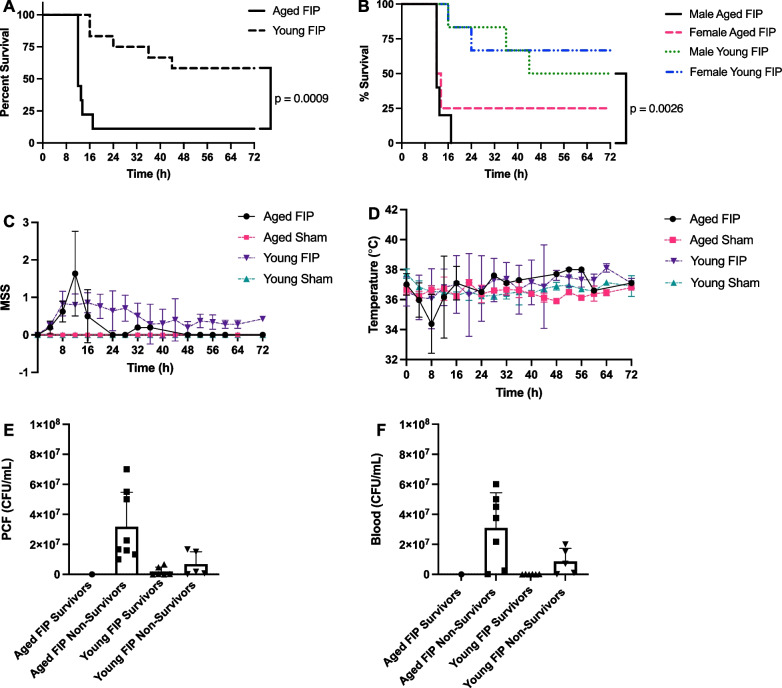
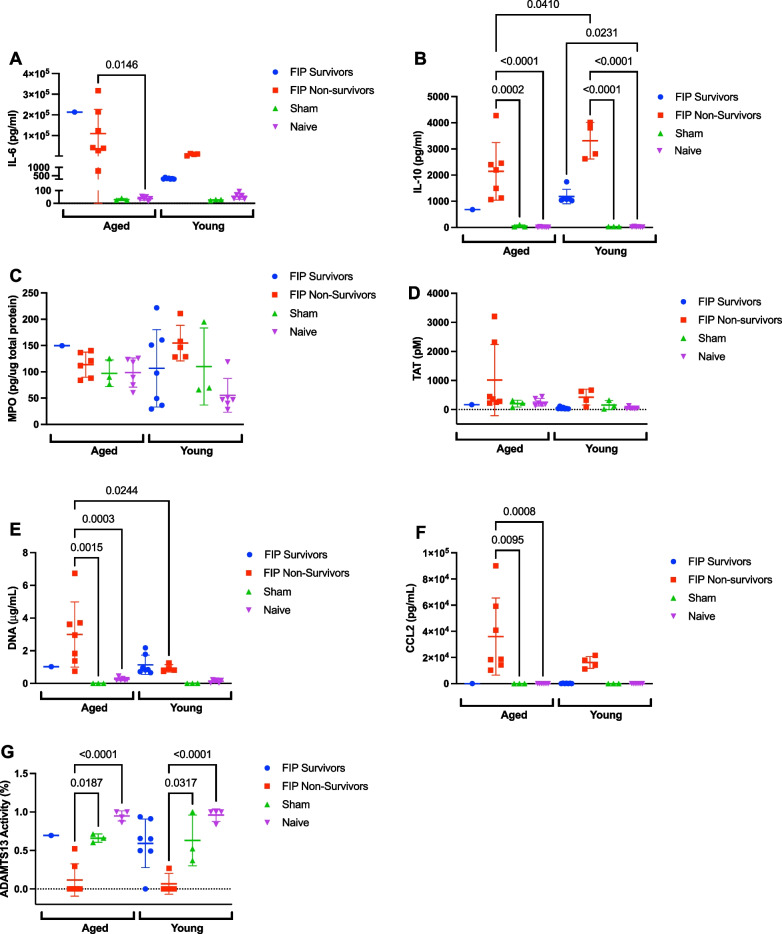
In the 12 h time course study, aged FIP mice demonstrated increased inflammation and injury to the lungs compared to young FIP mice. In the 72 h study, aged FIP mice exhibited a higher mortality rate (89%) compared to young FIP mice (42%) (p < 0.001). Aged FIP non-survivors also exhibited a trend towards elevated IL-6, TAT, CFDNA, CCL2, and decreased IL-10, and impaired bacterial clearance compared to young FIP non-survivors.
To our knowledge, this is the first study to investigate the impact of age on survival using the FIP model of sepsis. Our model includes clinically-relevant supportive therapies and inclusion of both sexes. The higher mortality rate in aged mice may reflect increased inflammation and worsened organ injury in the early stage of sepsis. We also observed trends in impaired bacterial clearance, increase in IL-6, TAT, CFDNA, CCL2, and decreased IL-10 and ADAMTS13 activity in aged septic non-survivors compared to young septic non-survivors. Our aging model may help to increase the scientific validity of preclinical research and may be useful for identifying mechanisms of age-related susceptibility to sepsis as well as age-specific treatment strategies.
尽管老年人更容易患败血症,但大多数关于败血症的临床前研究都是使用幼小动物进行的。由于年龄是不良预后的独立预测因素,这导致科学有效性降低。在本研究中,我们使用国家临床前败血症平台(NPSP)开发的粪便诱导性腹膜炎(FIP)模型,探讨了衰老对宿主败血症反应的影响。
将C57BL/6小鼠(3个月或12个月大)腹腔注射大鼠粪便悬液(0.75mg/g)或对照载体。为了研究败血症的早期阶段,在4小时、8小时或12小时处死小鼠,以研究疾病严重程度、免疫血栓形成生物标志物和器官损伤。FIP后4小时给小鼠注射丁丙诺啡。对另一组FIP小鼠进行72小时的研究(FIP后4小时、12小时给药,然后FIP后每12小时给药一次,FIP后12小时开始使用抗生素/补液)。采集器官,定量检测血浆中白细胞介素(IL)-6、IL-10、单核细胞趋化蛋白(MCP-1)/CCL2、凝血酶-抗凝血酶(TAT)复合物和无细胞DNA(CFDNA)的水平以及ADAMTS13活性,并测量细菌载量。
在12小时的时间进程研究中,与年轻FIP小鼠相比,老年FIP小鼠肺部炎症和损伤增加。在72小时的研究中,老年FIP小鼠的死亡率(89%)高于年轻FIP小鼠(42%)(p<0.001)。与年轻FIP非存活者相比,老年FIP非存活者的IL-6、TAT、CFDNA、CCL2也有升高趋势,IL-10降低,细菌清除受损。
据我们所知,这是第一项使用败血症FIP模型研究年龄对生存影响的研究。我们的模型包括临床相关的支持性治疗,并纳入了两性。老年小鼠较高的死亡率可能反映了败血症早期炎症增加和器官损伤恶化。我们还观察到,与年轻败血症非存活者相比,老年败血症非存活者的细菌清除受损、IL-6、TAT、CFDNA、CCL2增加,IL-10和ADAMTS13活性降低。我们的衰老模型可能有助于提高临床前研究的科学有效性,并可能有助于确定与年龄相关的败血症易感性机制以及特定年龄的治疗策略。