Crossmodal Perception and Plasticity Laboratory, Institute of Research in Psychology & Institute of Neuroscience, Université Catholique de Louvain, Louvain-la-Neuve, Belgium.
Social and Affective Neuroscience Group, MoMiLab, IMT School for Advanced Studies Lucca, Lucca, Italy.
Sci Adv. 2024 Mar 8;10(10):eadk6840. doi: 10.1126/sciadv.adk6840.
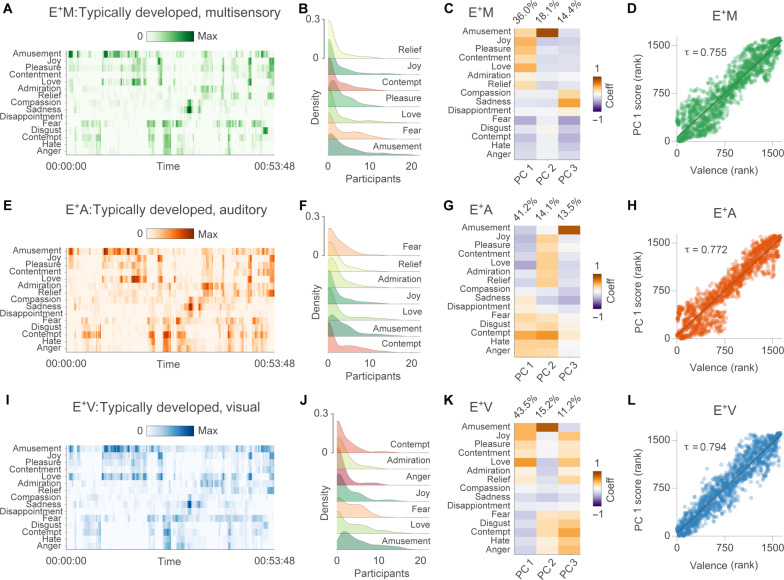
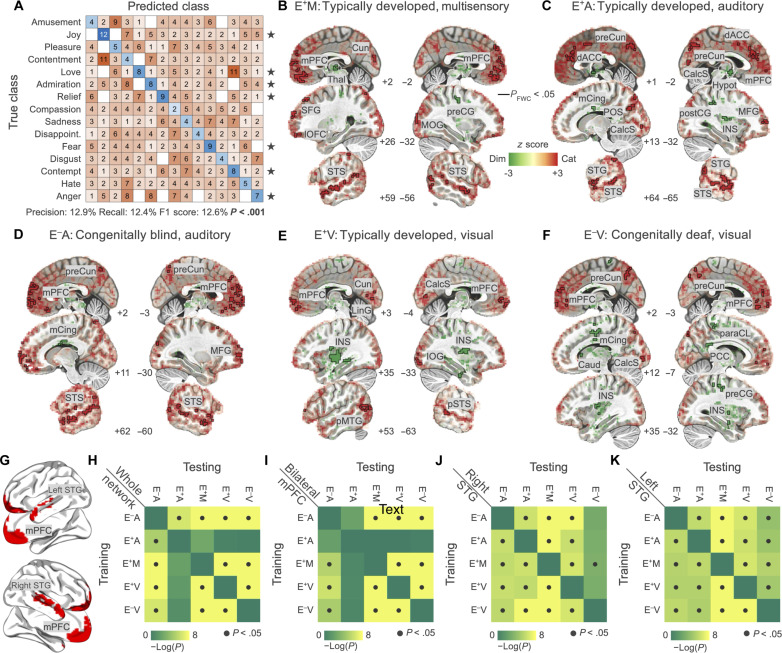
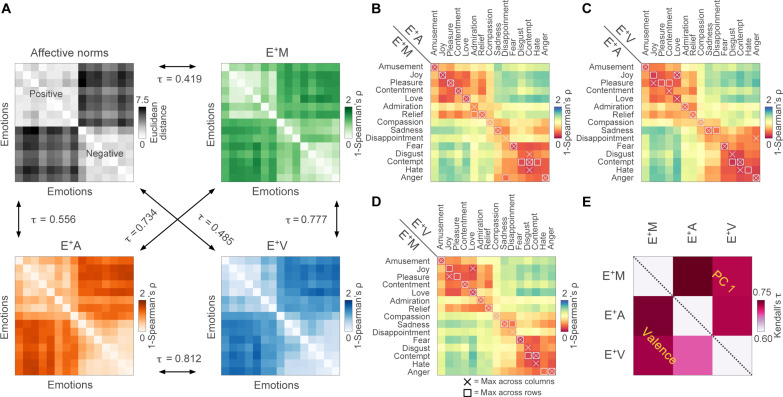
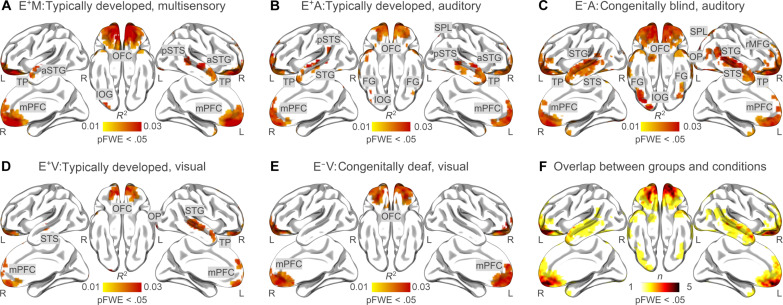
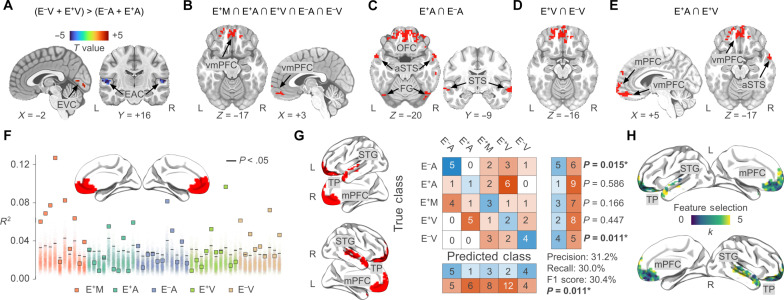
Emotion and perception are tightly intertwined, as affective experiences often arise from the appraisal of sensory information. Nonetheless, whether the brain encodes emotional instances using a sensory-specific code or in a more abstract manner is unclear. Here, we answer this question by measuring the association between emotion ratings collected during a unisensory or multisensory presentation of a full-length movie and brain activity recorded in typically developed, congenitally blind and congenitally deaf participants. Emotional instances are encoded in a vast network encompassing sensory, prefrontal, and temporal cortices. Within this network, the ventromedial prefrontal cortex stores a categorical representation of emotion independent of modality and previous sensory experience, and the posterior superior temporal cortex maps the valence dimension using an abstract code. Sensory experience more than modality affects how the brain organizes emotional information outside supramodal regions, suggesting the existence of a scaffold for the representation of emotional states where sensory inputs during development shape its functioning.
情感和感知紧密交织,因为情感体验通常源于对感官信息的评价。然而,大脑是否使用感官特异性代码或更抽象的方式来编码情感实例尚不清楚。在这里,我们通过测量在全长度电影的单感觉或多感觉呈现期间收集的情感评分与在正常发育、先天性失明和先天性耳聋参与者中记录的大脑活动之间的关联来回答这个问题。情感实例是通过包含感官、前额叶和颞叶皮质的广泛网络进行编码的。在这个网络中,腹内侧前额叶皮质存储了一种独立于模态和先前感官体验的情感分类表示,而后上颞叶皮质使用抽象代码映射效价维度。感官体验而不是模态会影响大脑如何在超模态区域之外组织情感信息,这表明存在一个情感状态表示的支架,其中发育过程中的感官输入塑造了它的功能。