
谷氨酰胺通过调节脂肪分解和氧化应激来预防高脂饮食诱导的小鼠肝脏脂质积累。
Glutamine prevents high-fat diet-induced hepatic lipid accumulation in mice by modulating lipolysis and oxidative stress.
作者信息
Zhang Yongjie, Wang Yangli, Liao Xin, Liu Tong, Yang Fengyuan, Yang Kaiqiang, Zhou Zhuohua, Fu Yinxu, Fu Ting, Sysa Aliaksei, Chen Xiandan, Shen Yao, Lyu Jianxin, Zhao Qiongya
机构信息
School of Basic Medical Sciences and Forensic Medicine, Hangzhou Medical College, Hangzhou, Zhejiang, China.
Key Laboratory of Biomarkers and In Vitro Diagnosis Translation of Zhejiang Province, School of Laboratory Medicine and Bioengineering, Hangzhou Medical College, Hangzhou, China.
出版信息
Nutr Metab (Lond). 2024 Mar 8;21(1):12. doi: 10.1186/s12986-024-00784-1.
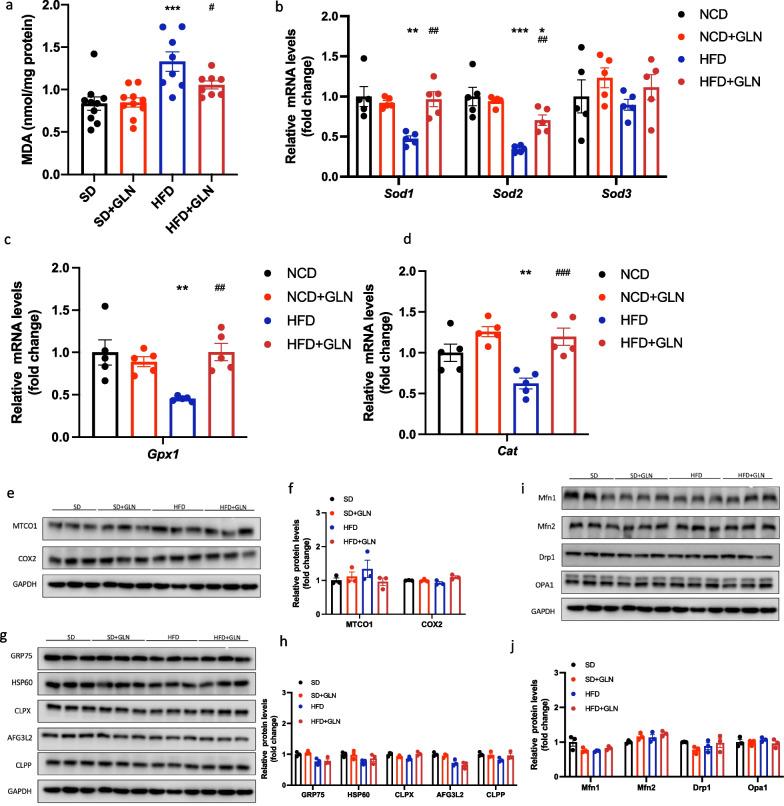
Metabolic-associated fatty liver disease (MAFLD) is related to metabolic dysfunction and is characterized by excess fat storage in the liver. Several studies have indicated that glutamine could be closely associated with lipid metabolism disturbances because of its important role in intermediary metabolism. However, the effect of glutamine supplementation on MAFLD progression remains unclear. Here, we used a high-fat diet (HFD)-induced MAFLD C57BL/6 mouse model, and glutamine was supplied in the drinking water at different time points for MAFLD prevention and reversal studies. A MAFLD prevention study was performed by feeding mice an HFD concomitant with 4% glutamine treatment for 24 weeks, whereas the MAFLD reversal study was performed based on 4% glutamine treatment for 13 weeks after feeding mice an HFD for 10 weeks. In the prevention study, glutamine treatment ameliorated serum lipid storage, hepatic lipid injury, and oxidative stress in HFD-induced obese mice, although glutamine supplementation did not affect body weight, glucose homeostasis, energy expenditure, and mitochondrial function. In the MAFLD reversal study, there were no noticeable changes in the basic physiological phenotype and hepatic lipid metabolism. In summary, glutamine might prevent, but not reverse, HFD-induced MAFLD in mice, suggesting that a cautious attitude is required regarding its use for MAFLD treatment.
代谢相关脂肪性肝病(MAFLD)与代谢功能障碍有关,其特征是肝脏中脂肪过度蓄积。多项研究表明,谷氨酰胺可能因其在中间代谢中的重要作用而与脂质代谢紊乱密切相关。然而,补充谷氨酰胺对MAFLD进展的影响仍不清楚。在此,我们使用高脂饮食(HFD)诱导的MAFLD C57BL/6小鼠模型,并在不同时间点通过饮水供应谷氨酰胺以进行MAFLD的预防和逆转研究。MAFLD预防研究是通过给小鼠喂食HFD并同时进行4%谷氨酰胺处理24周来进行的,而MAFLD逆转研究是在给小鼠喂食HFD 10周后基于4%谷氨酰胺处理13周来进行的。在预防研究中,谷氨酰胺处理改善了HFD诱导的肥胖小鼠的血清脂质蓄积、肝脂质损伤和氧化应激,尽管补充谷氨酰胺并未影响体重、葡萄糖稳态、能量消耗和线粒体功能。在MAFLD逆转研究中,基本生理表型和肝脂质代谢没有明显变化。总之,谷氨酰胺可能预防但不能逆转HFD诱导的小鼠MAFLD,这表明在将其用于MAFLD治疗时需要谨慎。



 Zotero 插件