Shirato Yusuke, Hsueh An-Ju, Ab Mutalib Nurul Asyikeen, Deng Yi, Suematsu Ryohei, Kato Azusa, Kearney Bradley M, Kinoshita Manabu, Suzuki Hiroaki
Graduate School of Science and Technology, University of Tsukuba, 1-1-1 Tennodai, Tsukuba, Ibaraki 305-8573, Japan.
Graduate School of Pure and Applied Sciences, University of Tsukuba, 1-1-1 Tennodai, Tsukuba, Ibaraki 305-8573, Japan.
ACS Omega. 2024 Feb 19;9(9):10825-10833. doi: 10.1021/acsomega.3c09802. eCollection 2024 Mar 5.
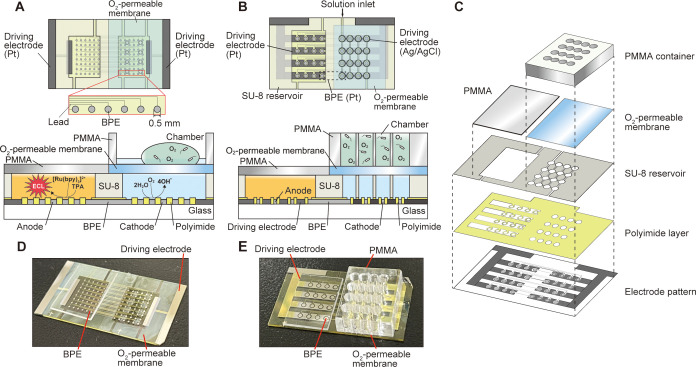
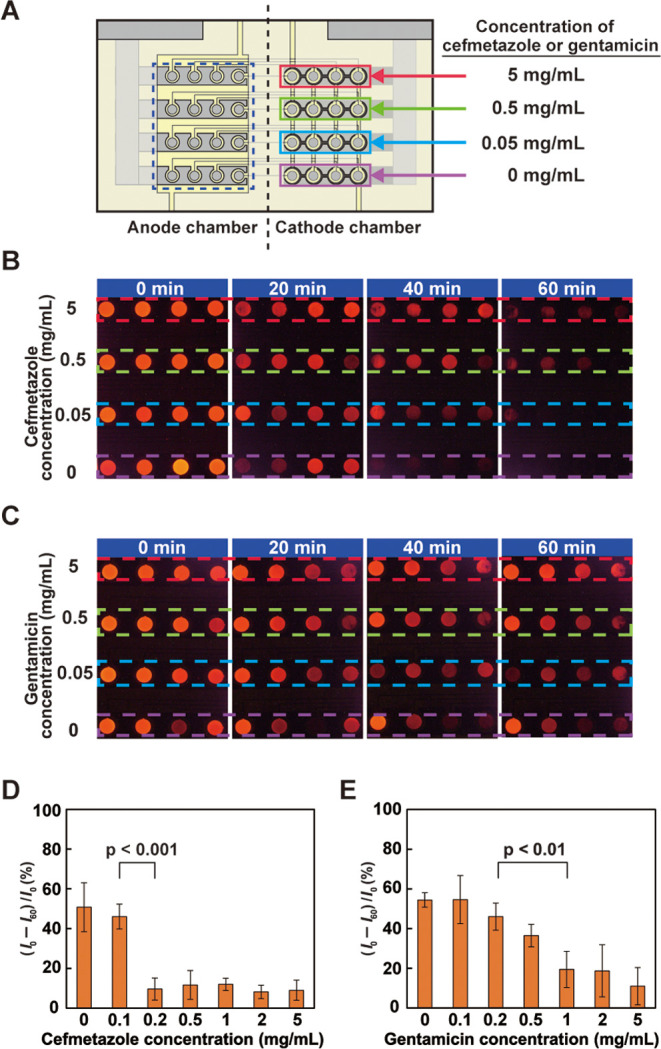
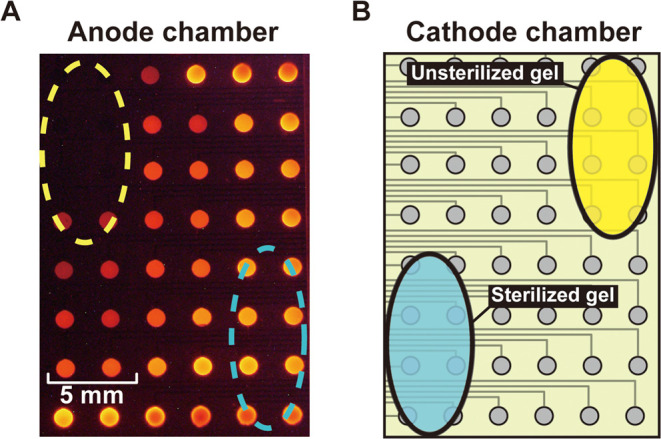
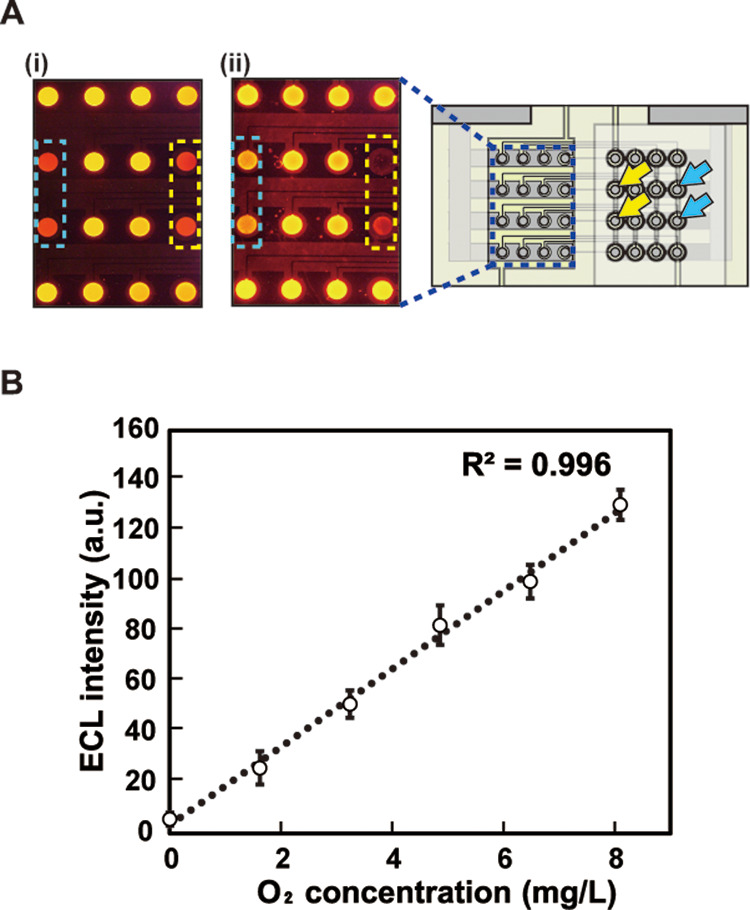
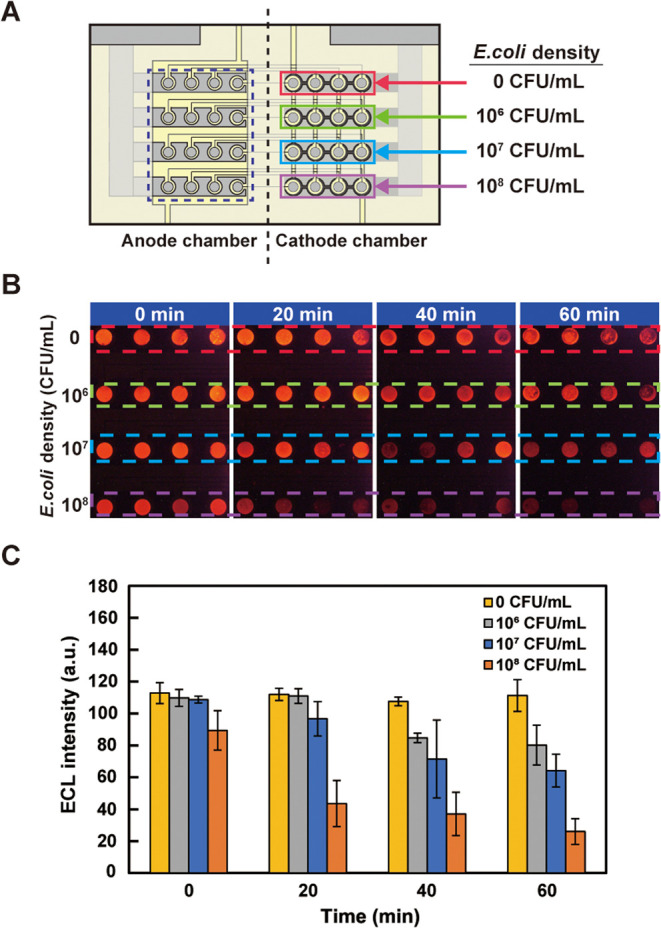
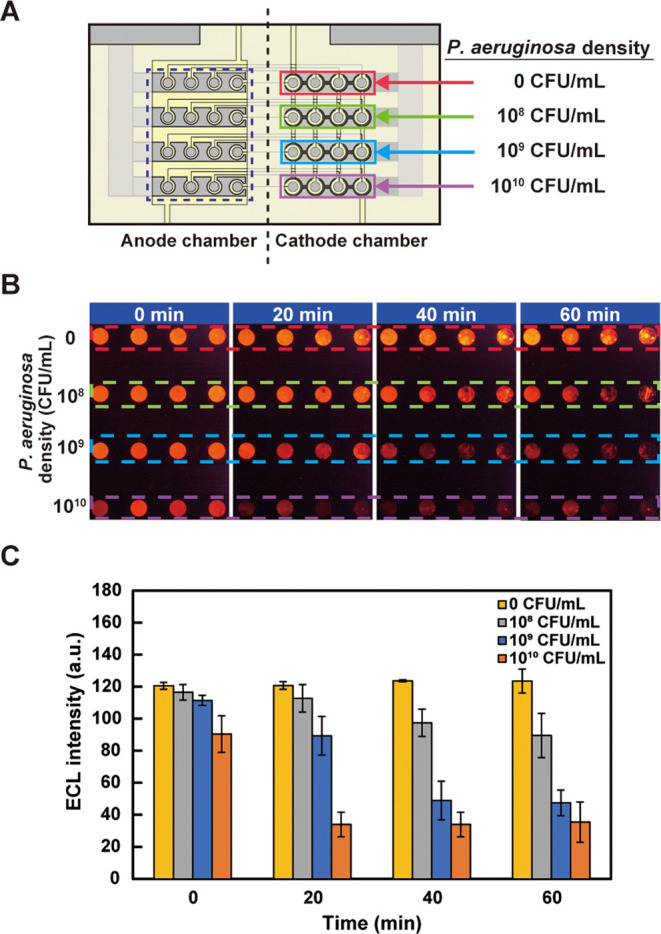
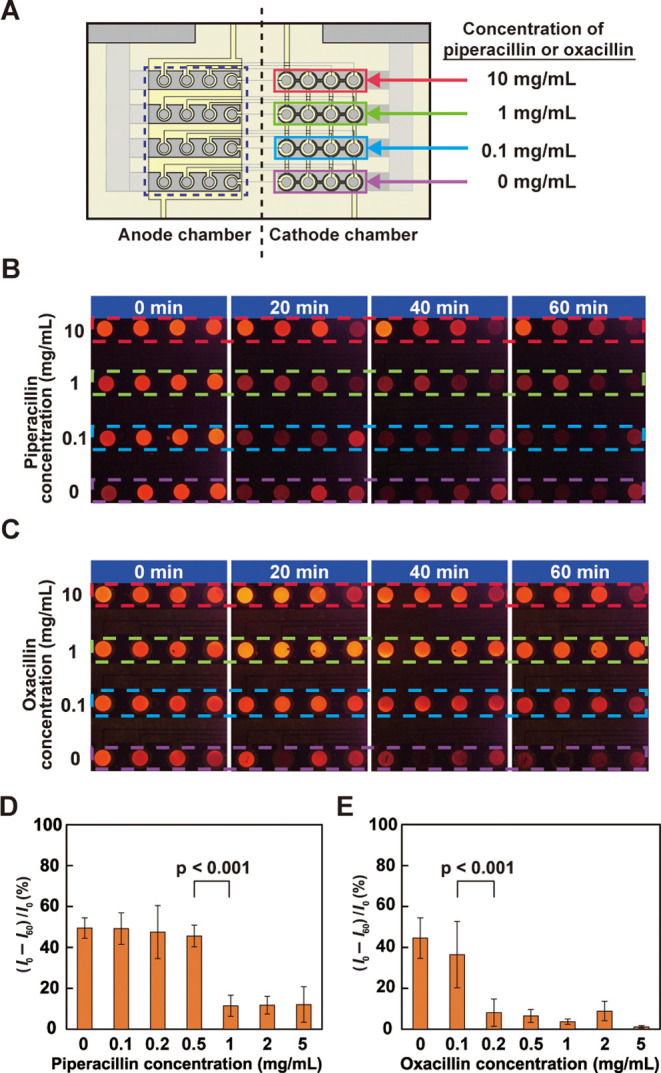
Various miniature Clark-type oxygen electrodes (COEs), which are typically used to measure dissolved oxygen (DO) concentration in cellular respiration, have been developed since the 1980s. Arrays with individually addressable electrodes that constitute the sensor were used for various applications. However, the large number of leads and contact pads required for connecting the electrodes and the external instrument complicate the electrode layout and make the operation of integrated COE arrays challenging. Here, we fabricated closed bipolar electrochemical systems comprising 6 × 8 and 4 × 4 arrays of COEs for imaging and multiplexed detection. The cathodic compartment was sealed with a hydrophobic oxygen-permeable membrane to separate the internal electrolyte solution from the sample solutions. Using the bipolar Clark-type oxygen electrode (BCOE) arrays and electrochemiluminescence (ECL), we measured the DO concentration at each cathode. The results revealed that the ECL intensity changed linearly with the DO concentration. In addition, we used ECL imaging to investigate the respiratory activity of () and () in suspensions with different cell densities. The ECL images showed that the ECL intensity changed noticeably with the bacterial density. The bacterial respiratory activity was then qualitatively analyzed based on the ECL images acquired successively over a time duration. Further, we measured the antibiotic efficacy of piperacillin, oxacillin, gentamicin, and cefmetazole against and using the BCOE. We found that the ECL intensity increased with the antibiotic concentration, thus indicating the suppression of the bacterial respiratory activity.
自20世纪80年代以来,人们开发了各种微型克拉克型氧电极(COE),通常用于测量细胞呼吸中的溶解氧(DO)浓度。由可单独寻址电极组成的阵列被用于各种应用。然而,连接电极和外部仪器所需的大量引线和接触垫使电极布局变得复杂,并使集成COE阵列的操作具有挑战性。在这里,我们制造了包含6×8和4×4阵列COE的封闭双极电化学系统,用于成像和多重检测。阴极室用疏水性透氧膜密封,以将内部电解质溶液与样品溶液分开。使用双极克拉克型氧电极(BCOE)阵列和电化学发光(ECL),我们测量了每个阴极处的DO浓度。结果表明,ECL强度随DO浓度呈线性变化。此外,我们使用ECL成像来研究不同细胞密度悬浮液中()和()的呼吸活性。ECL图像显示,ECL强度随细菌密度显著变化。然后根据在一段时间内连续获取的ECL图像对细菌呼吸活性进行定性分析。此外,我们使用BCOE测量了哌拉西林、苯唑西林、庆大霉素和头孢美唑对()和()的抗生素疗效。我们发现,ECL强度随抗生素浓度增加,从而表明细菌呼吸活性受到抑制。