• 文献检索
  • 文档翻译
  • 深度研究
  • 学术资讯
  • Suppr Zotero 插件Zotero 插件
  • 邀请有礼
  • 套餐&价格
  • 历史记录
应用&插件
Suppr Zotero 插件Zotero 插件浏览器插件Mac 客户端Windows 客户端微信小程序
定价
高级版会员购买积分包购买API积分包
服务
文献检索文档翻译深度研究API 文档MCP 服务
关于我们
关于 Suppr公司介绍联系我们用户协议隐私条款
关注我们

Suppr 超能文献

核心技术专利:CN118964589B侵权必究
粤ICP备2023148730 号-1Suppr @ 2026

文献检索

告别复杂PubMed语法,用中文像聊天一样搜索,搜遍4000万医学文献。AI智能推荐,让科研检索更轻松。

立即免费搜索

文件翻译

保留排版,准确专业,支持PDF/Word/PPT等文件格式,支持 12+语言互译。

免费翻译文档

深度研究

AI帮你快速写综述,25分钟生成高质量综述,智能提取关键信息,辅助科研写作。

立即免费体验

收入追赶与幸福追赶有关吗?来自八个欧洲国家的证据。

Is income catch-up related to happiness catch-up? Evidence from eight European countries.

作者信息

Chen Wen-Yi, Hsu Lin-Ying

机构信息

Department of Senior Citizen Service Management, National Taichung University of Science and Technology, Taichung, 403301, Taiwan.

Community Health Center, Taichung Tzu Chi Hospital, Buddhist Tzu Chi Medical Foundation, Taichung, 427213, Taiwan.

出版信息

Heliyon. 2024 Feb 16;10(5):e26544. doi: 10.1016/j.heliyon.2024.e26544. eCollection 2024 Mar 15.

DOI:10.1016/j.heliyon.2024.e26544
PMID:38463785
原文链接:https://pmc.ncbi.nlm.nih.gov/articles/PMC10920172/
Abstract

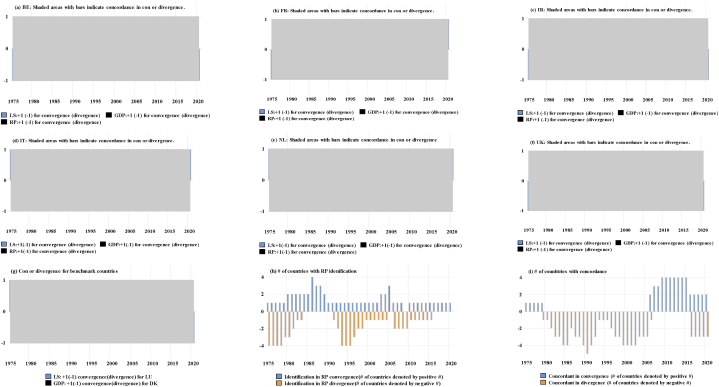
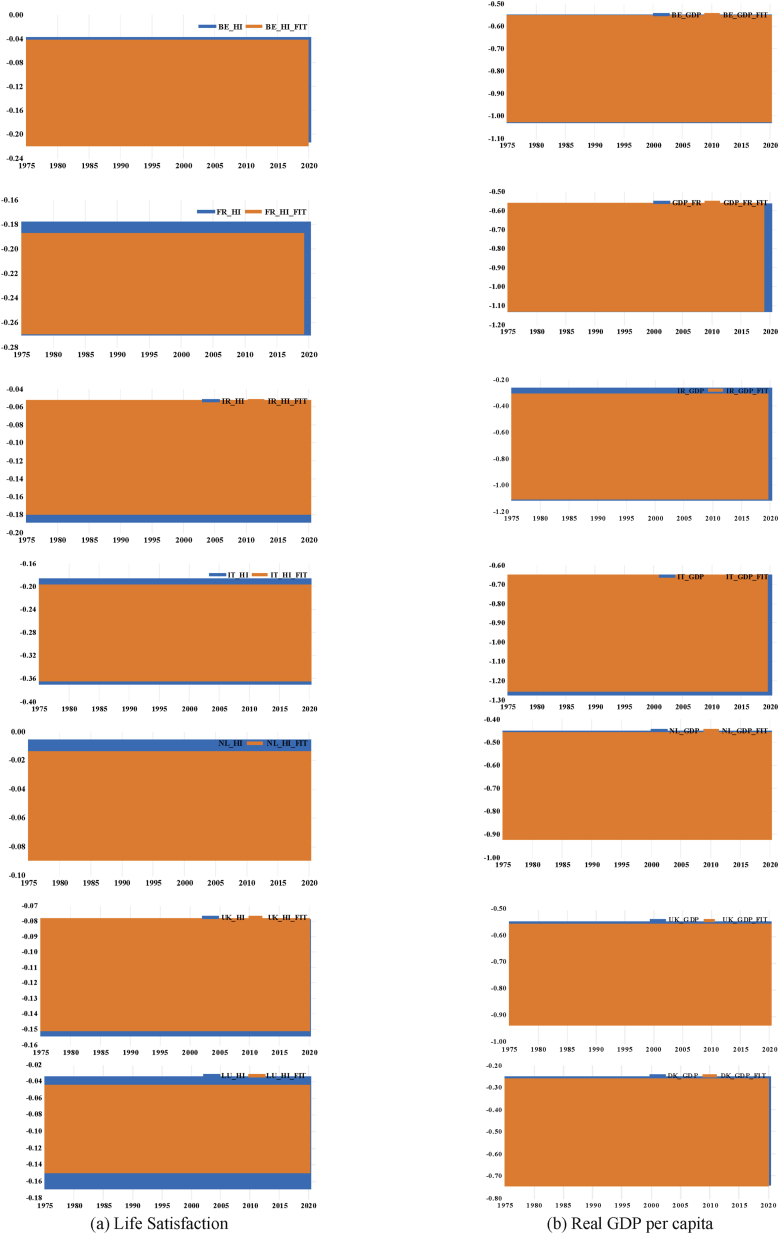
The Easterlin paradox illuminates the counter-intuitive finding that happiness is unlikely to increase with economic growth over time. This study investigates the income-happiness relationship through the concept of β convergence (i.e., the catch-up effect). To this end, we first employed the KPSS panel unit root tests to reveal the time-varying patterns in convergences between the happiness index and real GDP per capita. Then, we conducted analyses of contingency for the linkage between the happiness catch-up and income catch-up effects via estimation using the random coefficient logit model. The data used in this study were obtained from World Database of Happiness and World Development Indicators Database. Our results indicate that both the happiness index and real GDP per capita in selected European countries exhibited signs of catch-up with their benchmark countries over the period of 1975-2020. The average income catch-up effect (generated from group mean of all individual effects) positively impacted the social harmonization of well-being (i.e., the average happiness catch-up effect). Since economic growth is the major force driving the income catch-up effect, the positive linkage between happiness and income catch-up effects provides solid proof of the beneficial effect of economic growth on the social harmonization of well-being.

摘要

伊斯特林悖论揭示了一个违反直觉的发现

随着时间的推移,幸福不太可能随着经济增长而增加。本研究通过β收敛概念(即追赶效应)来考察收入与幸福之间的关系。为此,我们首先采用KPSS面板单位根检验来揭示幸福指数与实际人均国内生产总值之间收敛的时变模式。然后,我们通过使用随机系数logit模型进行估计,对幸福追赶效应与收入追赶效应之间的联系进行了列联分析。本研究使用的数据来自世界幸福数据库和世界发展指标数据库。我们的结果表明,在1975年至2020年期间,选定欧洲国家的幸福指数和实际人均国内生产总值均显示出与其基准国家的追赶迹象。平均收入追赶效应(由所有个体效应的组均值产生)对幸福的社会和谐(即平均幸福追赶效应)产生了积极影响。由于经济增长是推动收入追赶效应的主要力量,幸福与收入追赶效应之间的正向联系为经济增长对幸福社会和谐的有益影响提供了确凿证据。

https://cdn.ncbi.nlm.nih.gov/pmc/blobs/b0a0/10920172/3932e057982c/gr3.jpg
https://cdn.ncbi.nlm.nih.gov/pmc/blobs/b0a0/10920172/3e1127e89613/gr1.jpg
https://cdn.ncbi.nlm.nih.gov/pmc/blobs/b0a0/10920172/21fa66965ce0/gr2.jpg
https://cdn.ncbi.nlm.nih.gov/pmc/blobs/b0a0/10920172/3932e057982c/gr3.jpg
https://cdn.ncbi.nlm.nih.gov/pmc/blobs/b0a0/10920172/3e1127e89613/gr1.jpg
https://cdn.ncbi.nlm.nih.gov/pmc/blobs/b0a0/10920172/21fa66965ce0/gr2.jpg
https://cdn.ncbi.nlm.nih.gov/pmc/blobs/b0a0/10920172/3932e057982c/gr3.jpg

相似文献

1
Is income catch-up related to happiness catch-up? Evidence from eight European countries.收入追赶与幸福追赶有关吗?来自八个欧洲国家的证据。
Heliyon. 2024 Feb 16;10(5):e26544. doi: 10.1016/j.heliyon.2024.e26544. eCollection 2024 Mar 15.
2
Does wealth equate to happiness? an 11-year panel data analysis exploring socio-economic indicators and social media metrics.财富等同于幸福吗?一项探索社会经济指标和社交媒体指标的 11 年面板数据分析。
PLoS One. 2024 Apr 10;19(4):e0301206. doi: 10.1371/journal.pone.0301206. eCollection 2024.
3
The Easterlin paradox revisited.再探伊斯特林悖论。
Emotion. 2012 Dec;12(6):1188-91. doi: 10.1037/a0029969. Epub 2012 Oct 22.
4
Income Inequality Explains Why Economic Growth Does Not Always Translate to an Increase in Happiness.收入不平等解释了为什么经济增长并不总是转化为幸福感的提升。
Psychol Sci. 2015 Oct;26(10):1630-8. doi: 10.1177/0956797615596713. Epub 2015 Sep 3.
5
Economic growth and obesity: an interesting relationship with world-wide implications.经济增长与肥胖:具有全球意义的有趣关系。
Econ Hum Biol. 2012 Mar;10(2):147-53. doi: 10.1016/j.ehb.2012.01.002. Epub 2012 Jan 20.
6
Money and happiness: the income-happiness correlation is higher when income inequality is higher.金钱与幸福:当收入不平等程度较高时,收入与幸福的关联度也更高。
PNAS Nexus. 2022 Oct 8;1(5):pgac224. doi: 10.1093/pnasnexus/pgac224. eCollection 2022 Nov.
7
Happiness inequality has a Kuznets-style relation with economic growth in China.中国的幸福感不平等与经济增长呈库兹涅茨式关系。
Sci Rep. 2022 Sep 20;12(1):15712. doi: 10.1038/s41598-022-19881-3.
8
Revisiting the convergence of carbon emission phenomenon in OECD countries: new evidence from Fourier panel KPSS test.重新审视经合组织国家碳排放现象的趋同:来自 Fourier 面板 KPSS 检验的新证据。
Environ Sci Pollut Res Int. 2019 Aug;26(24):24758-24771. doi: 10.1007/s11356-019-05584-2. Epub 2019 Jun 25.
9
Economic Growth Evens Out Happiness: Evidence from Six Surveys.经济增长使幸福水平趋于均衡:来自六项调查的证据。
Rev Income Wealth. 2016 Sep;62(3):405-419. doi: 10.1111/roiw.12190. Epub 2015 Mar 11.
10
The happiness-income paradox revisited.再探幸福-收入悖论。
Proc Natl Acad Sci U S A. 2010 Dec 28;107(52):22463-8. doi: 10.1073/pnas.1015962107. Epub 2010 Dec 13.

本文引用的文献

1
Income inequality and subjective well-being: a systematic review and meta-analysis.收入不平等与主观幸福感:系统综述和荟萃分析。
Qual Life Res. 2018 Mar;27(3):577-596. doi: 10.1007/s11136-017-1719-x. Epub 2017 Oct 24.
2
Local neighbors as positives, regional neighbors as negatives: Competing channels in the relationship between others' income, health, and happiness.邻里是积极因素,地区是消极因素:他人收入、健康和幸福感关系中的竞争渠道。
J Health Econ. 2018 Jan;57:263-276. doi: 10.1016/j.jhealeco.2017.08.003. Epub 2017 Aug 22.
3
Income and wellbeing in a society on the verge to market integration: The case of the Tsimane' in the Bolivian Amazon.
处于市场整合边缘的社会中的收入与福祉:以玻利维亚亚马逊地区的齐曼内人为例。
J Happiness Stud. 2017 Aug;18(4):993-1011. doi: 10.1007/s10902-016-9756-7. Epub 2016 May 23.
4
Economic Growth Evens Out Happiness: Evidence from Six Surveys.经济增长使幸福水平趋于均衡:来自六项调查的证据。
Rev Income Wealth. 2016 Sep;62(3):405-419. doi: 10.1111/roiw.12190. Epub 2015 Mar 11.
5
Does healthcare financing converge? Evidence from eight OECD countries.医疗保健融资会趋同吗?来自八个经合组织国家的证据。
Int J Health Care Finance Econ. 2013 Dec;13(3-4):279-300. doi: 10.1007/s10754-013-9132-7. Epub 2013 Sep 15.
6
Do caesarean section rates 'catch-up'? Evidence from 14 European countries.剖宫产率“追赶”现象存在吗?来自 14 个欧洲国家的证据。
Health Care Manag Sci. 2013 Dec;16(4):328-40. doi: 10.1007/s10729-013-9232-4. Epub 2013 Mar 22.
7
The happiness-income paradox revisited.再探幸福-收入悖论。
Proc Natl Acad Sci U S A. 2010 Dec 28;107(52):22463-8. doi: 10.1073/pnas.1015962107. Epub 2010 Dec 13.
8
The relation of economic status to subjective well-being in developing countries: a meta-analysis.发展中国家经济状况与主观幸福感的关系:一项荟萃分析。
Psychol Bull. 2008 Jul;134(4):536-60. doi: 10.1037/0033-2909.134.4.536.