Veronese Beatriz H S, Nguyen Amy, Patel Khushil, Paulsen Kimberly, Ma Zhe
Department of Molecular Genetics and Microbiology, College of Medicine, University of Florida, Gainesville, Florida, USA.
UF Health Cancer Center, Gainesville, Florida, USA.
bioRxiv. 2024 Feb 29:2024.02.29.582672. doi: 10.1101/2024.02.29.582672.
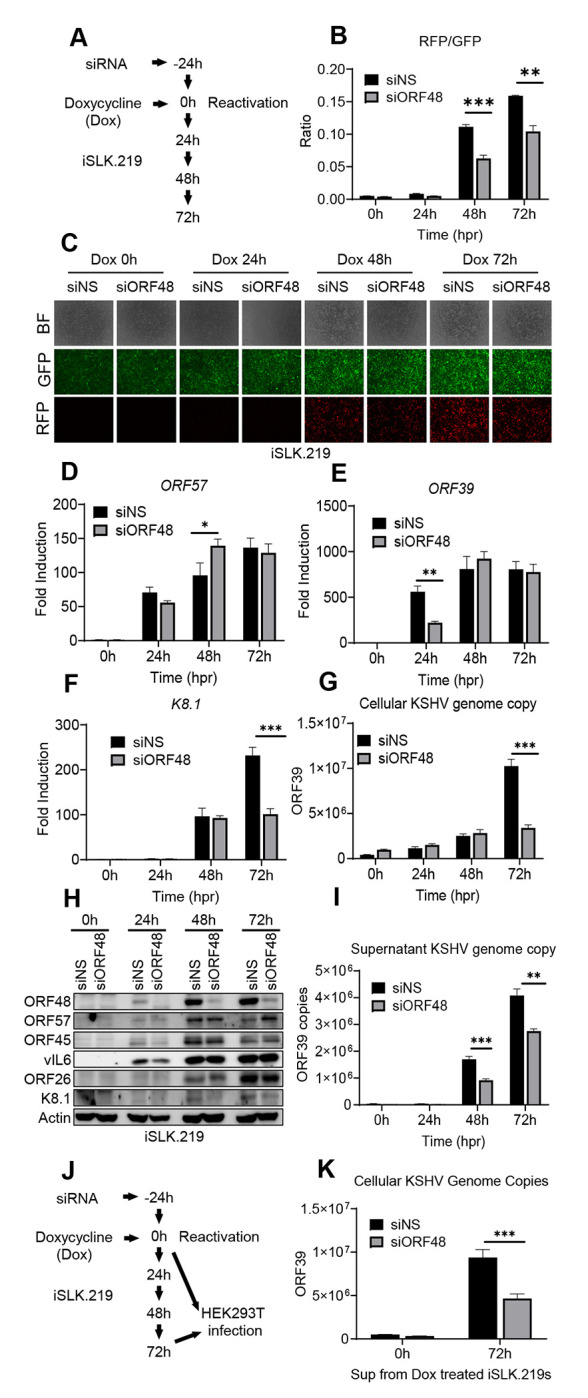
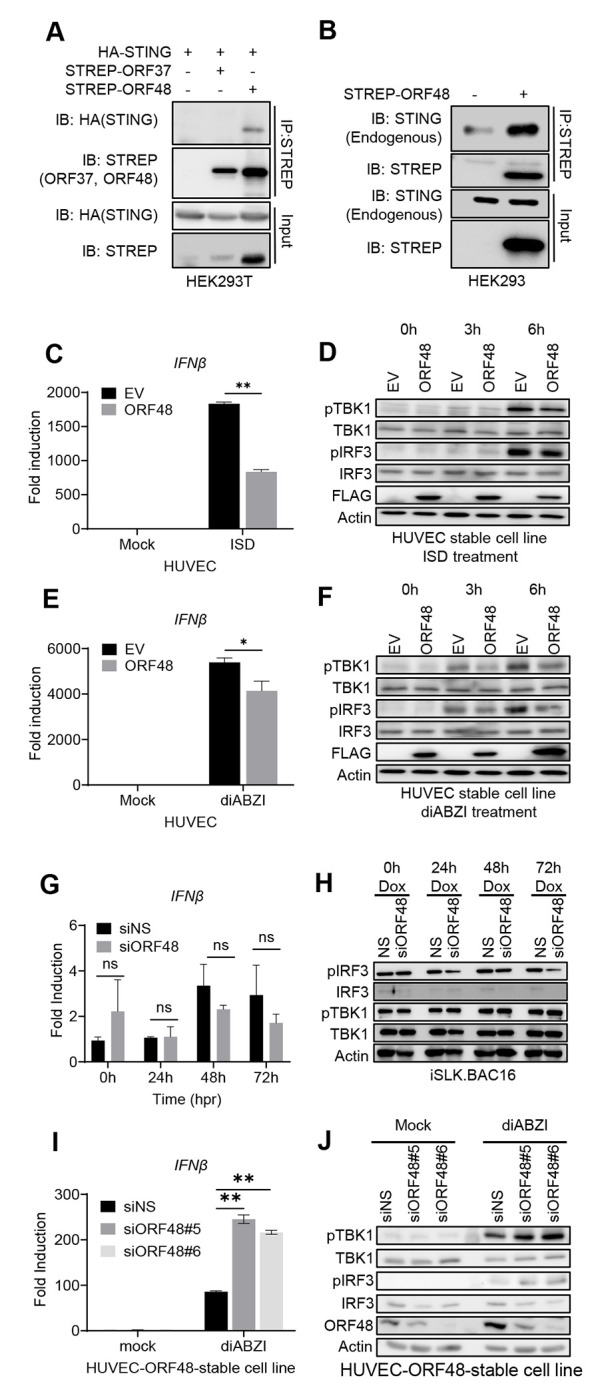
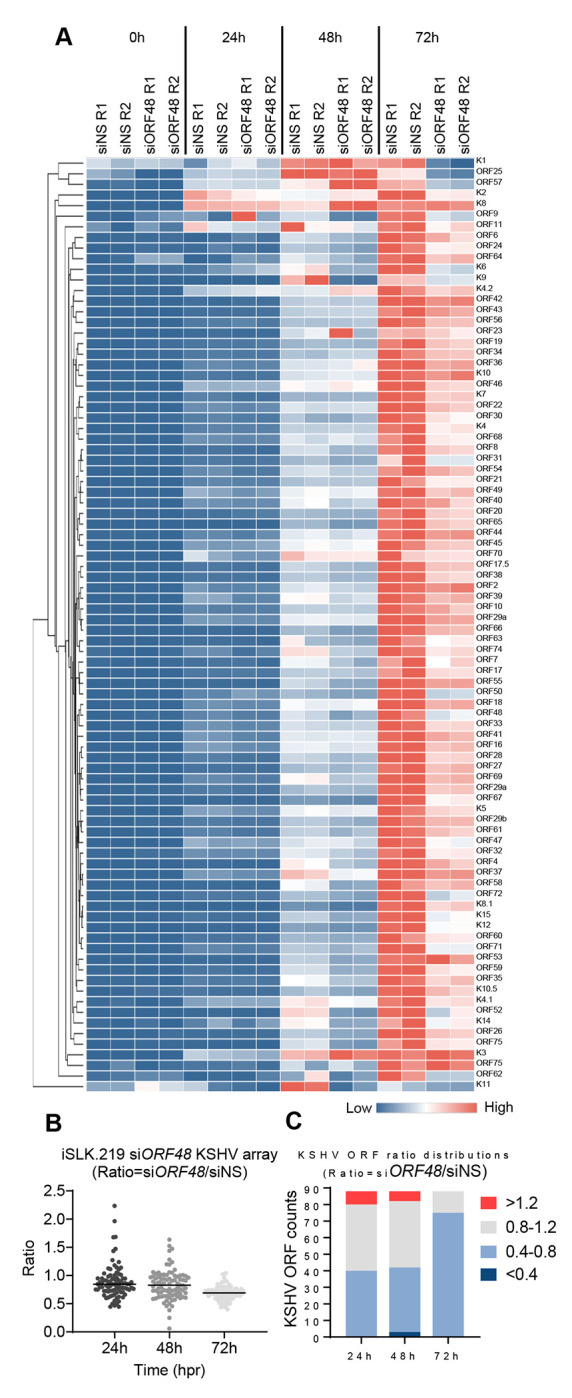
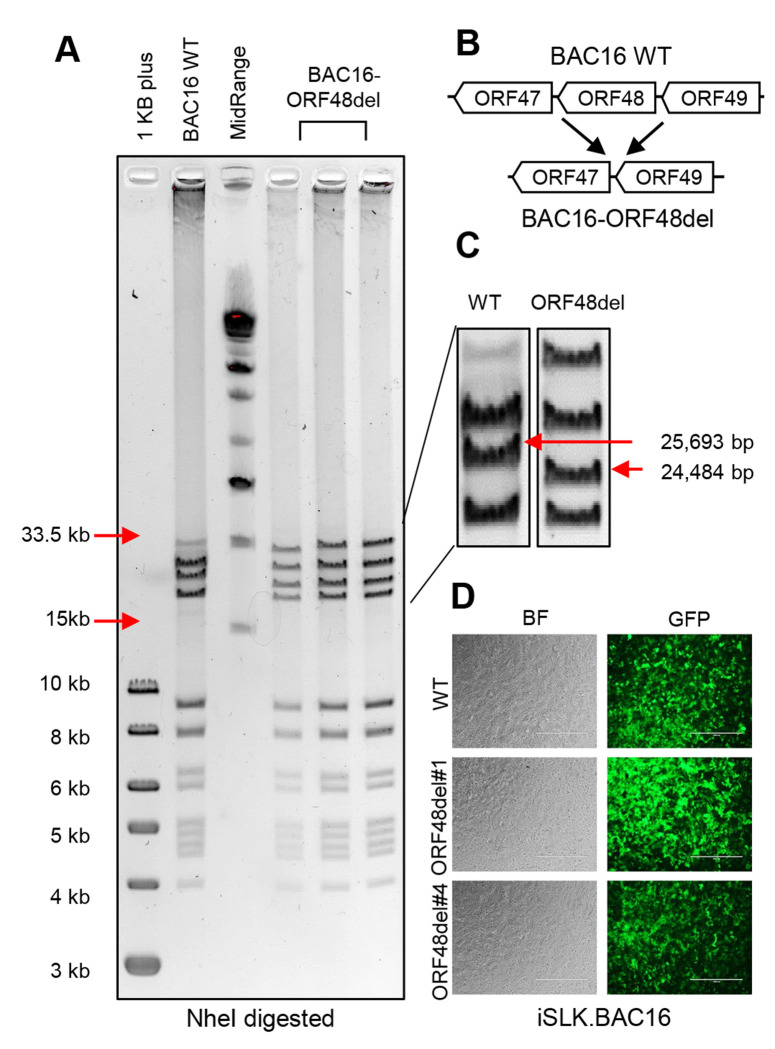
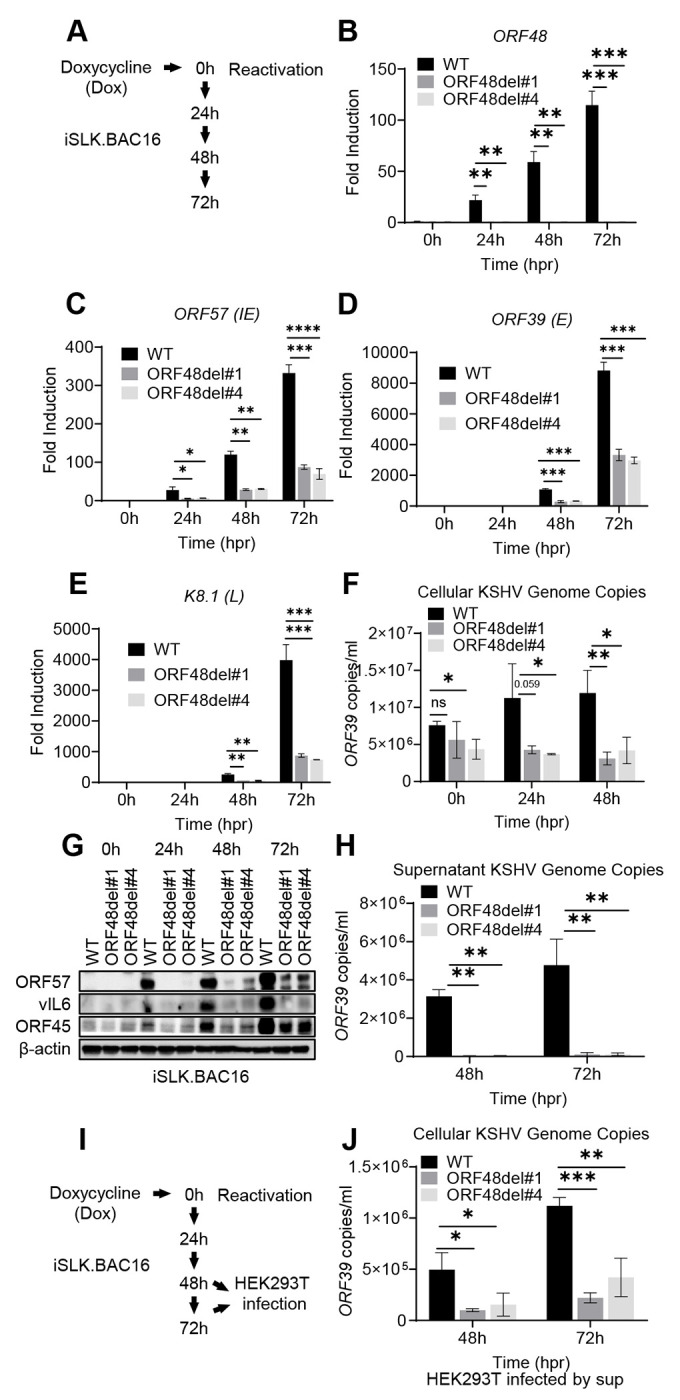
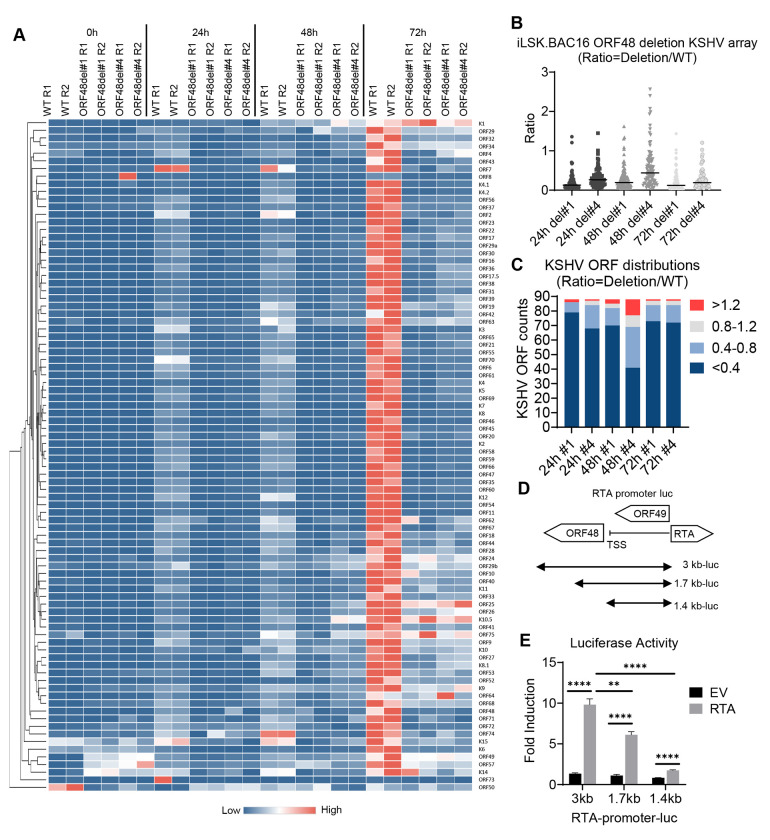
Kaposi's sarcoma-associated herpesvirus (KSHV) establishes persistent infection in the host by encoding a vast network of proteins that aid immune evasion. One of these targeted innate immunity pathways is the cGAS-STING pathway, which inhibits the reactivation of KSHV from latency. Previously, we identified multiple cGAS/STING inhibitors encoded by KSHV, suggesting that the counteractions of this pathway by viral proteins are critical for maintaining a successful KSHV life cycle. However, the detailed mechanisms of how these viral proteins block innate immunity and facilitate KSHV lytic replication remain largely unknown. In this study, we report that ORF48, a previously identified negative regulator of the cGAS/STING pathway, is required for optimal KSHV lytic replication. We used both siRNA and deletion-based systems to evaluate the importance of intact ORF48 in the KSHV lytic cycle. In both systems, loss of ORF48 resulted in defects in lytic gene transcription, lytic protein expression, viral genome replication and infectious virion production. ORF48 genome deletion caused more robust and global repression of the KSHV transcriptome, possibly due to the disruption of RTA promoter activity. Mechanistically, overexpressed ORF48 was found to interact with endogenous STING in HEK293 cells. Compared with the control cell line, HUVEC cells stably expressing ORF48 exhibited repressed STING-dependent innate immune signaling upon ISD or diABZI treatment. However, the loss of ORF48 in our iSLK-based lytic system failed to induce IFNβ production, suggesting a redundant role of ORF48 on STING signaling during the KSHV lytic phase. Thus, ORF48 is required for optimal KSHV lytic replication through additional mechanisms that need to be further explored.
卡波西肉瘤相关疱疹病毒(KSHV)通过编码一个庞大的有助于免疫逃逸的蛋白质网络,在宿主体内建立持续感染。这些靶向先天免疫途径之一是cGAS-STING途径,它抑制KSHV从潜伏期重新激活。此前,我们鉴定出KSHV编码的多种cGAS/STING抑制剂,这表明病毒蛋白对该途径的拮抗作用对于维持成功的KSHV生命周期至关重要。然而,这些病毒蛋白如何阻断先天免疫并促进KSHV裂解复制的详细机制仍 largely 未知。在本研究中,我们报告称,ORF48是先前鉴定出的cGAS/STING途径的负调控因子,是KSHV最佳裂解复制所必需的。我们使用siRNA和基于缺失的系统来评估完整的ORF48在KSHV裂解周期中的重要性。在这两种系统中,ORF48的缺失均导致裂解基因转录、裂解蛋白表达、病毒基因组复制和感染性病毒粒子产生方面的缺陷。ORF48基因组缺失导致KSHV转录组更强烈和全面的抑制,这可能是由于RTA启动子活性的破坏。从机制上讲,发现过表达的ORF48在HEK293细胞中与内源性STING相互作用。与对照细胞系相比,稳定表达ORF48的HUVEC细胞在ISD或diABZI处理后表现出受抑制的STING依赖性先天免疫信号传导。然而,在我们基于iSLK的裂解系统中ORF48的缺失未能诱导IFNβ产生,这表明ORF48在KSHV裂解阶段对STING信号传导具有冗余作用。因此,ORF48通过需要进一步探索的其他机制,是KSHV最佳裂解复制所必需的。