Cabrera-Sosa Luis, Nolasco Oscar, Kattenberg Johanna H, Fernandez-Miñope Carlos, Valdivia Hugo O, Barazorda Keare, Rios Silvia Arévalo de Los, Rodriguez-Ferrucci Hugo, Vinetz Joseph M, Rosanas-Urgell Anna, Geertruyden Jean-Pierre Van, Gamboa Dionicia, Delgado-Ratto Christopher
Laboratorio de Malaria: Parásitos y Vectores, Laboratorios de Investigación y Desarrollo, Facultad de Ciencias e Ingeniería, Universidad Peruana Cayetano Heredia.
Department of Biomedical Sciences, Institute of Tropical Medicine.
Res Sq. 2024 Feb 29:rs.3.rs-3979991. doi: 10.21203/rs.3.rs-3979991/v1.
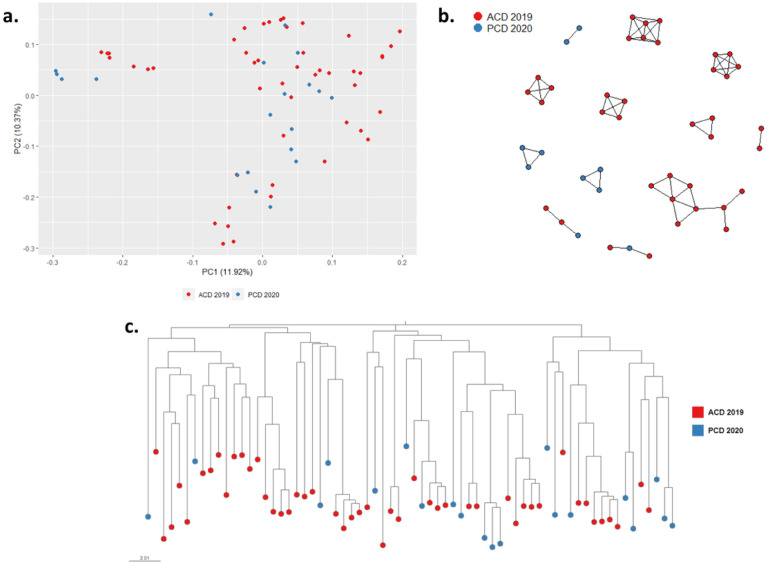
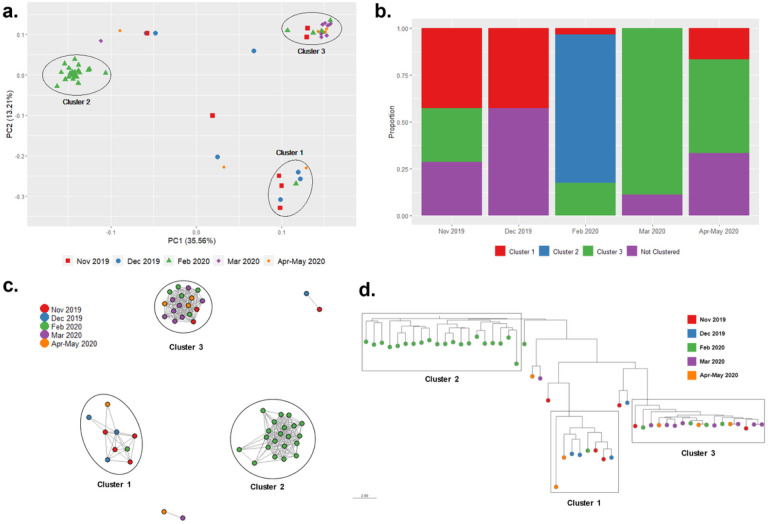
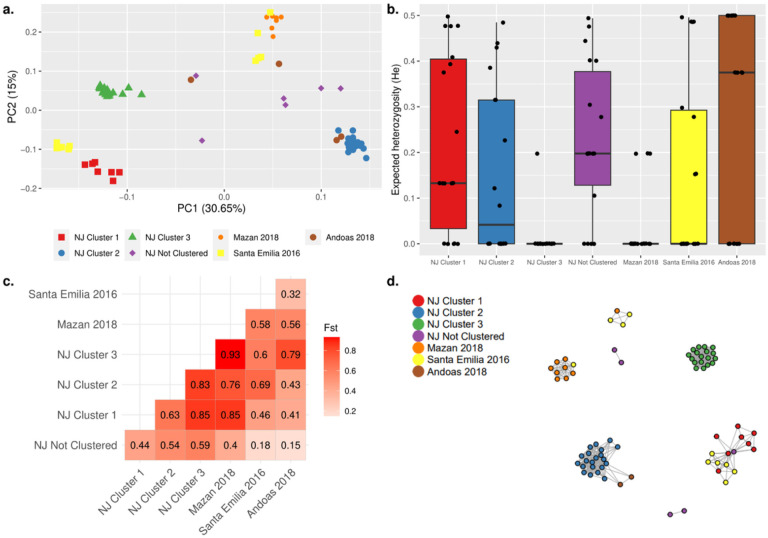
Hard-to-reach communities represent Peru's main challenge for malaria elimination, but information about transmission in these areas is scarce. Here, we assessed (Pv) and (Pf) transmission dynamics, resistance markers, and Pf deletions in Nueva Jerusalén (NJ), a remote, indigenous community in the Peruvian Amazon with high population mobility. We collected samples from November 2019 to May 2020 by active (ACD) and passive case detection (PCD) in NJ. Parasites were identified with microscopy and PCR. Then, we analyzed a representative set of positive-PCR samples (Pv = 68, Pf = 58) using highly-multiplexed deep sequencing assays (AmpliSeq) and compared NJ parasites with ones from other remote Peruvian areas using population genetics indexes. The ACD intervention did not reduce malaria cases in the short term, and persistent malaria transmission was observed (at least one Pv infection was detected in 96% of the study days). In Nueva Jerusalen, the Pv population had modest genetic diversity (He = 0.27). Pf population had lower diversity (He = 0.08) and presented temporal clustering, one of these clusters linked to an outbreak in February 2020. Moreover, Pv and Pf parasites from NJ exhibited variable levels of differentiation (Pv Fst = -0.52 & Pf Fst = 0.11-0.58) with parasites from other remote areas. No artemisin resistance mutations but chloroquine (57%) and sulfadoxine-pyrimethamine (35-67%) were detected in NJ's Pf parasites. Moreover, gene deletions were common (32-50% of parasites with one or both genes deleted). The persistent Pv transmission and the detection of a Pf outbreak with parasites genetically distinct from the local ones highlight the need for tailored interventions focusing on mobility patterns and imported infections in remote areas to eliminate malaria in the Peruvian Amazon.
难以触及的社区是秘鲁消除疟疾的主要挑战,但这些地区的传播信息匮乏。在此,我们评估了秘鲁亚马逊地区一个偏远的土著社区新耶路撒冷(NJ)的间日疟原虫(Pv)和恶性疟原虫(Pf)传播动态、耐药标志物以及Pf基因缺失情况,该社区人口流动性高。我们于2019年11月至2020年5月在NJ通过主动病例发现(ACD)和被动病例发现(PCD)收集样本。通过显微镜检查和聚合酶链反应(PCR)鉴定寄生虫。然后,我们使用高度多重深度测序分析(AmpliSeq)分析了一组具有代表性的PCR阳性样本(Pv = 68,Pf = 58),并使用群体遗传学指标将NJ的寄生虫与秘鲁其他偏远地区的寄生虫进行比较。ACD干预在短期内并未减少疟疾病例,且观察到持续的疟疾传播(在96%的研究日中至少检测到一例Pv感染)。在新耶路撒冷,Pv种群具有适度的遗传多样性(He = 0.27)。Pf种群的多样性较低(He = 0.08),并呈现出时间聚类,其中一个聚类与2020年2月的一次疫情有关。此外,NJ的Pv和Pf寄生虫与其他偏远地区的寄生虫表现出不同程度的分化(Pv Fst = -0.52 & Pf Fst = 0.11 - 0.58)。在NJ的Pf寄生虫中未检测到青蒿素耐药突变,但检测到氯喹耐药(57%)和磺胺多辛 - 乙胺嘧啶耐药(35 - 67%)。此外,基因缺失很常见(32 - 50%的寄生虫一个或两个基因缺失)。持续的Pv传播以及检测到与当地寄生虫基因不同的Pf疫情,凸显了需要针对偏远地区的流动模式和输入性感染制定有针对性的干预措施,以在秘鲁亚马逊地区消除疟疾。