Ferreira Marcelo U, Corder Rodrigo M, Johansen Igor C, Kattenberg Johanna H, Moreno Marta, Rosas-Aguirre Angel, Ladeia-Andrade Simone, Conn Jan E, Llanos-Cuentas Alejandro, Gamboa Dionicia, Rosanas-Urgell Anna, Vinetz Joseph M
Department of Parasitology, Institute of Biomedical Sciences, University of São Paulo, São Paulo, Brazil.
Global Health and Tropical Medicine, Institute of Hygiene and Tropical Medicine, Nova University of Lisbon, Lisbon, Portugal.
Lancet Reg Health Am. 2022 May;9. doi: 10.1016/j.lana.2021.100169. Epub 2022 Jan 5.
Low-density and asymptomatic infections remain largely undetected and untreated and may contribute significantly to malaria transmission in the Amazon.
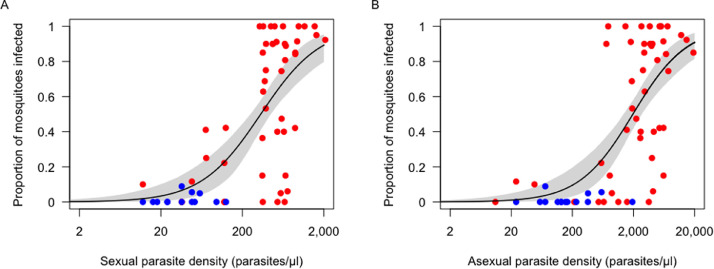
We analysed individual participant data from population-based surveys that measured prevalence by microscopy and polymerase chain reaction (PCR) between 2002 and 2015 and modelled the relationship between parasite density and infectiousness to vectors using membrane feeding assay data. We estimated the proportion of sub-patent (i.e., missed by microscopy) and asymptomatic infections and examined how parasite density relates to clinical manifestations and mosquito infection in Amazonian settings.
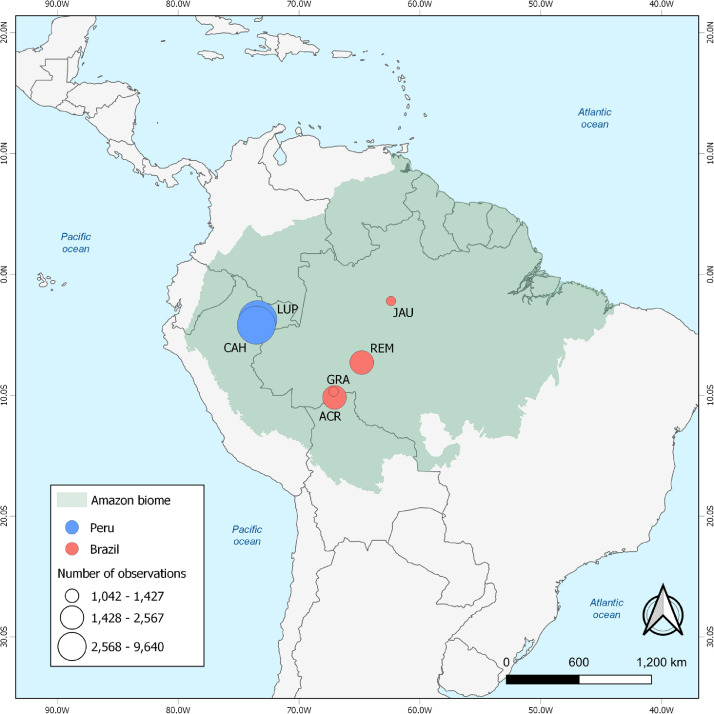
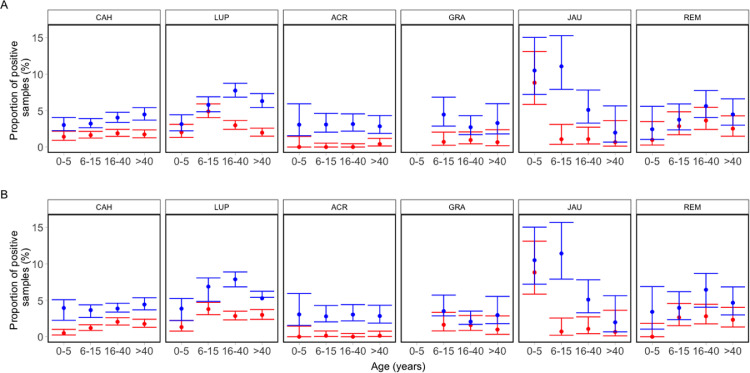
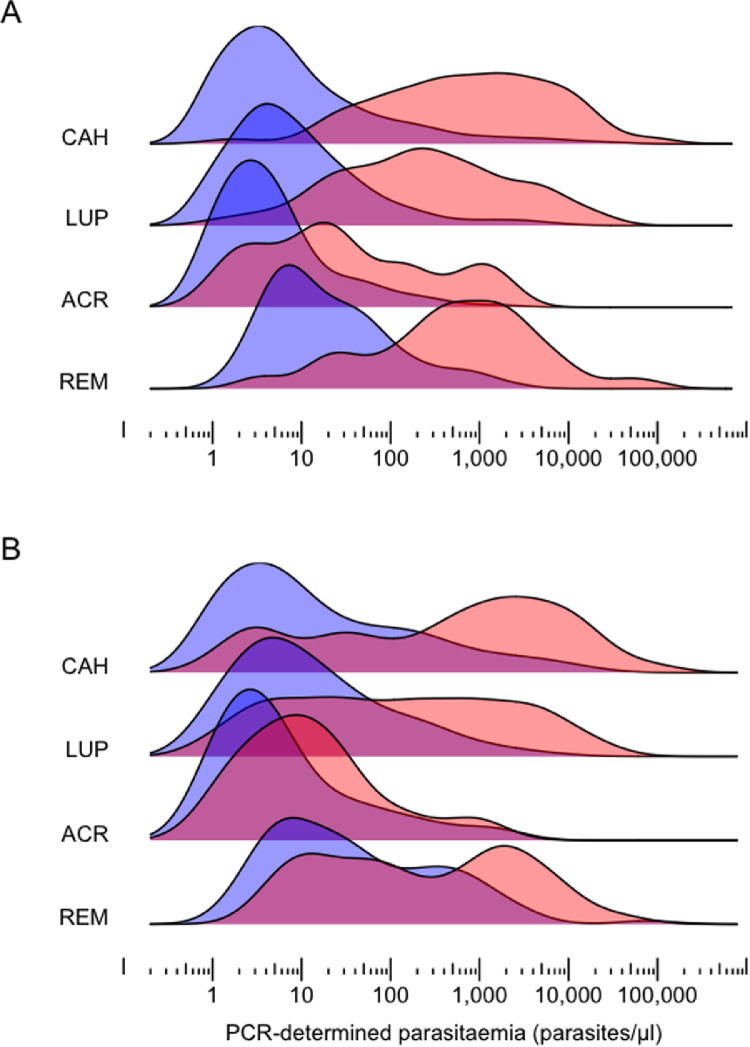
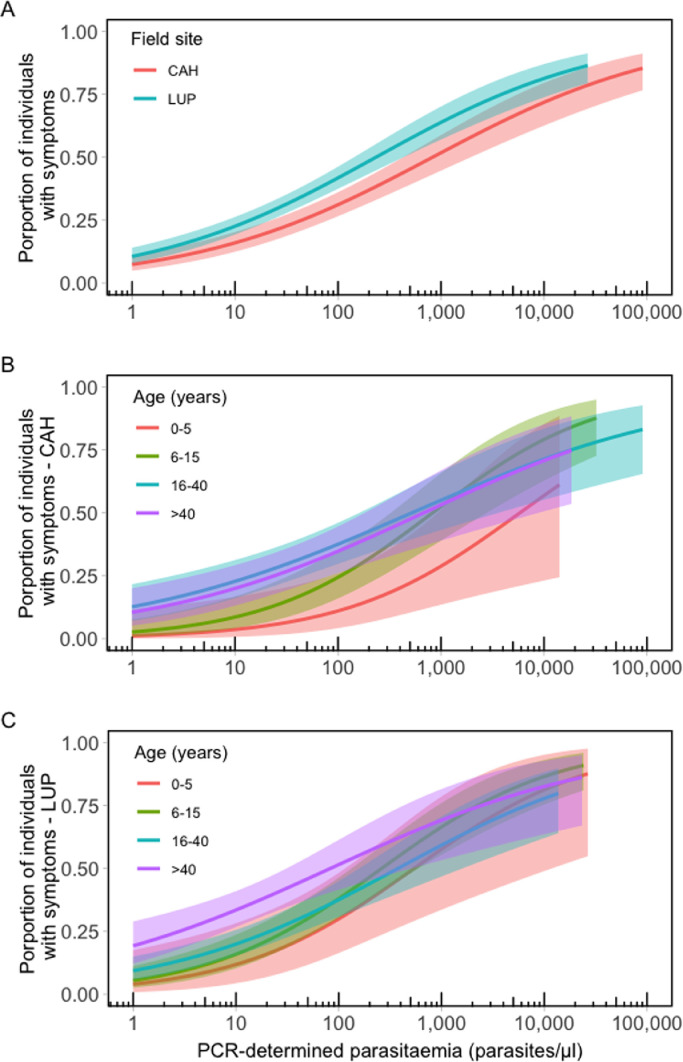
We pooled 24,986 observations from six sites in Brazil and Peru. was detected in 6·8% and 2·1% of them by PCR and microscopy, respectively. 58·5% to 92·6% of infections were asymptomatic and 61·2% to 96·3% were sub-patent across study sites. density thresholds associated with clinical symptoms were one order of magnitude higher in children than in adults. We estimate that sub-patent parasite carriers are minimally infectious and contribute 12·7% to 24·9% of the community-wide transmission, while asymptomatic carriers are the source of 28·2% to 79·2% of mosquito infections.
Asymptomatic carriers constitute a vast infectious reservoir that, if targeted by malaria elimination strategies, could substantially reduce malaria transmission in the Amazon. Infected children may remain asymptomatic despite high parasite densities that elicit clinical manifestations in adults.
US National Institutes of Health, Fundação de Amparo à Pesquisa do Estado de São Paulo, and Belgium Development Cooperation.
低密度和无症状感染在很大程度上仍未被发现和治疗,可能对亚马逊地区的疟疾传播有重大影响。
我们分析了基于人群调查的个体参与者数据,这些调查在2002年至2015年间通过显微镜检查和聚合酶链反应(PCR)测量患病率,并使用膜饲法数据模拟寄生虫密度与对媒介传染性之间的关系。我们估计了亚临床感染(即显微镜检查遗漏的感染)和无症状感染的比例,并研究了在亚马逊地区环境中寄生虫密度与临床表现和蚊虫感染之间的关系。
我们汇总了来自巴西和秘鲁六个地点的24986份观察数据。通过PCR和显微镜检查分别在其中6.8%和2.1%的数据中检测到感染。在各研究地点,58.5%至92.6%的感染为无症状感染,61.2%至96.3%为亚临床感染。与临床症状相关的寄生虫密度阈值在儿童中比在成人中高一个数量级。我们估计,亚临床寄生虫携带者的传染性极低,对全社区疟疾传播的贡献率为12.7%至24.9%,而无症状携带者是28.2%至79.2%蚊虫感染的源头。
无症状携带者构成了一个巨大的感染源,如果疟疾消除策略针对这一群体,可大幅减少亚马逊地区的疟疾传播。尽管寄生虫密度高到能在成人中引发临床表现,但受感染儿童可能仍无症状。
美国国立卫生研究院、圣保罗州研究资助基金会和比利时发展合作署。