Ponciano José M, Gómez Juan P, Ravel Jacques, Forney Larry J
Department of Biology, University of Florida, Gainesville, FL.
Departamento de Química y Biología, Universidad del Norte, Barranquilla, Colombia.
bioRxiv. 2024 Mar 3:2024.03.02.581600. doi: 10.1101/2024.03.02.581600.
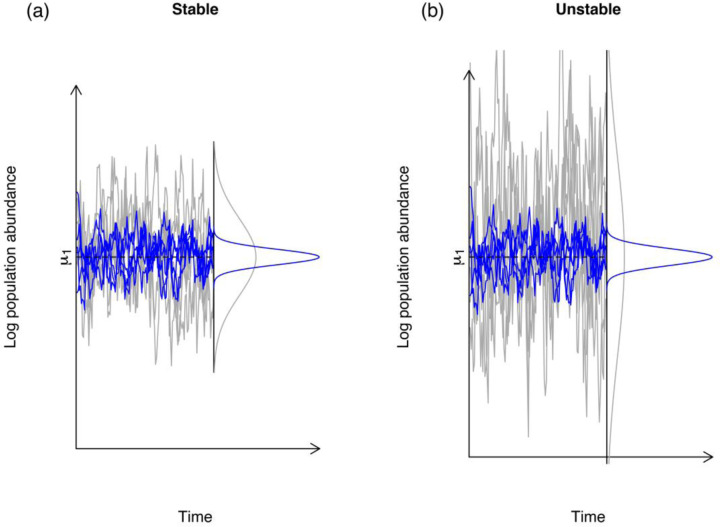
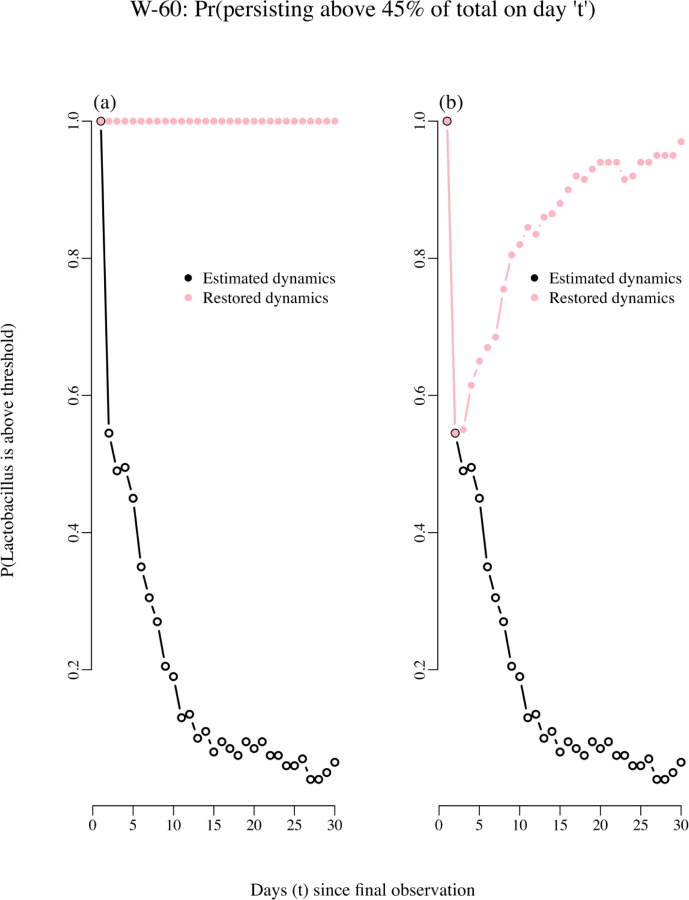
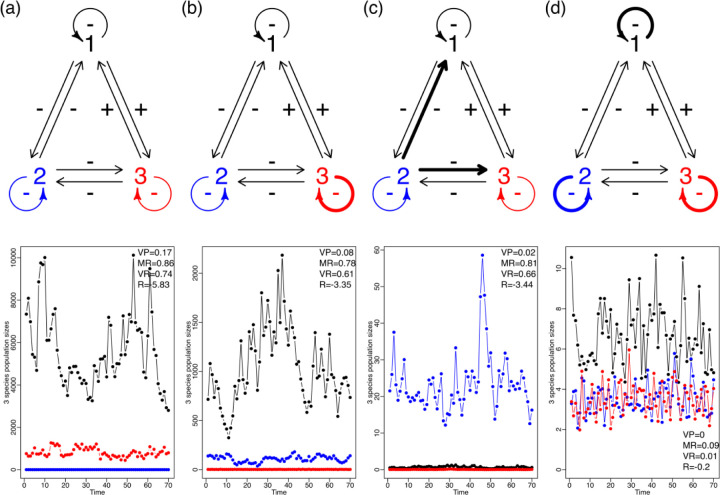
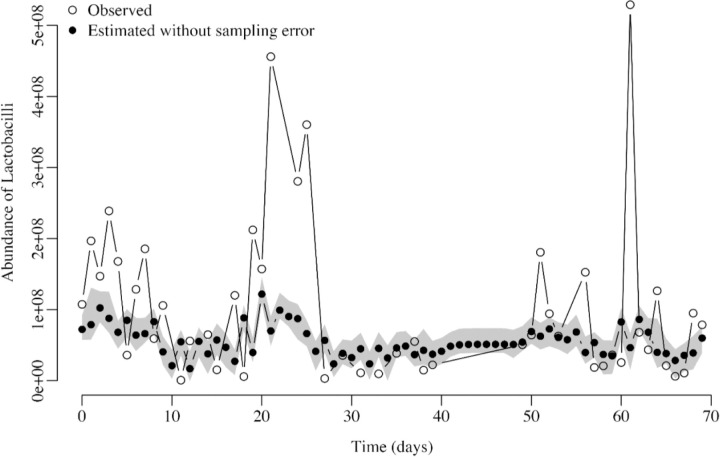
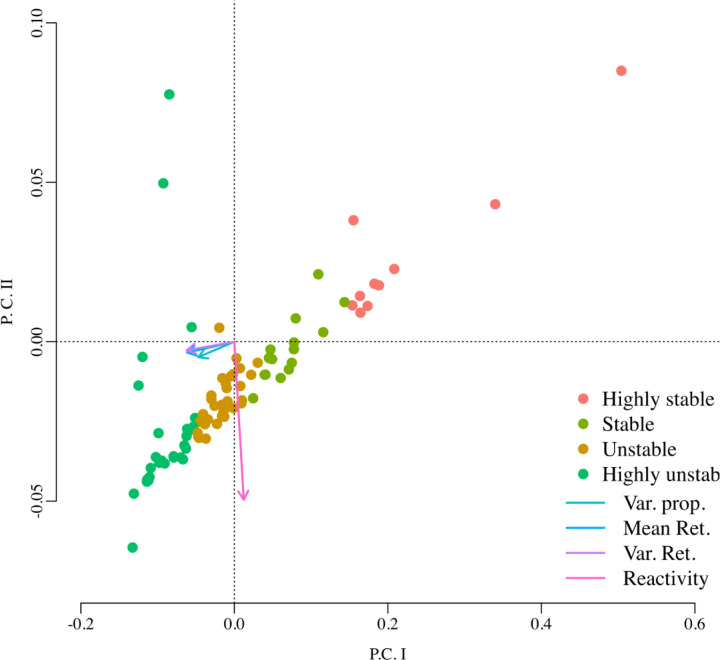
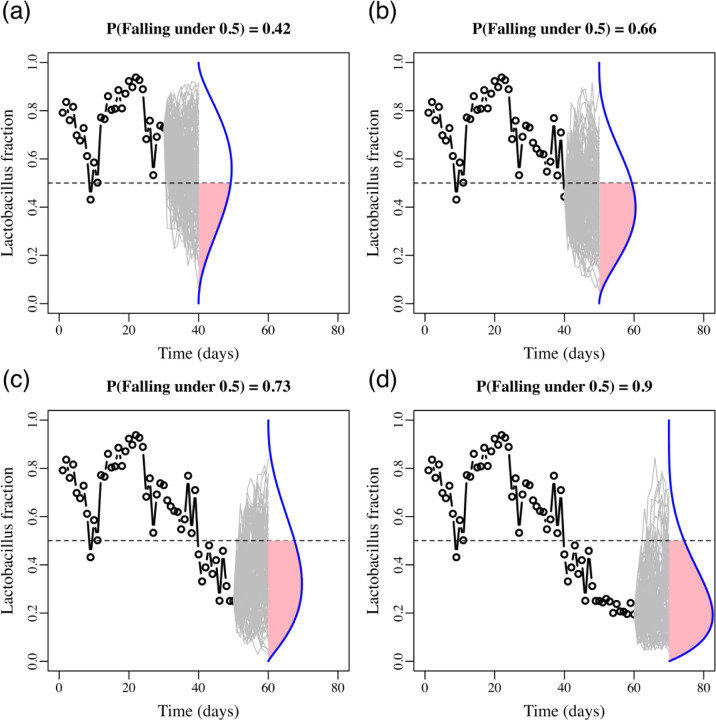
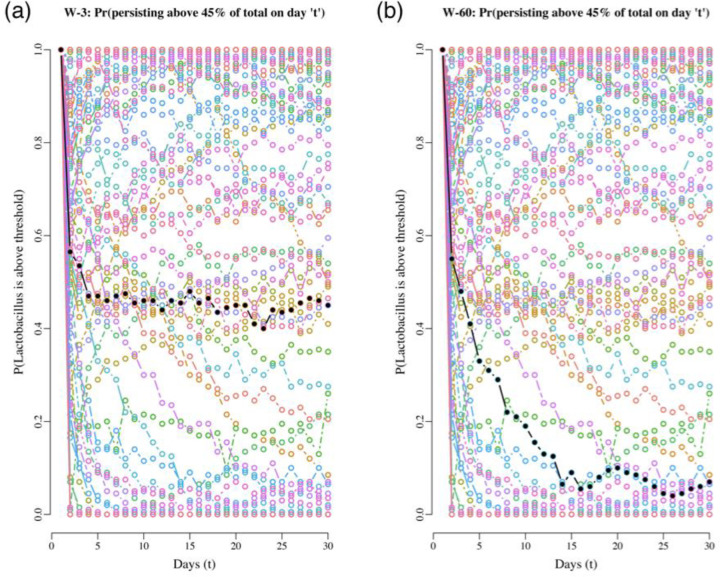
The interplay of stochastic and ecological processes that govern the establishment and persistence of host-associated microbial communities is not well understood. Here we illustrate the conceptual and practical advantages of fitting stochastic population dynamics models to multi-species bacterial time series data. We show how the stability properties, fluctuation regimes and persistence probabilities of human vaginal microbial communities can be better understood by explicitly accommodating three sources of variability in ecological stochastic models of multi-species abundances: 1) stochastic biotic and abiotic forces, 2) ecological feedback and 3) sampling error. Rooting our modeling tool in stochastic population dynamics modeling theory was key to apply standardized measures of a community's reaction to environmental variation that ultimately depends on the nature and intensity of the intra-specific and inter-specific interaction strengths. Using estimates of model parameters, we developed a Risk Prediction Monitoring (RPM) tool that estimates temporal changes in persistence probabilities for any bacterial group of interest. This method mirrors approaches that are often used in conservation biology in which a measure of extinction risks is periodically updated with any change in a population or community. Additionally, we show how to use estimates of interaction strengths and persistence probabilities to formulate hypotheses regarding the molecular mechanisms and genetic composition that underpin different types of interactions. Instead of seeking a definition of "dysbiosis" we propose to translate concepts of theoretical ecology and conservation biology methods into practical approaches for the management of human-associated bacterial communities.
目前对于控制宿主相关微生物群落的建立和持续存在的随机过程与生态过程之间的相互作用,我们还了解得不够透彻。在此,我们阐述了将随机种群动态模型应用于多物种细菌时间序列数据的概念优势和实际优势。我们展示了,通过在多物种丰度的生态随机模型中明确纳入三种变异性来源,即:1)随机生物和非生物力量,2)生态反馈,以及3)抽样误差,可以更好地理解人类阴道微生物群落的稳定性特征、波动状态和持续存在概率。将我们的建模工具扎根于随机种群动态建模理论,是应用群落对环境变化反应的标准化度量的关键,而这最终取决于种内和种间相互作用强度的性质和强度。利用模型参数估计,我们开发了一种风险预测监测(RPM)工具,可估计任何感兴趣细菌群体的持续存在概率的时间变化。这种方法类似于保护生物学中常用的方法,即在种群或群落发生任何变化时,定期更新灭绝风险的度量。此外,我们展示了如何利用相互作用强度和持续存在概率的估计值,来提出关于支撑不同类型相互作用的分子机制和遗传组成的假设。我们不是寻求“生态失调”的定义,而是建议将理论生态学和保护生物学方法的概念转化为管理人类相关细菌群落的实用方法。