
二甲双胍与电脉冲对乳腺癌MDA-MB-231细胞的疗效
Efficacy of metformin and electrical pulses in breast cancer MDA-MB-231 cells.
作者信息
Sahu Praveen, Camarillo Ignacio G, Sundararajan Raji
机构信息
School of Engineering Technology, Purdue University, West Lafayette, IN 47907, USA.
Department of Biological Sciences, Purdue University, West Lafayette, IN 47907, USA.
出版信息
Explor Target Antitumor Ther. 2024;5(1):54-73. doi: 10.37349/etat.2024.00204. Epub 2024 Feb 19.
AIM
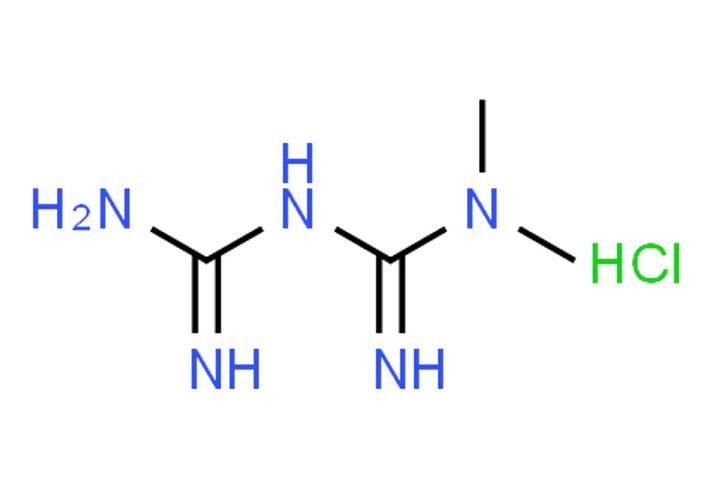
Triple-negative breast cancer (TNBC) is a very aggressive subset of breast cancer, with limited treatment options, due to the lack of three commonly targeted receptors, which merits the need for novel treatments for TNBC. Towards this need, the use of metformin (Met), the most widely used type-2 diabetes drug worldwide, was explored as a repurposed anticancer agent. Cancer being a metabolic disease, the modulation of two crucial metabolites, glucose, and reactive oxygen species (ROS), is studied in MDA-MB-231 TNBC cells, using Met in the presence of electrical pulses (EP) to enhance the drug efficacy.
METHODS
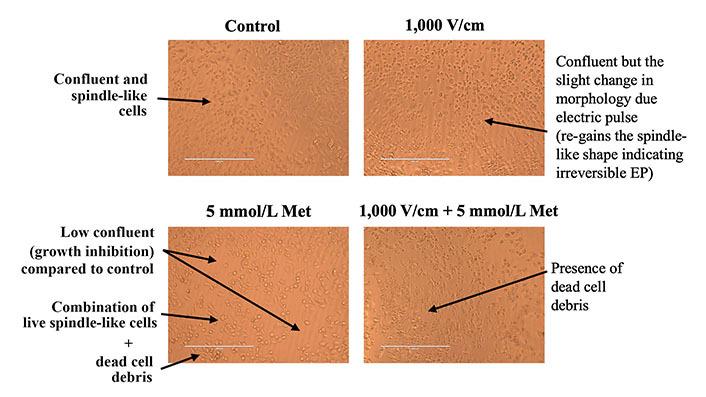
MDA-MB-231, human TNBC cells were treated with Met in the presence of EP, with various concentrations Met of 1 mmol/L, 2.5 mmol/L, 5 mmol/L, and 10 mmol/L. EP of 500 V/cm, 800 V/cm, and 1,000 V/cm (with a pulse width of 100 µs at 1 s intervals) were applied to TNBC and the impact of these two treatments was studied. Various assays, including cell viability, microscopic inspection, glucose, ROS, and wound healing assay, were performed to characterize the response of the cells to the combination treatment.
RESULTS
Combining 1,000 V/cm with 5 mmol/L Met yielded cell viability as low as 42.6% at 24 h. The glucose level was reduced by 5.60-fold and the ROS levels were increased by 9.56-fold compared to the control, leading to apoptotic cell death.
CONCLUSIONS
The results indicate the enhanced anticancer effect of Met in the presence of electric pulses. The cell growth is inhibited by suppressing glucose levels and elevated ROS. This shows a synergistic interplay between electroporation, Met, glucose, and ROS metabolic alterations. The results show promises for combinational therapy in TNBC patients.
目的
三阴性乳腺癌(TNBC)是乳腺癌中极具侵袭性的一个亚型,由于缺乏三种常见的靶向受体,其治疗选择有限,因此需要针对TNBC开发新的治疗方法。为满足这一需求,人们探索了将全球使用最广泛的2型糖尿病药物二甲双胍(Met)重新用作抗癌药物。鉴于癌症是一种代谢性疾病,本研究在MDA-MB-231 TNBC细胞中,利用Met并结合电脉冲(EP)来增强药物疗效,对葡萄糖和活性氧(ROS)这两种关键代谢物的调节作用进行了研究。
方法
在存在EP的情况下,用1 mmol/L、2.5 mmol/L、5 mmol/L和10 mmol/L等不同浓度的Met处理人TNBC细胞MDA-MB-231。将500 V/cm、800 V/cm和1000 V/cm(脉冲宽度为100 µs,间隔1 s)的EP施加于TNBC细胞,并研究这两种处理方式的影响。进行了包括细胞活力、显微镜检查、葡萄糖、ROS和伤口愈合试验在内的各种测定,以表征细胞对联合治疗的反应。
结果
在24小时时,将1000 V/cm与5 mmol/L Met联合使用,细胞活力低至42.6%。与对照组相比,葡萄糖水平降低了5.60倍,ROS水平升高了9.56倍,导致细胞凋亡死亡。
结论
结果表明在电脉冲存在的情况下,Met的抗癌作用增强。通过抑制葡萄糖水平和升高ROS来抑制细胞生长。这显示了电穿孔、Met、葡萄糖和ROS代谢改变之间的协同相互作用。研究结果为TNBC患者的联合治疗带来了希望。






 Zotero 插件