Wang Yu, Jia Yitong, Wang Zheng, Feng Guang, Ma Yanhui, Fan Zhen, Liu Miao, Feng Kunpeng, Wang Tianlong
Department of Neurosurgery, Beijing Boai Hospital, China Rehabilitation Research Center, Beijing, People's Republic of China.
College of Rehabilitation, Capital Medical University, Beijing, People's Republic of China.
J Pain Res. 2024 Mar 4;17:851-863. doi: 10.2147/JPR.S439909. eCollection 2024.
Neuropathic pain (NP) is recognized as one of the most difficult pain syndromes which lacks a safe, well-tolerated and effective treatment. Pulsed radiofrequency (PRF), a novel and minimally invasive interventions, has been introduced to alleviate various types of NP. Previous studies reported PRF with higher voltage could further improve the treatment efficacy. Therefore, we conducted this systematic review and meta-analysis to determine whether high-voltage PRF is superior to standard-voltage PRF for the treatment of NP patients.
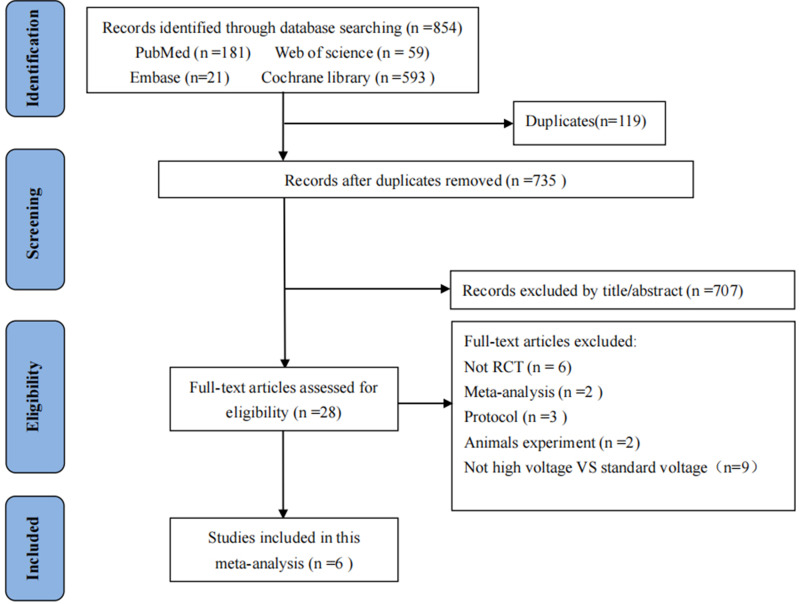
Databases published from the date of inception until 15 March 2022 on PubMed/MEDLINE, EMBASE, Web of Science and the Cochrane Library were searched for RCTs comparing high-voltage PRF and standard-voltage PRF in NP patients. The primary outcome measures were the efficiency rates of NP patients with high-voltage PRF or standard-voltage PRF treatment. Data analysis was conducted using the Review Manager software (RevMan V.5.3).
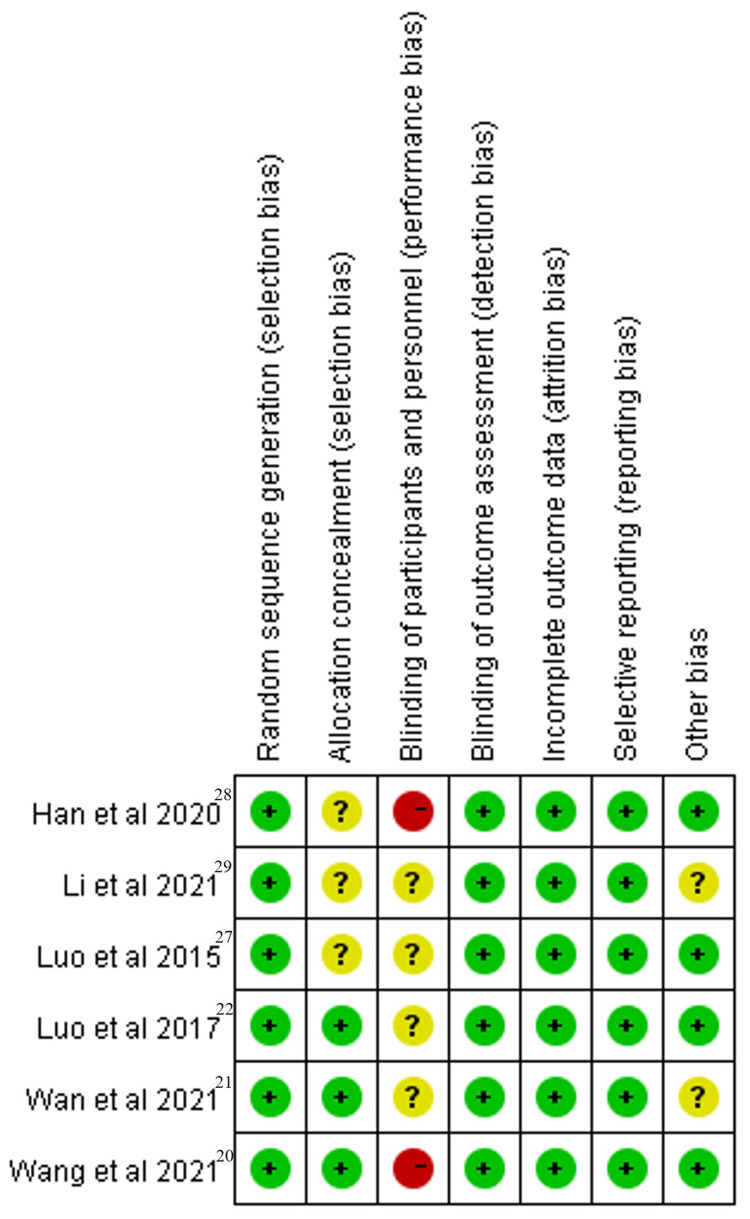
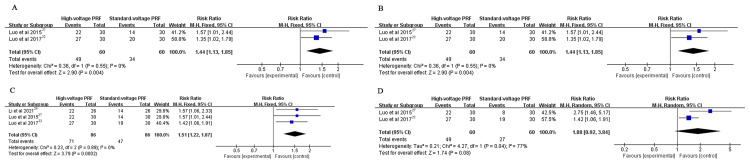
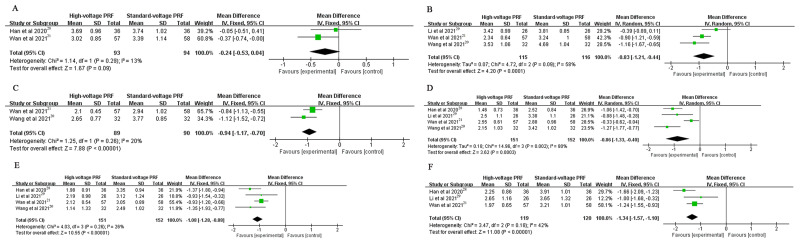
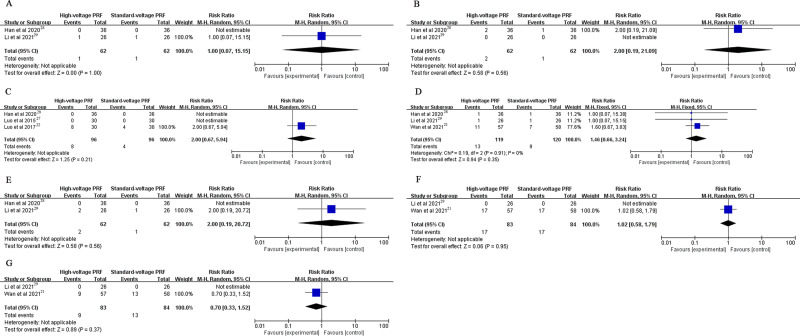
Six RCTs involving 423 patients were included in our meta-analysis. Compared with standard-voltage PRF group, the high-voltage PRF group attained a higher efficiency rate at 1 month (P = 0.04; I = 0%), 3 months (P = 0.04; I = 0%), 6 months (P = 0.002; I = 0%) post-procedure respectively. There was no significant difference in the complications between the two groups.
Our study supported that high-voltage PRF attained more satisfactory efficacy than standard-voltage PRF without increased side effects. High-voltage PRF could be a promising, effective, minimally invasive technology for NP patients.
神经病理性疼痛(NP)被认为是最难治疗的疼痛综合征之一,缺乏安全、耐受性良好且有效的治疗方法。脉冲射频(PRF)作为一种新型的微创干预手段,已被用于缓解各种类型的NP。先前的研究报道,较高电压的PRF可进一步提高治疗效果。因此,我们进行了这项系统评价和荟萃分析,以确定高压PRF在治疗NP患者方面是否优于标准电压PRF。
检索PubMed/MEDLINE、EMBASE、Web of Science和Cochrane图书馆从建库至2022年3月15日发表的数据库,查找比较NP患者高压PRF和标准电压PRF的随机对照试验(RCT)。主要结局指标是接受高压PRF或标准电压PRF治疗的NP患者的有效率。使用Review Manager软件(RevMan V.5.3)进行数据分析。
我们的荟萃分析纳入了6项涉及423例患者的RCT。与标准电压PRF组相比,高压PRF组在术后1个月(P = 0.04;I² = 0%)、3个月(P = 0.04;I² = 0%)、6个月(P = 0.002;I² = 0%)时的有效率更高。两组之间的并发症无显著差异。
我们的研究支持高压PRF比标准电压PRF疗效更满意,且未增加副作用。高压PRF可能是一种有前景、有效且微创的NP治疗技术。