Department of Health and Kinesiology, University of Illinois Urbana-Champaign, Urbana, IL, United States.
Division of Nutritional Sciences, University of Illinois Urbana-Champaign, Urbana, IL, United States.
J Nutr. 2024 May;154(5):1549-1560. doi: 10.1016/j.tjnut.2024.03.009. Epub 2024 Mar 11.
Digestibility is a primary factor in determining the quality of dietary protein. Microbial protease supplementation may be a strategy for improving protein digestion and subsequent postprandial plasma amino acid availability.
To assess the effect of co-ingesting a microbial protease mixture with pea protein on postprandial plasma amino acid concentrations.
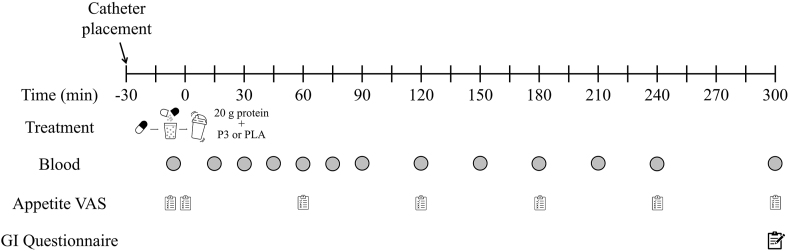
A mixture of 3 microbial protease preparations (P3) was tested for proteolytic efficacy in an in vitro static simulation of gastrointestinal digestion. Subsequently, in a randomized, double-blind, placebo-controlled crossover trial, 24 healthy adults (27 ± 4 y; 12 females, 12 males) ingested 25 g pea protein isolate (20 g protein, 2.2 g fat) with either P3 or maltodextrin placebo (PLA). Blood samples were collected at baseline and throughout a 0‒5 h postprandial period and both the early (0-2 h) iAUC and total (0-5 h) iAUC were examined.
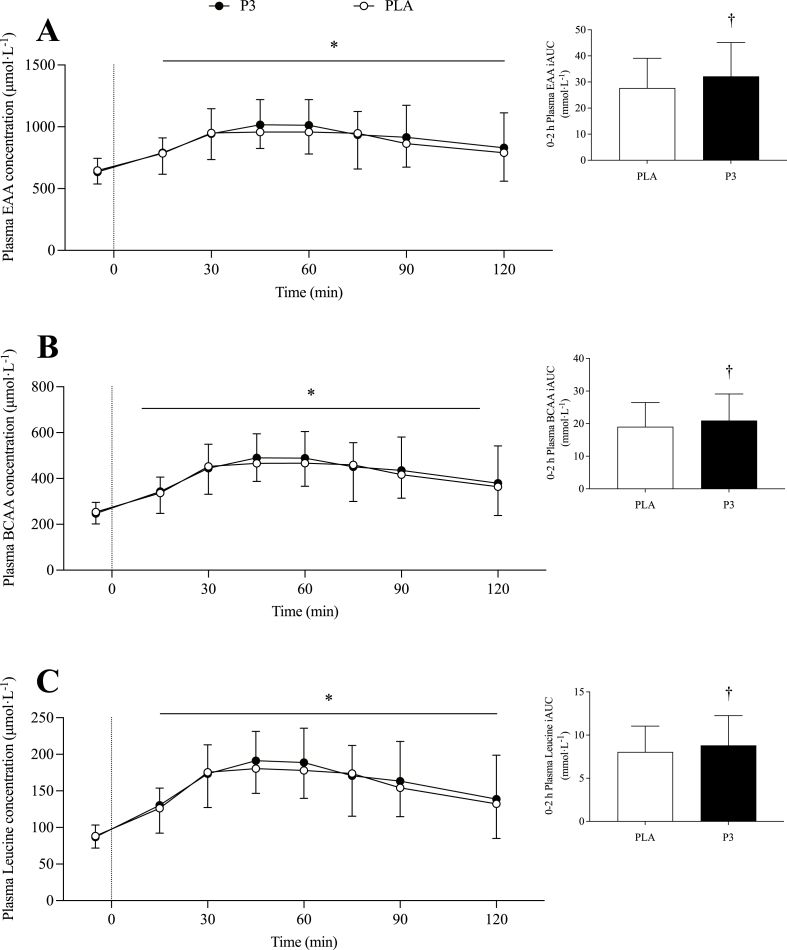
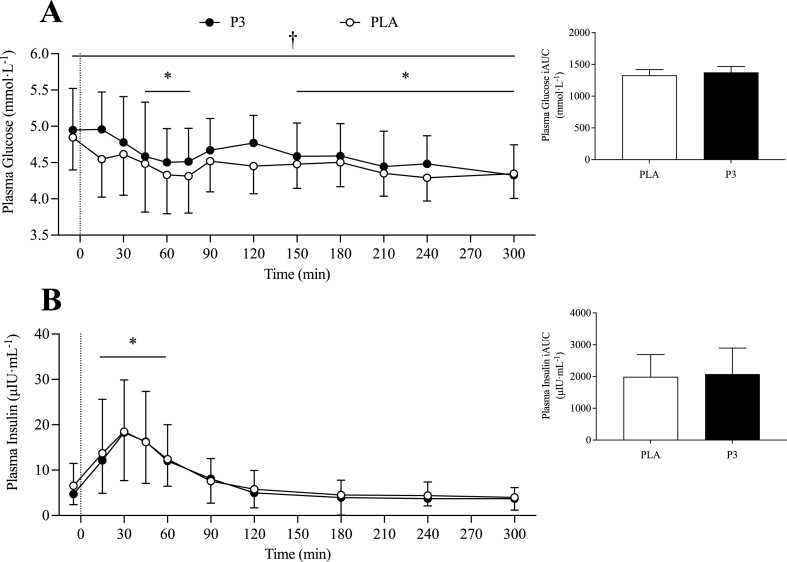
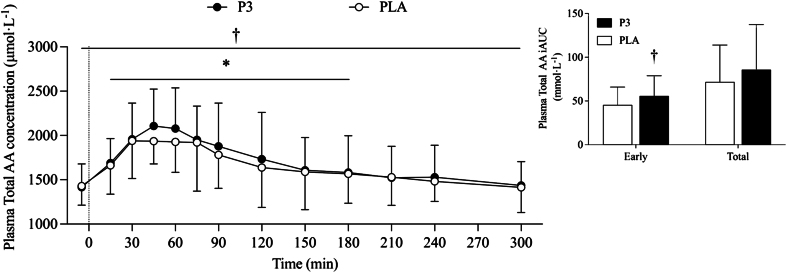
Plasma glucose concentrations decreased in both conditions (P < 0.001), with higher concentrations after P3 ingestion compared with PLA (P < 0.001). Plasma insulin concentrations increased for both conditions (P < 0.001) with no difference between conditions (P = 0.331). Plasma total amino acid (TAA) concentrations increased over time (P < 0.001) with higher concentrations observed for P3 compared with PLA (P = 0.010) during the 0‒5 h period. There was a trend for elevated essential amino acid (EAA) concentrations for P3 compared with PLA (P = 0.099) during the 0‒5 h postprandial period but not for leucine (P = 0.282) or branched-chain amino acids (BCAA, P = 0.410). The early net exposure (0‒2 h iAUC) to amino acids (leucine, BCAA, EAA, and TAA) was higher for P3 compared with PLA (all, P < 0.05).
Microbial protease co-ingestion increases plasma TAA concentrations (0-5 h) and leucine, BCAA, EAA, and TAA availability in the early postprandial period (0‒2 h) compared with ingesting pea protein with placebo in healthy adults.
消化率是决定膳食蛋白质质量的主要因素。微生物蛋白酶的补充可能是改善蛋白质消化和随后的餐后血浆氨基酸利用率的一种策略。
评估同时摄入豌豆蛋白和微生物蛋白酶混合物对餐后血浆氨基酸浓度的影响。
在胃肠道消化的体外静态模拟中,测试了 3 种微生物蛋白酶制剂(P3)的水解效果。随后,在一项随机、双盲、安慰剂对照交叉试验中,24 名健康成年人(27 ± 4 岁;女性 12 名,男性 12 名)摄入 25 g 豌豆蛋白分离物(20 g 蛋白质,2.2 g 脂肪),分别添加 P3 或麦芽糊精安慰剂(PLA)。在基线和餐后 0-5 小时期间采集血样,并检查早期(0-2 小时)iAUC 和总(0-5 小时)iAUC。
两种情况下的血浆葡萄糖浓度均降低(P < 0.001),P3 摄入后的浓度高于 PLA(P < 0.001)。两种情况下的血浆胰岛素浓度均升高(P < 0.001),但无差异(P = 0.331)。血浆总氨基酸(TAA)浓度随时间增加(P < 0.001),0-5 小时期间 P3 组的浓度高于 PLA 组(P = 0.010)。与 PLA 相比,P3 组的必需氨基酸(EAA)浓度在 0-5 小时的餐后期间有升高的趋势(P = 0.099),但亮氨酸(P = 0.282)或支链氨基酸(BCAA,P = 0.410)除外。与 PLA 相比,P3 组的早期净暴露(0-2 小时 iAUC)氨基酸(亮氨酸、BCAA、EAA 和 TAA)更高(均,P < 0.05)。
与摄入含安慰剂的豌豆蛋白相比,同时摄入微生物蛋白酶可增加健康成年人餐后血浆 TAA 浓度(0-5 小时)和早期(0-2 小时)的亮氨酸、BCAA、EAA 和 TAA 利用率。