Universidade Federal do Paraná, Curitiba PR, Brazil.
Arq Neuropsiquiatr. 2024 Mar;82(3):1-9. doi: 10.1055/s-0044-1781464. Epub 2024 Mar 11.
Children with cerebral palsy have a higher prevalence of sleep disorders, with numerous factors associated with a negative impact on the quality of life of caregivers.
To identify factors related to sleep disorders, nonpharmacological treatment, and the impact on the lives of caregivers.
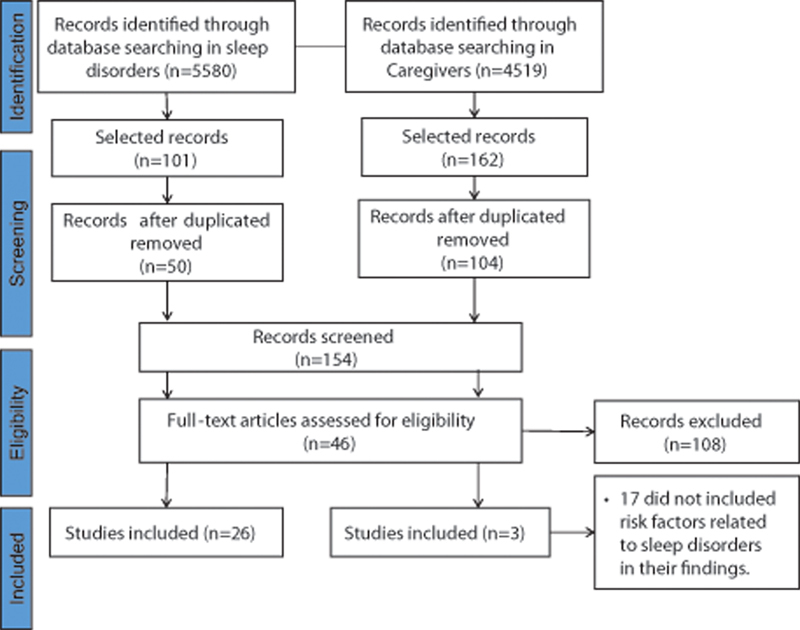
The present literature review was carried out in the Latin American and Caribbean Center on Health Sciences Information (BIREME), the Cochrane Library, Scopus, PubMed, the Cumulative Index to Nursing and Allied Health Literature (CINAHL), PsycInfo, WorldCat, Web of Science, Latin American Literature on Health Sciences (LILACS), and Excerpta Medica Database (EMBASE), with the descriptors , and . Studies available in Portuguese, English, or Spanish, published between 2010 and 2020, were our inclusion criteria. A total of 29 articles were included in the present review.
We considered nonpharmacological interventions effective support measures to drug-based treatments. The main sleep disorders in children with cerebral palsy are insomnia, parasomnias, nightmares, sleep bruxism, sleepwalking, sleep talking, disorders of initiation and maintenance of sleep, and sleep hyperhidrosis. Most studies point to a reduction in the quality of life of caregivers whose children have sleep disorders.
Our review suggests the effectiveness of nonpharmacological treatments combined with the use of medications. Measures such as changes in sleep environment and routine are favorable strategies to improve sleep quality. In addition, children with sleep disorders negatively impact the quality of life of their caregivers.
脑瘫儿童睡眠障碍的发病率较高,许多因素对照顾者的生活质量有负面影响。
确定与睡眠障碍、非药物治疗相关的因素,以及对照顾者生活的影响。
本文献复习在拉丁美洲和加勒比卫生科学信息中心(BIREME)、考科兰图书馆、Scopus、PubMed、护理和联合健康文献累积索引(CINAHL)、PsycInfo、世界图书馆、Web of Science、拉丁美洲卫生科学文献(LILACS)和医学生物文摘数据库(EMBASE)进行,使用的是 和 。纳入标准是 2010 年至 2020 年发表的、可用葡萄牙语、英语或西班牙语获取的研究。本综述共纳入 29 篇文章。
我们认为非药物干预是药物治疗的有效支持措施。脑瘫儿童的主要睡眠障碍包括失眠、睡眠障碍、梦魇、睡眠磨牙症、梦游、说梦话、睡眠启动和维持障碍以及睡眠多汗症。大多数研究表明,患有睡眠障碍的儿童的照顾者生活质量下降。
本综述表明,非药物治疗联合药物治疗是有效的。改变睡眠环境和日常习惯等措施是改善睡眠质量的有利策略。此外,患有睡眠障碍的儿童会对其照顾者的生活质量产生负面影响。