Yuan Yijia, Huang Jiayao, Yu Jiachen, Tan Justin Kok Soon, Chng Kevin Ziyang, Lee Jiun, Kim Sangho
Advanced Innovation in Micro/Nanoengineering (AIM) Laboratory, Department of Biomedical Engineering, National University of Singapore, Singapore, 119276, Singapore.
N.1 Institute for Health, National University of Singapore, Singapore, 119276, Singapore.
Sci Rep. 2024 Mar 12;14(1):5952. doi: 10.1038/s41598-024-56319-4.
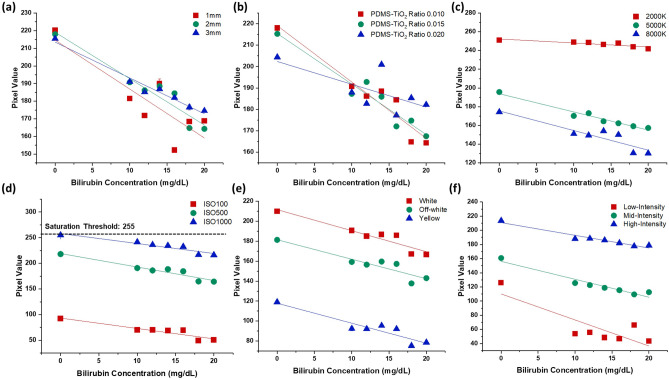
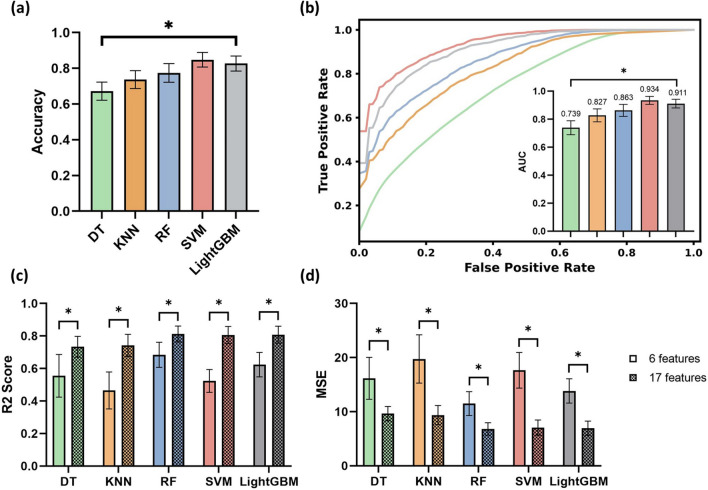
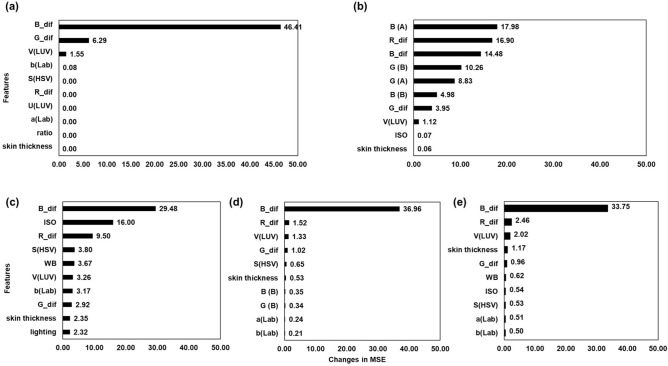
Neonatal Jaundice is a common occurrence in neonates. High excess bilirubin would lead to hyperbilirubinemia, leading to irreversible adverse damage such as kernicterus. Therefore, it is necessary and important to monitor neonates' bilirubin levels in real-time for immediate intervention. However, current screening protocols have their inherent limitations, necessitating more convenient measurements. In this proof-of-concept study, we evaluated the feasibility of using machine learning for the screening of hyperbilirubinemia in neonates from smartphone-acquired photographs. Different machine learning models were compared and evaluated to gain a better understanding of feature selection and model performance in bilirubin determination. An in vitro study was conducted with a bilirubin-containing tissue phantom to identify potential biological and environmental confounding factors. The findings of this study present a systematic characterization of the confounding effect of various factors through separate parametric tests. These tests uncover potential techniques in image pre-processing, highlighting important biological features (light scattering property and skin thickness) and external features (ISO, lighting conditions and white balance), which together contribute to robust model approaches for accurately determining bilirubin concentrations. By obtaining an accuracy of 0.848 in classification and 0.812 in regression, these findings indicate strong potential in aiding in the design of clinical studies using patient-derived images.
新生儿黄疸在新生儿中很常见。过高的胆红素会导致高胆红素血症,进而引发诸如核黄疸等不可逆转的不良损害。因此,实时监测新生儿胆红素水平以便及时干预是必要且重要的。然而,当前的筛查方案存在其固有的局限性,需要更便捷的测量方法。在这项概念验证研究中,我们评估了利用机器学习从智能手机拍摄的照片中筛查新生儿高胆红素血症的可行性。对不同的机器学习模型进行了比较和评估,以更好地了解胆红素测定中的特征选择和模型性能。利用含胆红素的组织模型进行了一项体外研究,以识别潜在的生物学和环境混杂因素。本研究的结果通过单独的参数测试对各种因素的混杂效应进行了系统表征。这些测试揭示了图像预处理中的潜在技术,突出了重要的生物学特征(光散射特性和皮肤厚度)和外部特征(感光度、光照条件和白平衡),这些共同促成了用于准确测定胆红素浓度的稳健模型方法。通过在分类中获得0.848的准确率和在回归中获得0.812的准确率,这些发现表明在利用患者来源的图像辅助临床研究设计方面具有强大的潜力。