Merz Myriam P, Seal Snehaa V, Grova Nathalie, Mériaux Sophie, Guebels Pauline, Kanli Georgia, Mommaerts Elise, Nicot Nathalie, Kaoma Tony, Keunen Olivier, Nazarov Petr V, Turner Jonathan D
Immune Endocrine and Epigenetics Research Group, Department of Infection and Immunity, Luxembourg Institute of Health (LIH), 29 Rue Henri Koch, 4354, Esch-Sur-Alzette, Luxembourg.
Faculty of Science, Technology and Medicine, University of Luxembourg, 2 Avenue de Université, L-4365, Esch-Sur-Alzette, Luxembourg.
Sci Rep. 2024 Mar 11;14(1):5898. doi: 10.1038/s41598-024-56601-5.
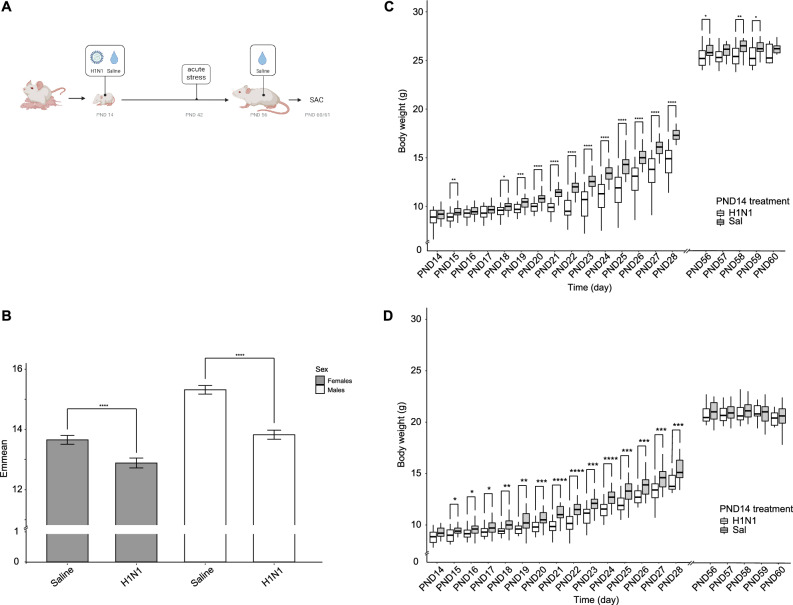
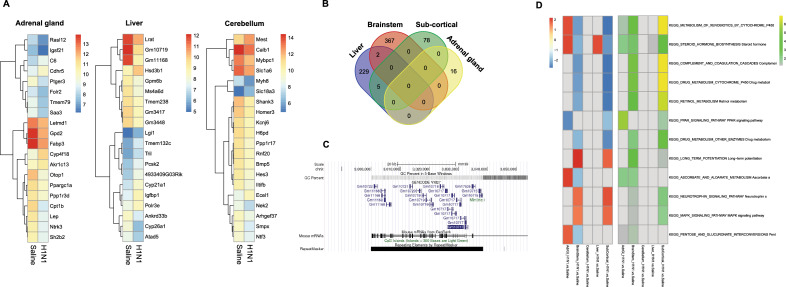
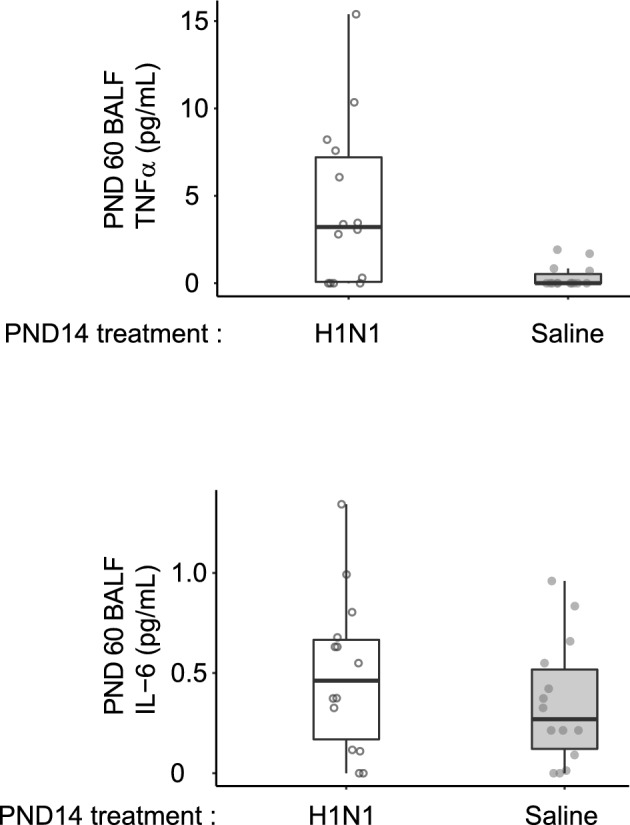
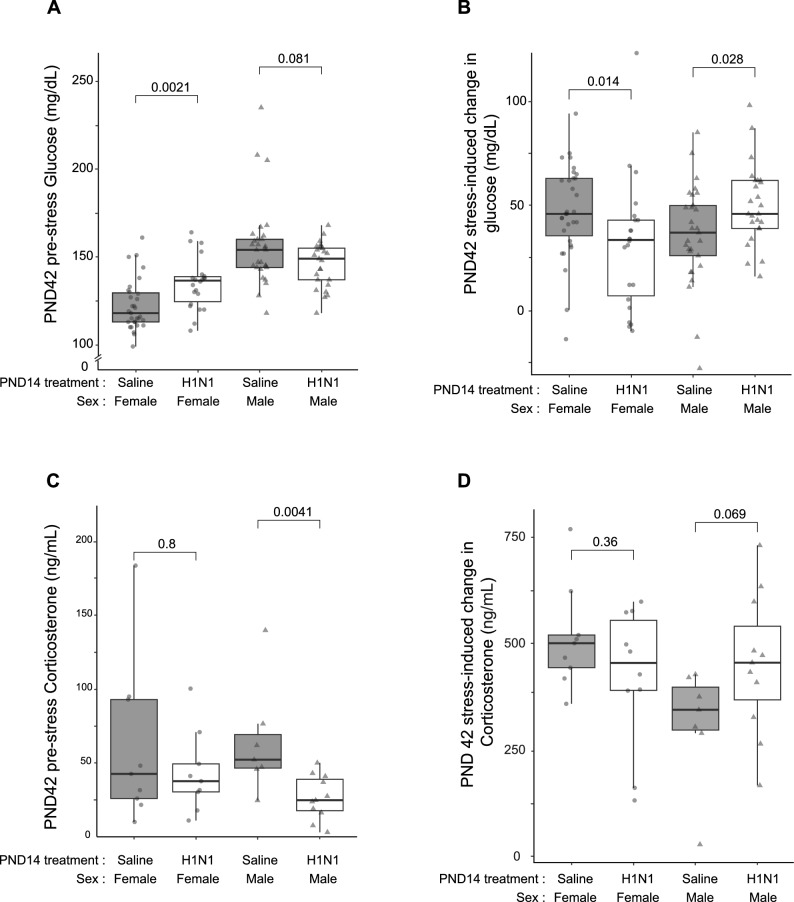
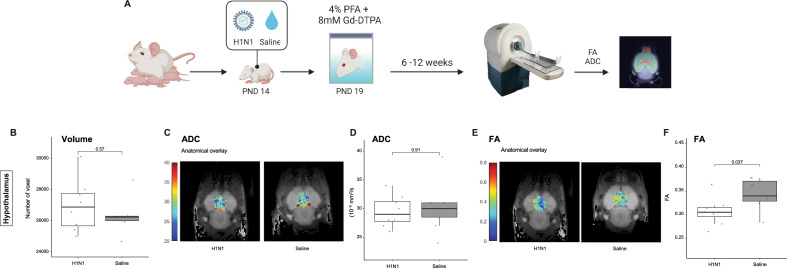
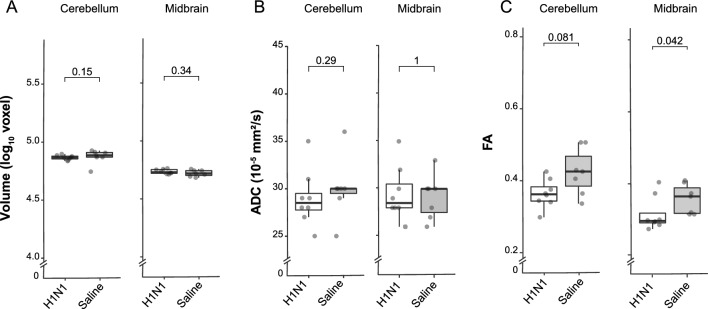
Early-life adversity covers a range of physical, social and environmental stressors. Acute viral infections in early life are a major source of such adversity and have been associated with a broad spectrum of later-life effects outside the immune system or "off-target". These include an altered hypothalamus-pituitary-adrenal (HPA) axis and metabolic reactions. Here, we used a murine post-natal day 14 (PND 14) Influenza A (H1N1) infection model and applied a semi-holistic approach including phenotypic measurements, gene expression arrays and diffusion neuroimaging techniques to investigate HPA axis dysregulation, energy metabolism and brain connectivity. By PND 56 the H1N1 infection had been resolved, and there was no residual gene expression signature of immune cell infiltration into the liver, adrenal gland or brain tissues examined nor of immune-related signalling. A resolved early-life H1N1 infection had sex-specific effects. We observed retarded growth of males and altered pre-stress (baseline) blood glucose and corticosterone levels at PND42 after the infection was resolved. Cerebral MRI scans identified reduced connectivity in the cortex, midbrain and cerebellum that were accompanied by tissue-specific gene expression signatures. Gene set enrichment analysis confirmed that these were tissue-specific changes with few common pathways. Early-life infection independently affected each of the systems and this was independent of HPA axis or immune perturbations.
早年逆境涵盖一系列身体、社会和环境应激源。早年的急性病毒感染是此类逆境的主要来源,并与免疫系统之外或“脱靶”的广泛后期影响相关。这些影响包括下丘脑 - 垂体 - 肾上腺(HPA)轴改变和代谢反应。在此,我们使用了小鼠出生后第14天(PND 14)甲型流感(H1N1)感染模型,并采用了一种半整体方法,包括表型测量、基因表达阵列和扩散神经成像技术,以研究HPA轴失调、能量代谢和脑连接性。到PND 56时,H1N1感染已得到解决,在检查的肝脏、肾上腺或脑组织中,未发现免疫细胞浸润的残留基因表达特征,也未发现免疫相关信号。已解决的早年H1N1感染具有性别特异性影响。我们观察到雄性生长迟缓,在感染解决后的PND42时,应激前(基线)血糖和皮质酮水平发生改变。脑部MRI扫描显示皮质、中脑和小脑的连接性降低,同时伴有组织特异性基因表达特征。基因集富集分析证实,这些是具有很少共同通路的组织特异性变化。早年感染独立影响每个系统,且这与HPA轴或免疫干扰无关。