Li Meng, Han Jingmei, Yang Nana, Li Xiangyun, Wu Xinglong
College of Animal Science and Technology, Hebei Technology Innovation Center of Cattle and Sheep Embryo, Hebei Agricultural University, Baoding, China.
College of Veterinary Medicine, Hebei Agricultural University, Baoding, China.
Front Endocrinol (Lausanne). 2024 Feb 26;15:1354435. doi: 10.3389/fendo.2024.1354435. eCollection 2024.
Superovulation is a critical step in assisted reproductive technology, but the use of human chorionic gonadotropin (hCG) as a trigger for superovulation can result in ovarian hyperstimulation. Thus, the use of Gonadotropin-releasing hormone agonist (GnRHa) trigger has been increasingly adopted, although it has been associated with a higher rate of pregnancy failure compared to natural cycles. This study aimed to investigate the effect of GnRHa trigger on embryo implantation in a mouse model.
Mice in the superovulation (PG) group were administered 7.5 IU of PMSG, followed by the injection of 3.5 μg of GnRHa (Leuprorelin) 48 h later, while mice in the control group (CTR) mated naturally. We compared the number of oocytes, blastocysts, and corpus luteum between the two groups and the implantation sites after the transfer of natural blastocysts. Ovaries, uterus, and serum 2 and 4 days after mating were collected for qRT-PCR, transcriptome sequencing, and hormone assays.
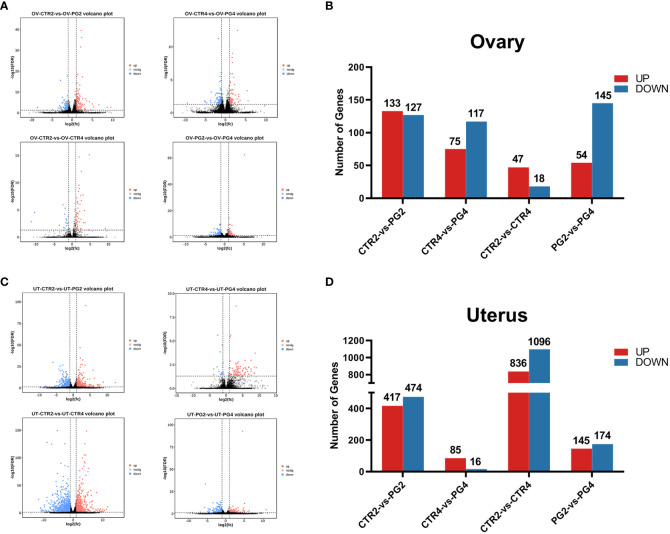
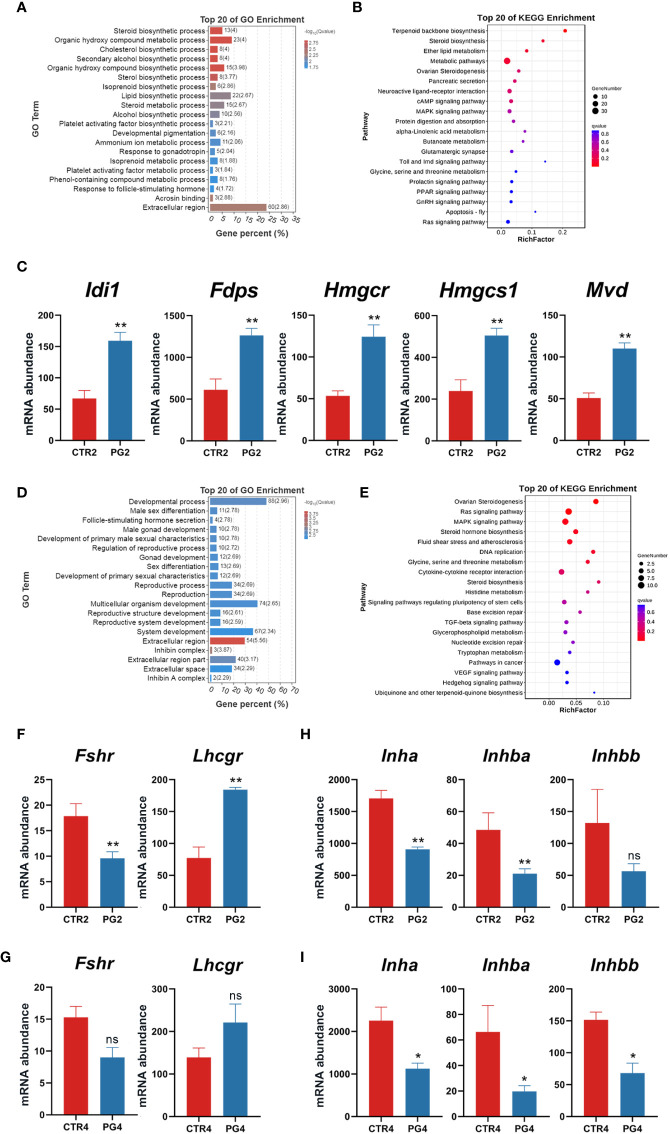
The PG group had more oocytes, blastocysts, and corpus luteum after superovulation than the CTR group. However, the mRNA expression of leukemia inhibitory factor () and the number of implantation sites were reduced in the PG group. The ELISA assay revealed that superovulation increased ovarian estrogen secretion. The transcriptome analysis showed that superphysiological estrogen led to a response of the uterus to a high estrogen signal, resulting in abnormal endometrium and extracellular matrix remodeling and up-regulation of ion transport and inflammation-related genes.
Our findings suggest that a combination of PMSG and GnRHa trigger impaired embryo implantation in mice, as the excessive uterine response to superphysiological estrogen levels can lead to the change of gene expression related to endometrial remodeling, abnormal expression of uterine ion transport genes and excessive immune-related genes.
超排卵是辅助生殖技术中的关键步骤,但使用人绒毛膜促性腺激素(hCG)作为超排卵的触发剂可导致卵巢过度刺激。因此,尽管与自然周期相比,促性腺激素释放激素激动剂(GnRHa)触发剂与更高的妊娠失败率相关,但它的使用已越来越普遍。本研究旨在探讨GnRHa触发剂对小鼠模型胚胎着床的影响。
超排卵(PG)组小鼠注射7.5 IU的孕马血清促性腺激素(PMSG),48小时后注射3.5μg的GnRHa(亮丙瑞林),而对照组(CTR)小鼠自然交配。我们比较了两组之间的卵母细胞、囊胚和黄体数量以及自然囊胚移植后的着床部位。在交配后2天和4天收集卵巢、子宫和血清用于qRT-PCR、转录组测序和激素测定。
PG组超排卵后的卵母细胞、囊胚和黄体数量均多于CTR组。然而,PG组白血病抑制因子()的mRNA表达和着床部位数量减少。ELISA分析显示超排卵增加了卵巢雌激素分泌。转录组分析表明,超生理水平的雌激素导致子宫对高雌激素信号产生反应,从而导致子宫内膜和细胞外基质重塑异常以及离子转运和炎症相关基因上调。
我们的研究结果表明,PMSG和GnRHa触发剂联合使用会损害小鼠的胚胎着床,因为子宫对超生理雌激素水平的过度反应会导致与子宫内膜重塑相关的基因表达改变、子宫离子转运基因异常表达以及免疫相关基因过度表达。