Poulet Axel, Zhao Min, Peng Yongyan, Tham FangFei, Jaudal Mauren, Zhang Lulu, van Wolfswinkel Josien C, Putterill Joanna
Department of Molecular, Cellular and Developmental Biology, Faculty of Arts and Sciences, Yale University, New Haven, CT, United States.
Flowering Lab, School of Biological Sciences, University of Auckland, Auckland, New Zealand.
Front Plant Sci. 2024 Feb 26;15:1357924. doi: 10.3389/fpls.2024.1357924. eCollection 2024.
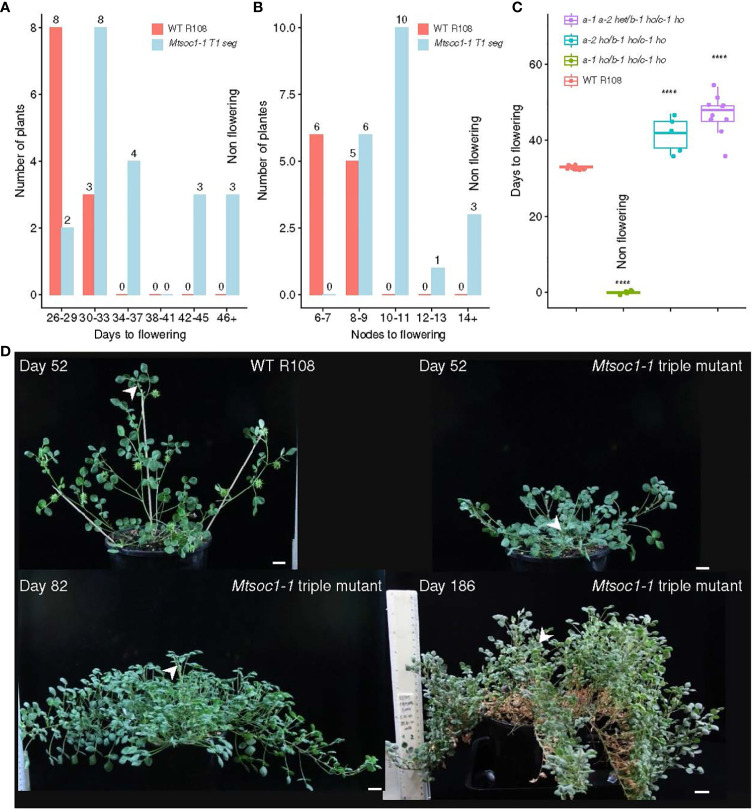
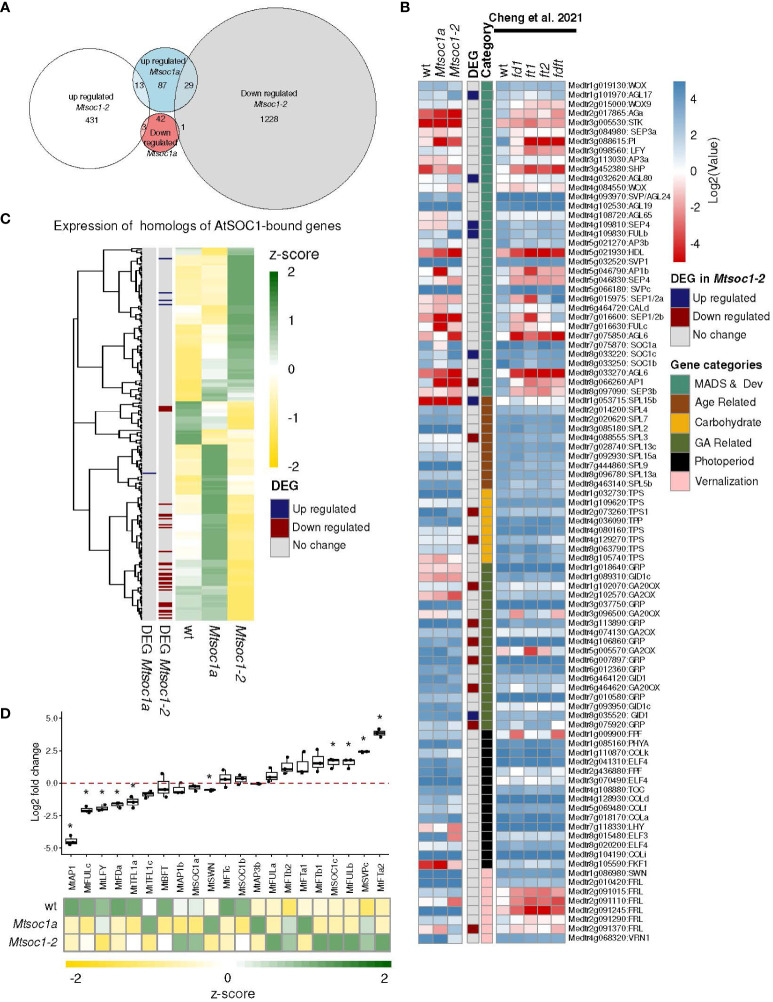
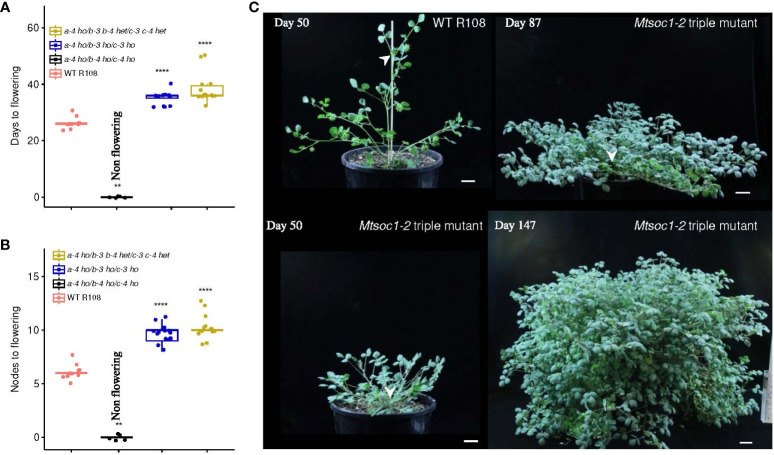
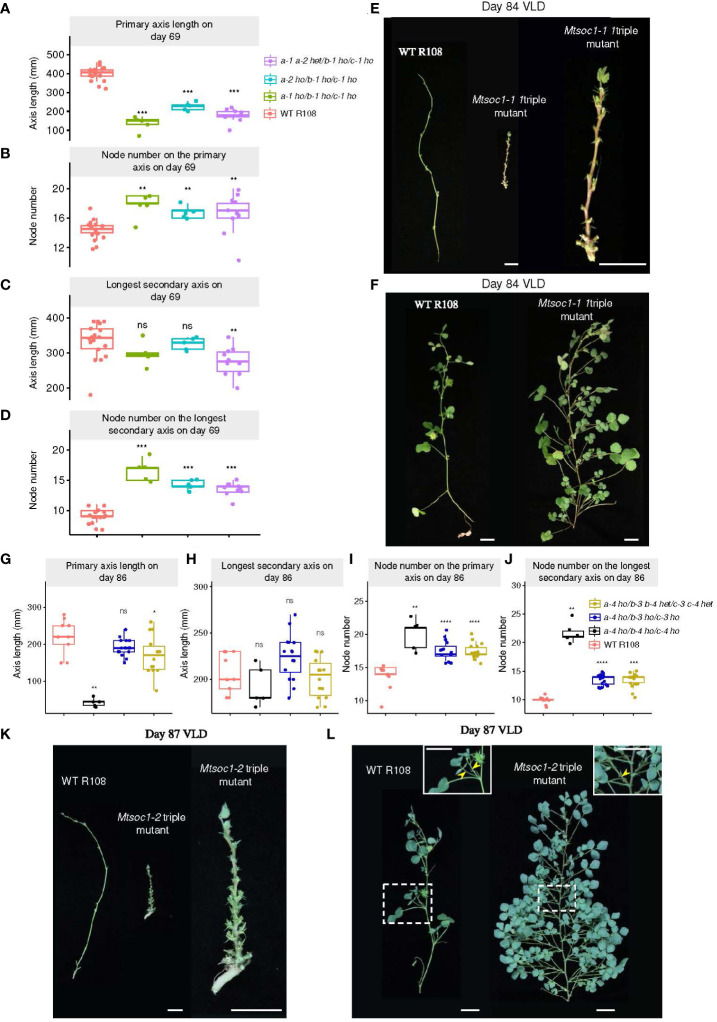
Optimized flowering time is an important trait that ensures successful plant adaptation and crop productivity. genes encode MADS transcription factors, which are known to play important roles in flowering control in many plants. This includes the best-characterized eudicot model (Arabidopsis), where promotes flowering and functions as a floral integrator gene integrating signals from different flowering-time regulatory pathways. (Medicago) is a temperate reference legume with strong genomic and genetic resources used to study flowering pathways in legumes. Interestingly, despite responding to similar floral-inductive cues of extended cold (vernalization) followed by warm long days (VLD), such as in winter annual Arabidopsis, Medicago lacks FLC and CO which are key regulators of flowering in Arabidopsis. Unlike Arabidopsis with one gene, multiple gene duplication events have given rise to three paralogs within the genus in legumes: one Fabaceae group A gene, , and two tandemly repeated Fabaceae group B genes, and . Previously, we showed that has unique functions in floral promotion in Medicago. The retroelement insertion single mutant showed moderately delayed flowering in long- and short-day photoperiods, with and without prior vernalization, compared to the wild-type. In contrast, single mutants did not have altered flowering time or flower development, indicating that it was redundant in an otherwise wild-type background. Here, we describe the generation of triple mutant lines using CRISPR-Cas9 gene editing. We studied two independent triple mutant lines that segregated plants that did not flower and were bushy under floral inductive VLD. Genotyping indicated that these non-flowering plants were homozygous for the predicted strong mutant alleles of the three genes. Gene expression analyses using RNA-seq and RT-qPCR indicated that these plants remained vegetative. Overall, the non-flowering triple mutants were dramatically different from the single mutant and the Arabidopsis mutant; implicating multiple genes in critical overlapping roles in the transition to flowering in Medicago.
优化开花时间是确保植物成功适应和作物高产的重要性状。基因编码MADS转录因子,已知其在许多植物的开花控制中发挥重要作用。这包括特征最明确的双子叶植物模式植物(拟南芥),其中促进开花并作为整合来自不同开花时间调控途径信号的花整合基因发挥作用。苜蓿是一种温带参考豆科植物,拥有强大的基因组和遗传资源,用于研究豆科植物的开花途径。有趣的是,尽管苜蓿对延长寒冷(春化)后接着温暖长日照(VLD)这种类似的花诱导信号有反应,就像冬性一年生拟南芥那样,但苜蓿缺乏拟南芥中开花的关键调节因子FLC和CO。与拟南芥只有一个基因不同,多次基因复制事件在豆科植物的属内产生了三个同源基因:一个豆科A组基因、和两个串联重复的豆科B组基因、。此前,我们表明在苜蓿的花促进中具有独特功能。与野生型相比,逆转录元件插入单突变体在长日照和短日照光周期下,无论有无预先春化,开花都适度延迟。相比之下,单突变体的开花时间或花发育没有改变,表明在其他野生型背景下它是冗余的。在这里,我们描述了使用CRISPR-Cas9基因编辑产生三突变体系。我们研究了两个独立的三突变体系,它们分离出在花诱导VLD条件下不开花且呈丛生状的植株。基因分型表明这些不开花植株对于三个基因预测的强突变等位基因是纯合的。使用RNA测序和逆转录定量PCR进行的基因表达分析表明这些植株保持营养生长状态。总体而言,不开花的三突变体与单突变体和拟南芥突变体有显著差异;这表明多个基因在苜蓿向开花转变中起关键的重叠作用。