Tognetti Linda, Cartocci Alessandra, Lallas Aimilios, Moscarella Elvira, Stanganelli Ignazio, Nazzaro Gianluca, Paoli John, Fargnoli Maria Concetta, Broganelli Paolo, Kittler Harald, Perrot Jean-Luc, Cataldo Gennaro, Cevenini Gabriele, Lo Conte Sofia, Simone Leonardelli, Cinotti Elisa, Rubegni Pietro
Dermatology Unit, Department of Medical, Surgical and Neurosciences, University of Siena, 53100 Siena, Italy.
First Department of Dermatology, Aristotle University, 54124 Thessaloniki, Greece.
Diagnostics (Basel). 2024 Feb 20;14(5):460. doi: 10.3390/diagnostics14050460.
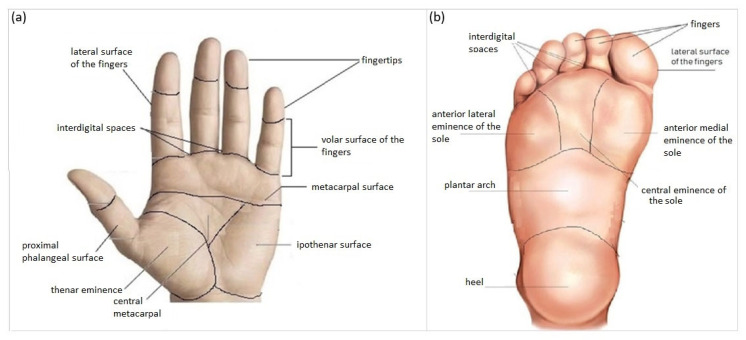
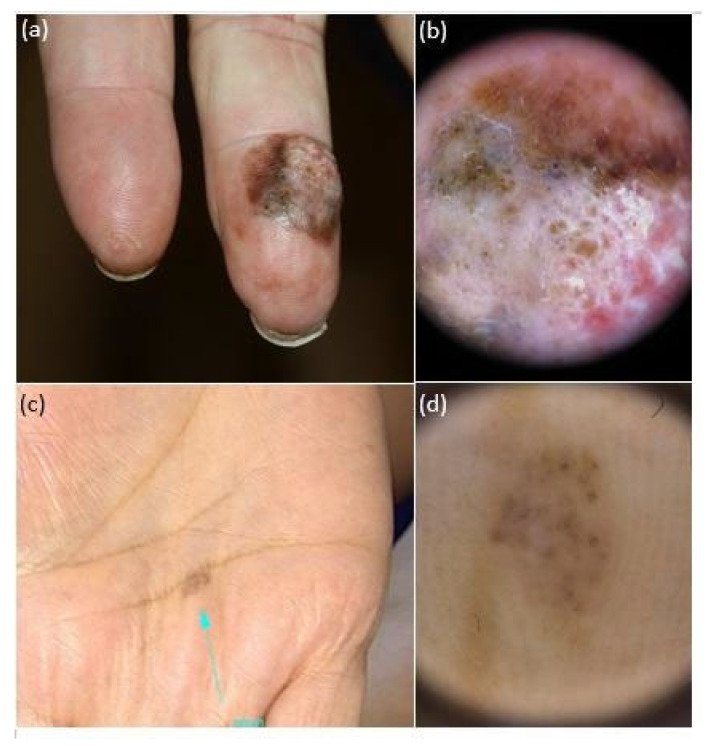
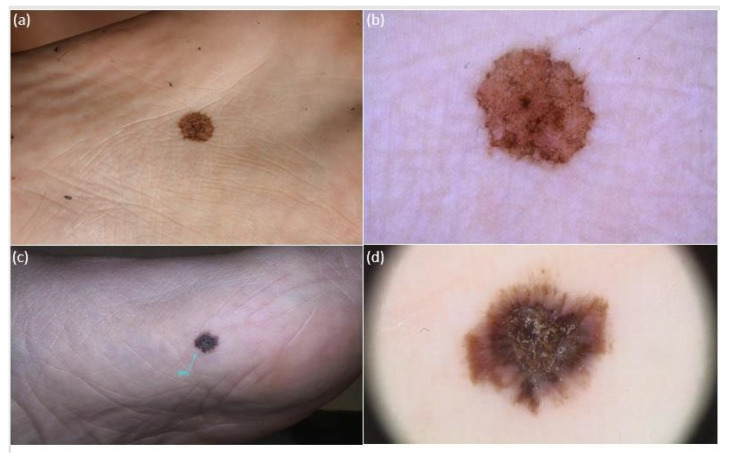
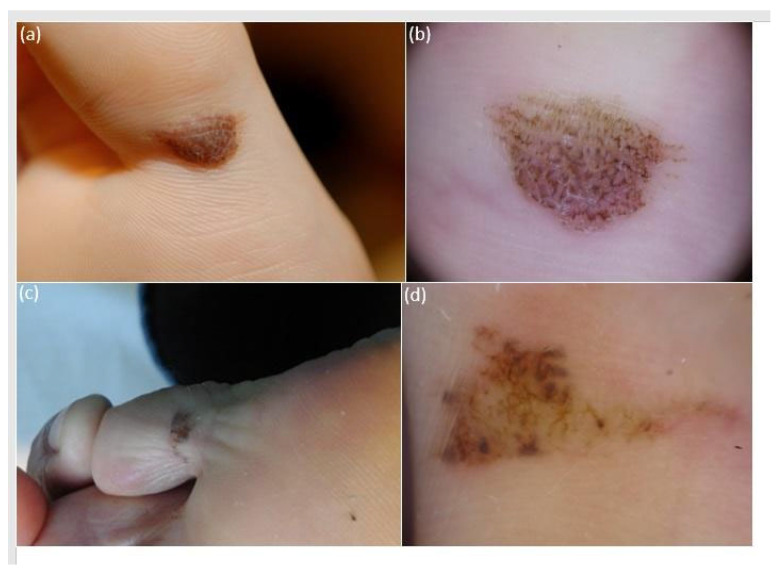
The differential diagnosis of atypical melanocytic palmoplantar skin lesions (aMPLs) represents a diagnostic challenge, including atypical nevi (AN) and early melanomas (MMs) that display overlapping clinical and dermoscopic features. We aimed to set up a multicentric dataset of aMPL dermoscopic cases paired with multiple anamnestic risk factors and demographic and morphologic data. Each aMPL case was paired with a dermoscopic and clinical picture and a series of lesion-related data (maximum diameter value; location on the palm/sole in 17 areas; histologic diagnosis; and patient-related data (age, sex, family history of melanoma/sunburns, phototype, pheomelanin, eye/hair color, multiple/dysplastic body nevi, and traumatism on palms/soles). A total of 542 aMPL cases-113 MM and 429 AN-were collected from 195 males and 347 females. No sex prevalence was found for melanomas, while women were found to have relatively more nevi. Melanomas were prevalent on the heel, plantar arch, and fingers in patients aged 65.3 on average, with an average diameter of 17 mm. Atypical nevi were prevalent on the plantar arch and palmar area of patients aged 41.33 on average, with an average diameter of 7 mm. Keeping in mind the risk profile of an aMPL patient can help obtain a timely differentiation between malignant/benign cases, thus avoiding delayed and inappropriate excision, respectively, with the latter often causing discomfort/dysfunctional scarring, especially at acral sites.
非典型黑素细胞性掌跖皮肤病变(aMPLs)的鉴别诊断是一项诊断挑战,包括具有重叠临床和皮肤镜特征的非典型痣(AN)和早期黑素瘤(MMs)。我们旨在建立一个多中心数据集,包含aMPL皮肤镜病例,并配对多个既往风险因素以及人口统计学和形态学数据。每个aMPL病例均配对有一张皮肤镜和临床图片以及一系列病变相关数据(最大直径值;手掌/足底17个区域的位置;组织学诊断)和患者相关数据(年龄、性别、黑素瘤/晒伤家族史、光类型、褐黑素、眼睛/头发颜色、多发/发育异常的身体痣以及手掌/足底的创伤)。共收集了542例aMPL病例——113例MM和429例AN——来自195名男性和347名女性。未发现黑素瘤有性别差异,而女性的痣相对较多。黑素瘤在平均年龄65.3岁的患者中足跟、足底弓和手指部位较为常见,平均直径为17毫米。非典型痣在平均年龄41.33岁的患者中足底弓和手掌部位较为常见,平均直径为7毫米。牢记aMPL患者的风险特征有助于及时区分恶性/良性病例,从而分别避免延迟切除和不适当切除,后者往往会导致不适/功能障碍性瘢痕形成,尤其是在肢端部位。