Latorre Jessica, de Vera Nuria, Santalucía Tomàs, Balada Rafel, Marazuela-Duque Anna, Vaquero Alejandro, Planas Anna M, Petegnief Valérie
Department of Neuroscience and Experimental Therapeutics, Institute for Biomedical Research of Barcelona (IIBB), Spanish Research Council (CSIC), 08036 Barcelona, Spain.
Department of Fundamental and Clinical Nursing, School of Nursing, University of Barcelona, 08907 L'Hospitalet de Llobregat, Spain.
Int J Mol Sci. 2024 Mar 1;25(5):2856. doi: 10.3390/ijms25052856.
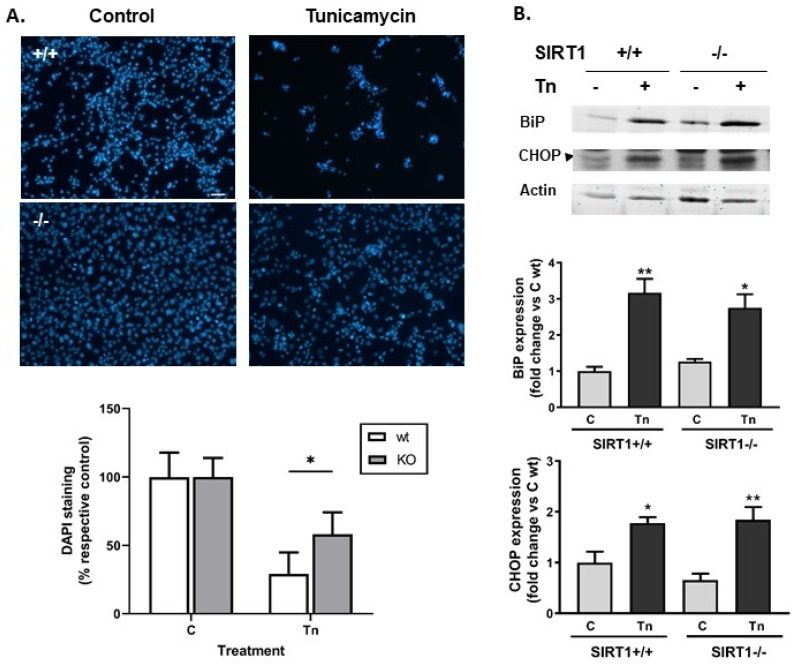
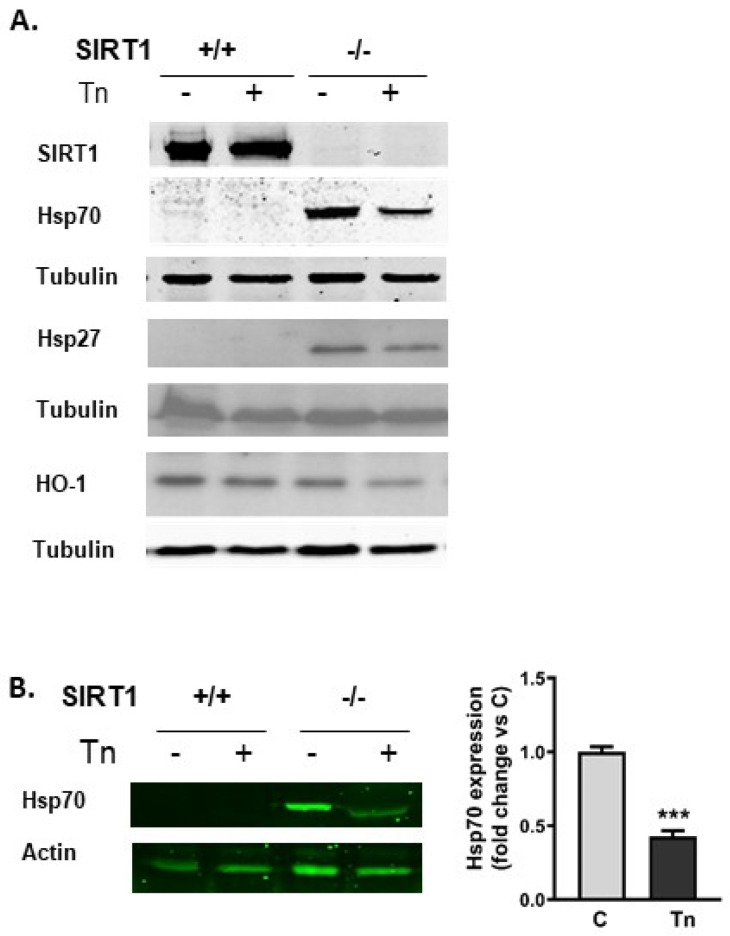
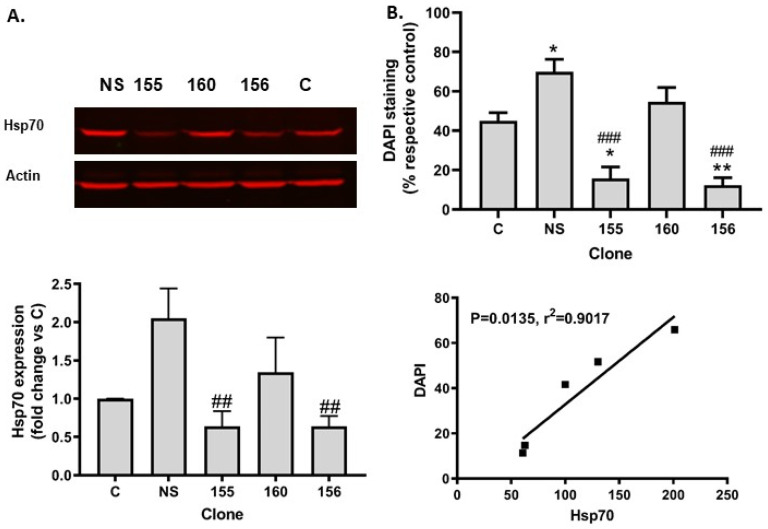
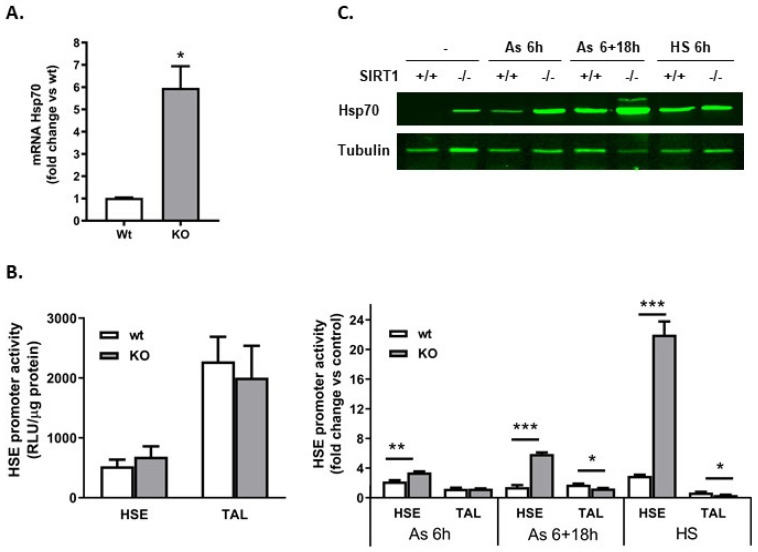
Histone deacetylase SIRT1 represses gene expression through the deacetylation of histones and transcription factors and is involved in the protective cell response to stress and aging. However, upon endoplasmic reticulum (ER) stress, SIRT1 impairs the IRE1α branch of the unfolded protein response (UPR) through the inhibition of the transcriptional activity of XBP-1 and SIRT1 deficiency is beneficial under these conditions. We hypothesized that SIRT1 deficiency may unlock the blockade of transcription factors unrelated to the UPR promoting the synthesis of chaperones and improving the stability of immature proteins or triggering the clearance of unfolded proteins. SIRT1+/+ and SIRT1-/- fibroblasts were exposed to the ER stress inducer tunicamycin and cell survival and expression of heat shock proteins were analyzed 24 h after the treatment. We observed that SIRT1 loss significantly reduced cell sensitivity to ER stress and showed that SIRT1-/- but not SIRT1+/+ cells constitutively expressed high levels of phospho-STAT3 and heat shock proteins. Hsp70 silencing in SIRT1-/- cells abolished the resistance to ER stress. Furthermore, accumulation of ubiquitinated proteins was lower in SIRT1-/- than in SIRT1+/+ cells. Our data showed that SIRT1 deficiency enabled chaperones upregulation and boosted the proteasome activity, two processes that are beneficial for coping with ER stress.
组蛋白去乙酰化酶SIRT1通过组蛋白和转录因子的去乙酰化作用来抑制基因表达,并参与细胞对应激和衰老的保护性反应。然而,在内质网(ER)应激时,SIRT1通过抑制XBP-1的转录活性而损害未折叠蛋白反应(UPR)的IRE1α分支,在这些条件下SIRT1缺乏是有益的。我们推测,SIRT1缺乏可能解除与UPR无关的转录因子的阻滞,促进伴侣蛋白的合成,提高未成熟蛋白的稳定性或触发未折叠蛋白的清除。将SIRT1+/+和SIRT1-/-成纤维细胞暴露于ER应激诱导剂衣霉素中,并在处理后24小时分析细胞存活率和热休克蛋白的表达。我们观察到SIRT1缺失显著降低了细胞对ER应激的敏感性,并表明SIRT1-/-细胞而非SIRT1+/+细胞组成性地高表达磷酸化STAT3和热休克蛋白。SIRT1-/-细胞中Hsp70沉默消除了对ER应激的抗性。此外,SIRT1-/-细胞中泛素化蛋白的积累低于SIRT1+/+细胞。我们的数据表明,SIRT1缺乏能够上调伴侣蛋白并增强蛋白酶体活性,这两个过程都有利于应对ER应激。