Department of Public Health, College of Medicine and Health sciences, Injibara University, Injibara, Ethiopia.
Department of Environmental health, College of medicine and Health Sciences, Injibara University, Injibara, Ethiopia.
Ital J Pediatr. 2024 Mar 13;50(1):49. doi: 10.1186/s13052-024-01612-1.
Despite strategies and recommendations for complementary feeding initiation were applied globally, mothers initiated complementary feeding to the infants on time was low. Previous works of literatures were not identified the effect of parity on time to initiate complementary feeding. Particularly, evidences regarding to this in Ethiopia is scanty. Therefore, this study aimed to identify the effect of parity on time to initiate complementary feeding among mother-infants pairs in Northwest Ethiopia.
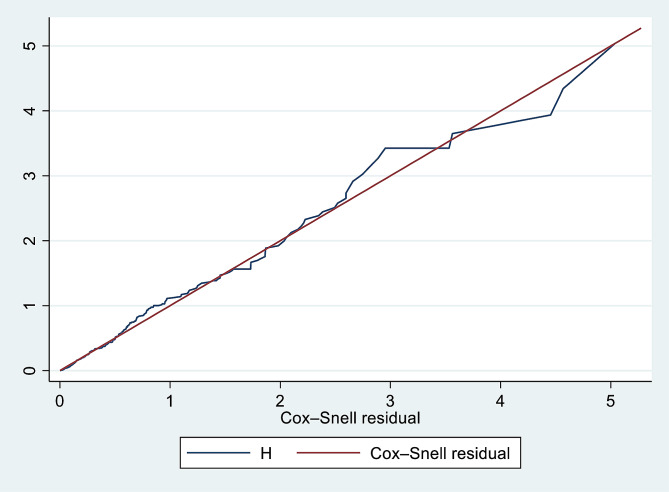
A community-based prospective cohort study was carried out among 732 primipara, and 1464 multipara mothers who had a live birth in Northwest Ethiopia. Data were collected using Kobo collect software at the start of and on a monthly bases until the end of the follow up period. Parity as exposure variable and other confounders were analyzed using cox proportional hazard regression. Kaplan-Meier survival curve and the Schoenfeld residuals global test (P-value = 0.4861) was performed. Hazard ratio (HR) with 95% confidence intervals (CI) was used to declare statistical significance of predictors.
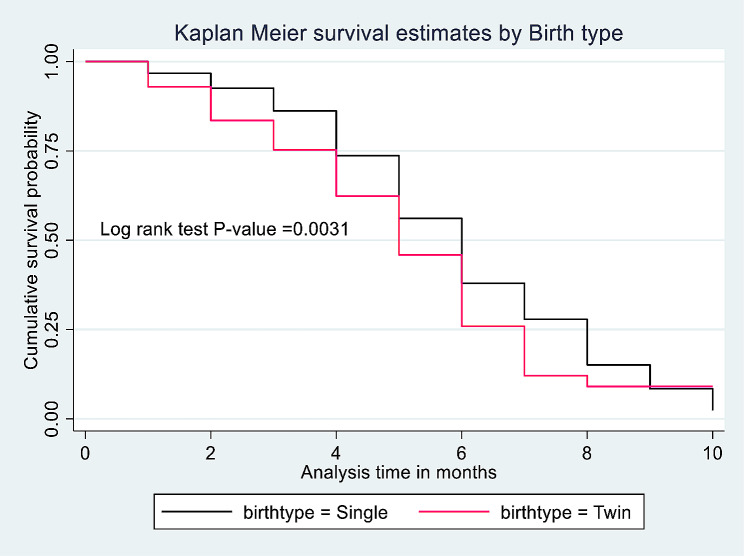
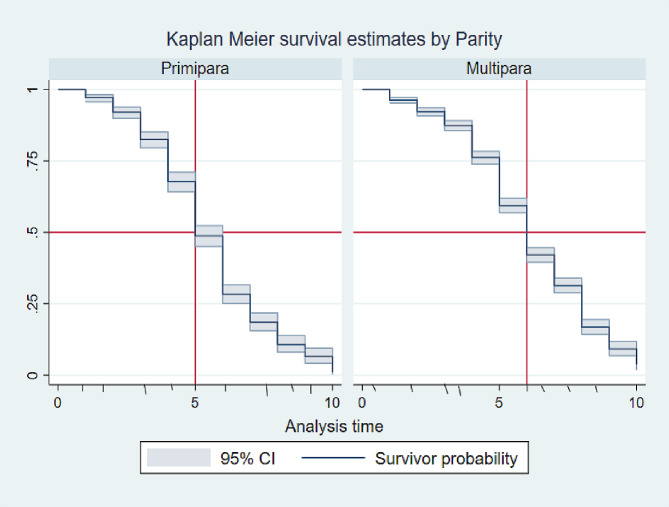
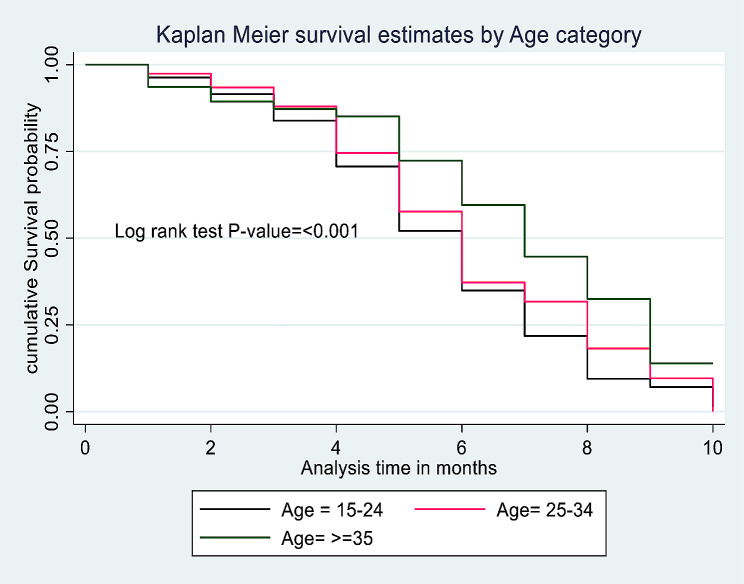
The overall incidence rate of initiation of complementary feeding among primipara and multipara mothers were 16.27 (95%CI: 15.04, 17.61) and 13.30 (95%CI: 12.53, 14.12) person months' observations respectively. The median time to initiate complementary feeding among primipara and multipara mothers for their infants was 5 and 6 months respectively. Primipara mothers had a 30% higher rate to initiate complementary feeding early (AHR = 1.30, 95%CI: 1.17, 1.43). Age from 15 to 24 and 25-34 years (AHR = 1.69, 95%CI: 1.36, 2.09; and AHR = 1.45, 95%CI: 1.17, 1.81) and Birth type (twin) (AHR = 1.29, 95%CI: 1.02, 1.64) were statistically significant predictors for time to initiate complementary feeding.
Parity was identified as a statistically significant predictor for time to initiate complementary feeding. The incidence rate of early and late initiation of complementary feeding was higher among primipara than multipara mothers. Besides, the median time to initiate complementary feeding was earlier among primipara than multipara mothers. So, a parity based complementary feeding practice education should be advocated to tackle the gap and further reduce infants and children malnutrition. Relatively younger age and twin delivered mothers initiated complementary feeding against the recommendation. Therefore, intervention considering such statistically significant predictors could have a public health importance.
尽管全球都采取了策略和建议来启动补充喂养,但按时为婴儿启动补充喂养的母亲比例仍然很低。以前的文献工作没有确定生育次数对开始补充喂养时间的影响。特别是,在埃塞俄比亚,这方面的证据很少。因此,本研究旨在确定生育次数对埃塞俄比亚西北部母婴对开始补充喂养时间的影响。
在埃塞俄比亚西北部,对 732 名初产妇和 1464 名多产妇进行了一项基于社区的前瞻性队列研究。在开始时和每月使用 Kobo 收集软件收集数据,直到随访期结束。生育次数作为暴露变量,其他混杂因素采用 Cox 比例风险回归进行分析。进行 Kaplan-Meier 生存曲线和 Schoenfeld 残差全局检验(P 值=0.4861)。使用危险比(HR)和 95%置信区间(CI)来宣布预测因子的统计学意义。
初产妇和多产妇母亲开始补充喂养的总发生率分别为 16.27(95%CI:15.04,17.61)和 13.30(95%CI:12.53,14.12)人月观察。初产妇和多产妇母亲为婴儿开始补充喂养的中位数时间分别为 5 个月和 6 个月。初产妇母亲早开始补充喂养的比例高 30%(AHR=1.30,95%CI:1.17,1.43)。15-24 岁和 25-34 岁(AHR=1.69,95%CI:1.36,2.09;和 AHR=1.45,95%CI:1.17,1.81)和分娩类型(双胞胎)(AHR=1.29,95%CI:1.02,1.64)是开始补充喂养时间的统计学显著预测因子。
生育次数被确定为开始补充喂养时间的统计学显著预测因子。初产妇比多产妇母亲早开始和晚开始补充喂养的发生率更高。此外,初产妇母亲开始补充喂养的中位数时间早于多产妇母亲。因此,应提倡基于生育次数的补充喂养实践教育,以解决这一差距,进一步减少婴儿和儿童营养不良。相对较年轻的年龄和双胞胎分娩的母亲违背了建议。因此,考虑到这些统计学上显著的预测因子的干预措施可能具有公共卫生重要性。