Abdurahman Ahmed A, Chaka Eshetu E, Bule Mohammed H, Niaz Kamal
Department of Community Nutrition, School of Nutritional Sciences and Dietetics, Tehran University of Medical Sciences International Campus (TUMS-IC), Tehran, Iran.
Department of Public Health, College of Medicine and Health Sciences, Ambo University, Oromia, Ethiopia.
Heliyon. 2019 Jul 2;5(7):e01865. doi: 10.1016/j.heliyon.2019.e01865. eCollection 2019 Jul.
BACKGROUND & AIM: Concurrent estimates on the magnitude and evidence on the determinants of complementary feeding (CF) practices in Ethiopia are currently disparate. Hence, this systematic review and meta-analysis assessed the magnitude and determinants of CF among children age 6-23 months in Ethiopia.
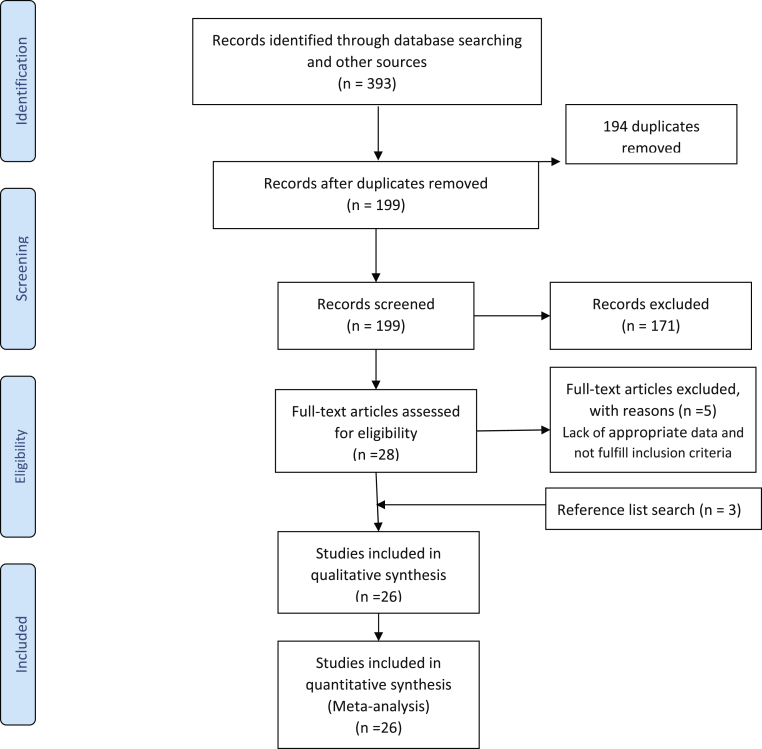
Studies from various databases published until July 2018 were identified, selected, extracted and assessed for risk of bias by two authors independently. A random-effects model was used to pool the prevalence and odds ratios (ORs).
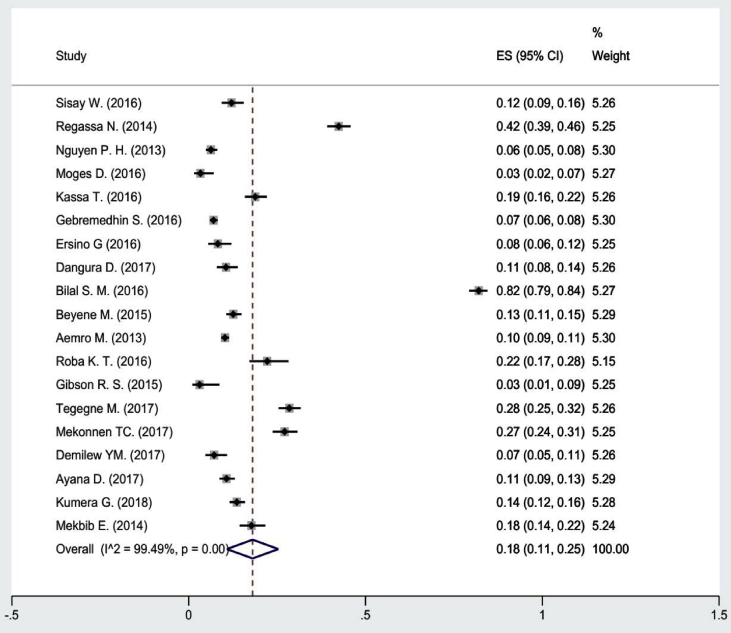
26 studies with 17, 383 children were included. The pooled prevalence estimate of timely initiated CF, minimum dietary diversity (DD), minimum meal frequency and minimum acceptable diet were 61.0%, 18.0%, 56.0%, and 10.0% respectively. The pooled prevalence of timely initiation and minimum DD were higher in Northern Ethiopia. On the other hand, except for the minimum meal frequency, all the three core indicators of CF were better in urban than rural settings. Child age, maternal and/or paternal education, paternal involvement, maternal DD, antenatal and postnatal care, and place of delivery were the main determinants that can increase appropriate CF practices.
The reported estimates of the prevalence of core CF indicators in Ethiopia remained poor. Therefore, the authors would like to acknowledge the effort that has been done by the minister of health and its partners including Alive & Thrive to improving CF practices in the country, however, these programs should be done more thoroughly, and scaled up by applying and adapting tested, proven approaches and tools in contexts.
目前,关于埃塞俄比亚辅食喂养(CF)行为的规模及其决定因素的同时期估计存在差异。因此,本系统评价和荟萃分析评估了埃塞俄比亚6至23个月儿童中CF的规模及其决定因素。
两名作者独立识别、筛选、提取并评估了截至2018年7月发表的来自各种数据库的研究的偏倚风险。采用随机效应模型汇总患病率和比值比(OR)。
纳入了26项研究,共17383名儿童。及时开始CF、最低饮食多样性(DD)、最低进餐频率和最低可接受饮食的汇总患病率估计分别为61.0%、18.0%、56.0%和10.0%。埃塞俄比亚北部及时开始CF和最低DD的汇总患病率较高。另一方面,除最低进餐频率外,CF的所有三个核心指标在城市地区均优于农村地区。儿童年龄、母亲和/或父亲的教育程度、父亲的参与度、母亲的DD、产前和产后护理以及分娩地点是可以增加适当CF行为的主要决定因素。
埃塞俄比亚核心CF指标患病率的报告估计仍然很低。因此,作者谨感谢卫生部及其合作伙伴(包括“生机与繁荣”组织)为改善该国CF行为所做的努力,然而,这些项目应做得更彻底,并通过在不同背景下应用和改编经过测试和验证的方法及工具来扩大规模。