CAS Key Laboratory for Plant Diversity and Biogeography of East Asia & Yunnan Key Laboratory of Crop Wild Relatives Omics, Kunming Institute of Botany, Chinese Academy of Sciences, Kunming 650201, China; University of Chinese Academy of Sciences, Beijing 100049, China.
Germplasm Bank of Wild Species & Yunnan Key Laboratory for Crop Wild Relatives Omics, Kunming Institute of Botany, Chinese Academy of Sciences, Kunming 650201, China.
Plant Commun. 2024 Jul 8;5(7):100878. doi: 10.1016/j.xplc.2024.100878. Epub 2024 Mar 11.
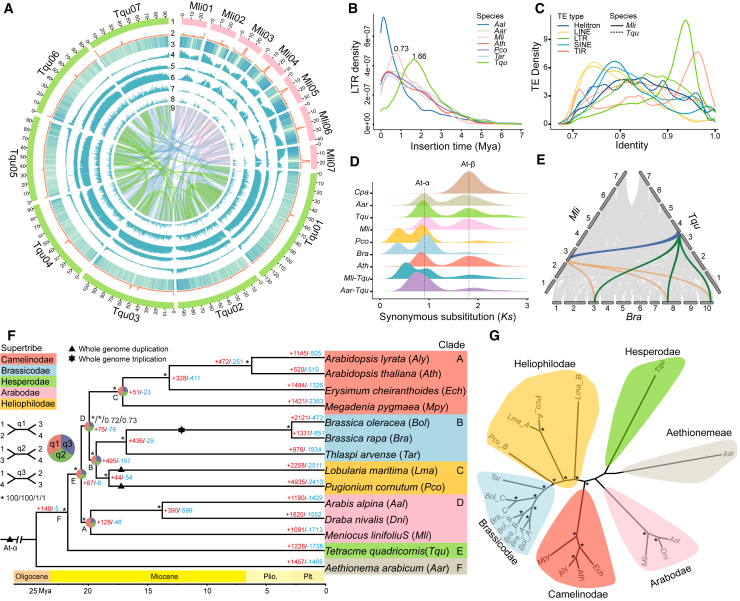
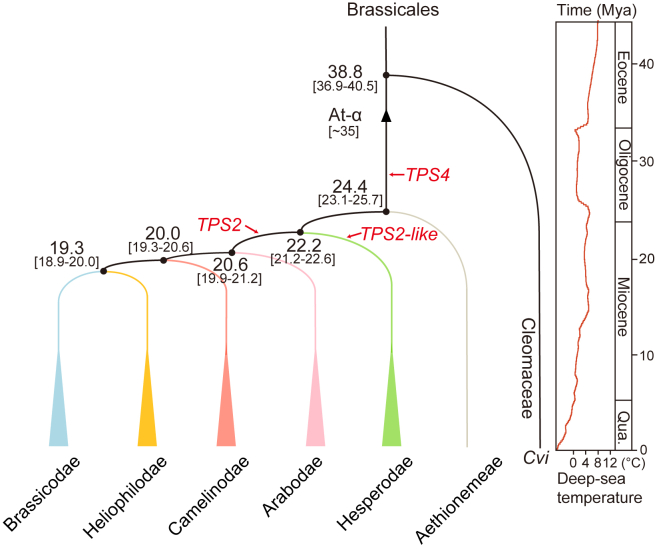
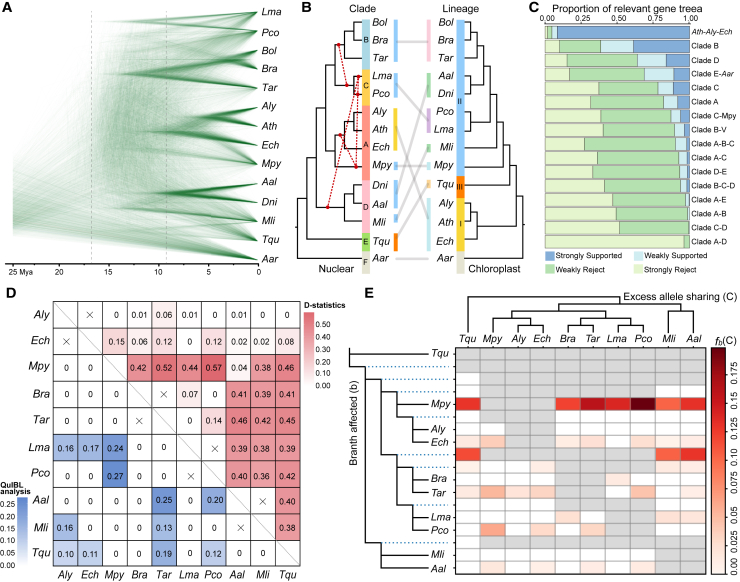
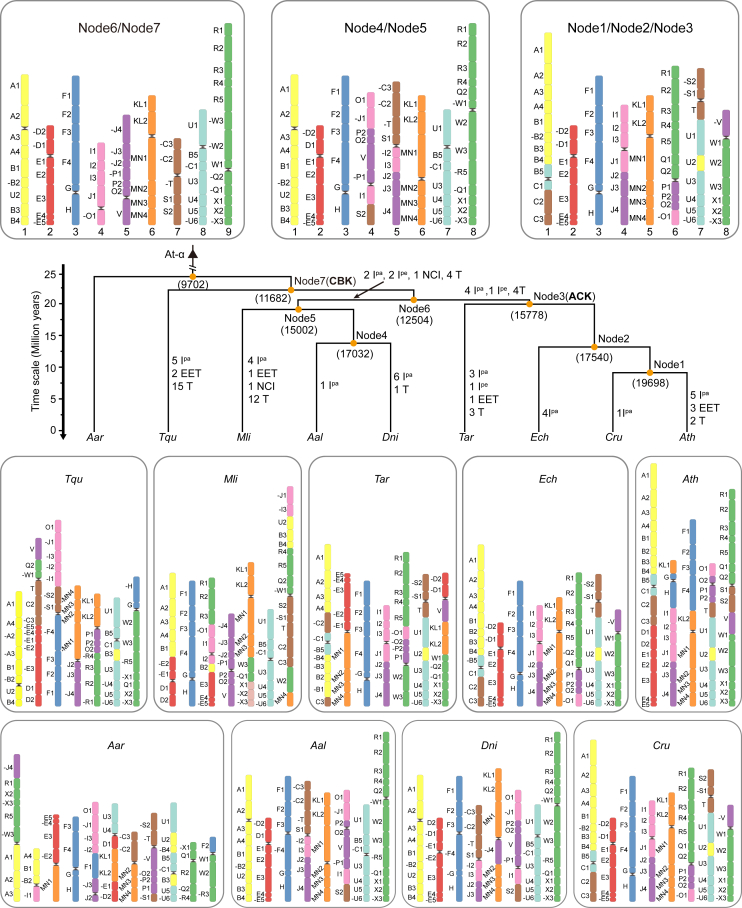
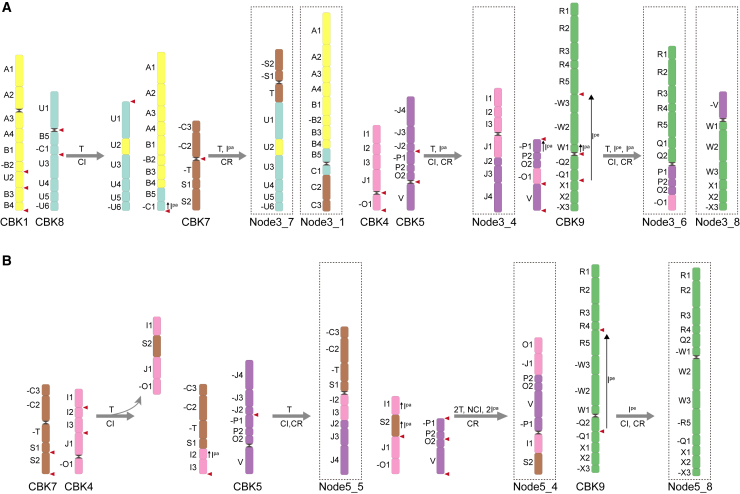
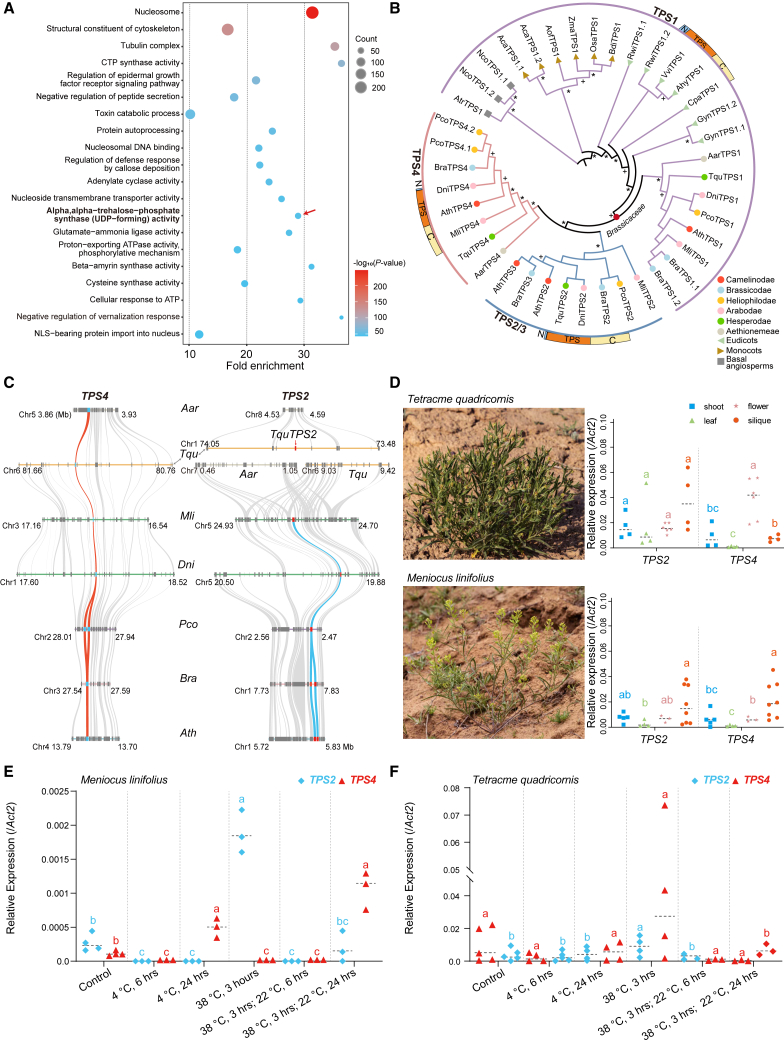
Brassicaceae represents an important plant family from both a scientific and economic perspective. However, genomic features related to the early diversification of this family have not been fully characterized, especially upon the uplift of the Tibetan Plateau, which was followed by increasing aridity in the Asian interior, intensifying monsoons in Eastern Asia, and significantly fluctuating daily temperatures. Here, we reveal the genomic architecture that accompanied early Brassicaceae diversification by analyzing two high-quality chromosome-level genomes for Meniocus linifolius (Arabodae; clade D) and Tetracme quadricornis (Hesperodae; clade E), together with genomes representing all major Brassicaceae clades and the basal Aethionemeae. We reconstructed an ancestral core Brassicaceae karyotype (CBK) containing 9 pseudochromosomes with 65 conserved syntenic genomic blocks and identified 9702 conserved genes in Brassicaceae. We detected pervasive conflicting phylogenomic signals accompanied by widespread ancient hybridization events, which correlate well with the early divergence of core Brassicaceae. We identified a successive Brassicaceae-specific expansion of the class I TREHALOSE-6-PHOSPHATE SYNTHASE 1 (TPS1) gene family, which encodes enzymes with essential regulatory roles in flowering time and embryo development. The TPS1s were mainly randomly amplified, followed by expression divergence. Our results provide fresh insights into historical genomic features coupled with Brassicaceae evolution and offer a potential model for broad-scale studies of adaptive radiation under an ever-changing environment.
芸薹科(Brassicaceae)是一个具有重要科学和经济意义的植物科。然而,关于该科早期多样化的基因组特征尚未得到充分的描述,特别是在青藏高原抬升之后,亚洲内陆地区变得更加干旱,东亚季风增强,日温差显著波动。在这里,我们通过分析两种高质量的染色体水平基因组,即山芥菜属(Meniocus linifolius,Arabodae;分支 D)和四棱果属(Tetracme quadricornis,Hesperodae;分支 E),以及代表所有主要芸薹科分支和基部十字花科(Aethionemeae)的基因组,揭示了伴随芸薹科早期多样化的基因组结构。我们重建了一个包含 9 个假染色体的祖先核心芸薹科染色体组(CBK),其中包含 65 个保守的同源基因组块,并在芸薹科中鉴定了 9702 个保守基因。我们检测到普遍存在的冲突系统发育信号,伴随着广泛的古老杂交事件,这些信号与核心芸薹科的早期分化密切相关。我们发现了一类 I 海藻糖-6-磷酸合酶 1(TPS1)基因家族在芸薹科中的连续扩张,该基因家族编码在开花时间和胚胎发育中具有重要调节作用的酶。TPS1 主要是随机扩增的,然后是表达的分化。我们的研究结果为历史基因组特征与芸薹科进化相结合提供了新的见解,并为在不断变化的环境下进行广泛的适应性辐射研究提供了一个潜在的模型。