Liu Xi-Hui, Miao Yi-Yi, Qian Lang, Shi Zhao-Ting, Wang Yu, Su Jiong-Long, Chang Cai, Chen Jia-Ying, Chen Jian-Gang, Li Jia-Wei
Department of Medical Ultrasound, Fudan University Shanghai Cancer Center, Shanghai, China.
Department of Oncology, Shanghai Medical College, Fudan University, Shanghai, China.
Front Oncol. 2024 Feb 27;14:1337631. doi: 10.3389/fonc.2024.1337631. eCollection 2024.
Pleomorphic adenoma (PA), often with the benign-like imaging appearances similar to Warthin tumor (WT), however, is a potentially malignant tumor with a high recurrence rate. It is worse that pathological fine-needle aspiration cytology (FNAC) is difficult to distinguish PA and WT for inexperienced pathologists. This study employed deep learning (DL) technology, which effectively utilized ultrasound images, to provide a reliable approach for discriminating PA from WT.
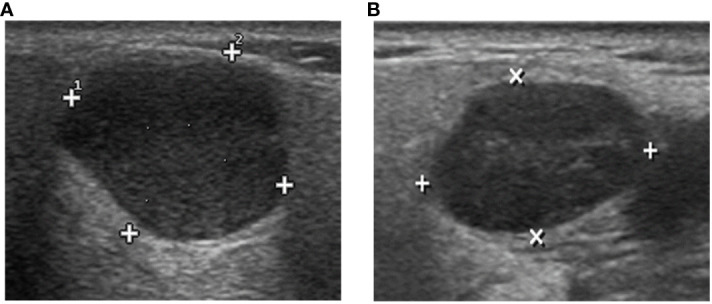
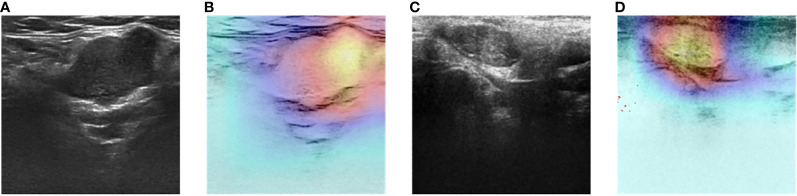
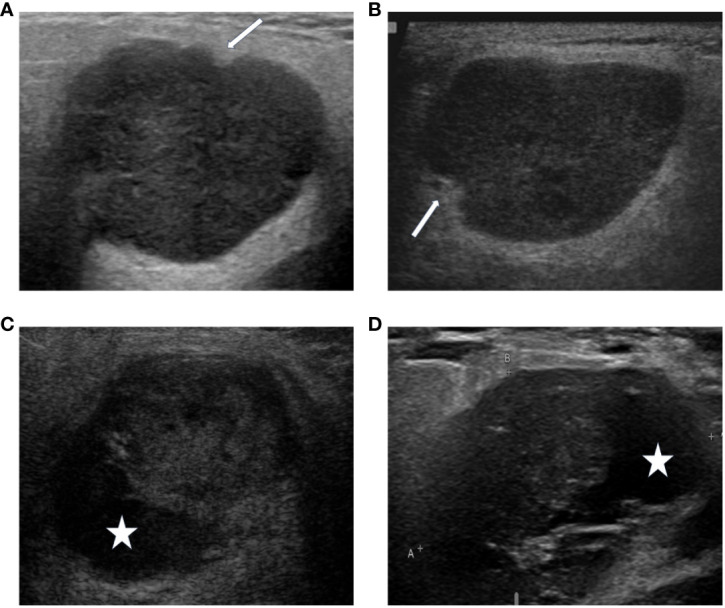
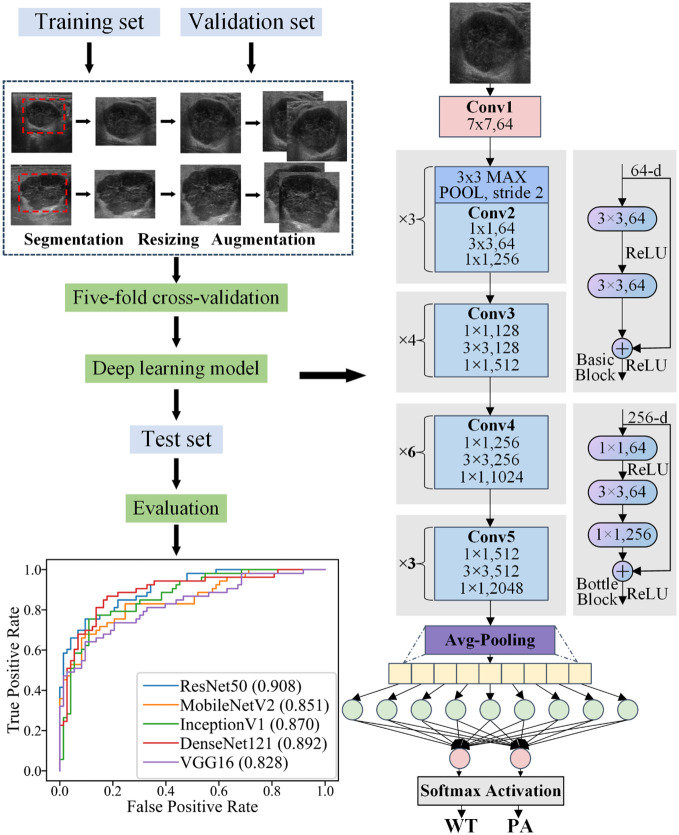
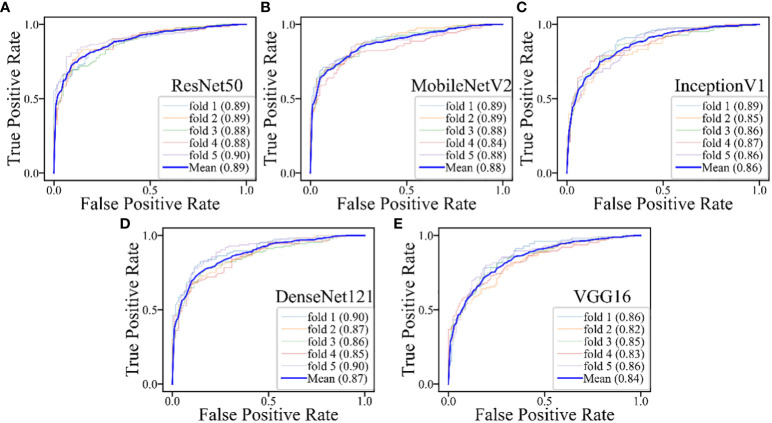
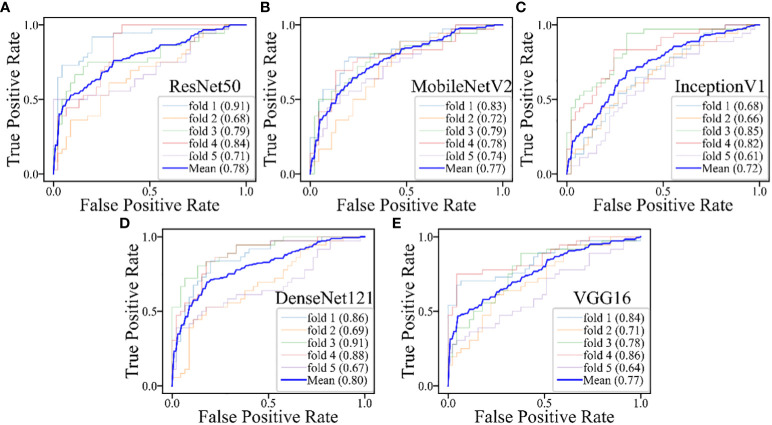
488 surgically confirmed patients, including 266 with PA and 222 with WT, were enrolled in this study. Two experienced ultrasound physicians independently evaluated all images to differentiate between PA and WT. The diagnostic performance of preoperative FNAC was also evaluated. During the DL study, all ultrasound images were randomly divided into training (70%), validation (20%), and test (10%) sets. Furthermore, ultrasound images that could not be diagnosed by FNAC were also randomly allocated to training (60%), validation (20%), and test (20%) sets. Five DL models were developed to classify ultrasound images as PA or WT. The robustness of these models was assessed using five-fold cross-validation. The Gradient-weighted Class Activation Mapping (Grad-CAM) technique was employed to visualize the region of interest in the DL models.
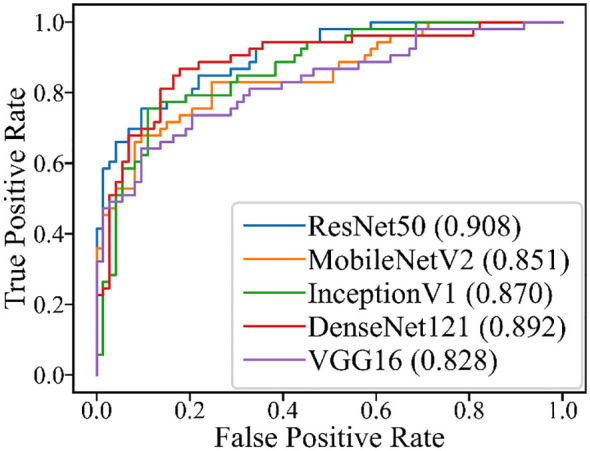
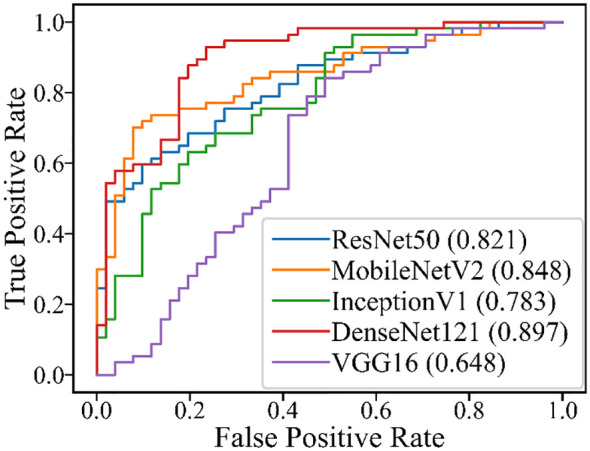
In Grad-CAM analysis, the DL models accurately identified the mass as the region of interest. The area under the receiver operating characteristic curve (AUROC) of the two ultrasound physicians were 0.351 and 0.598, and FNAC achieved an AUROC of only 0.721. Meanwhile, for DL models, the AUROC value for discriminating between PA and WT in the test set was from 0.828 to 0.908. ResNet50 demonstrated the optimal performance with an AUROC of 0.908, an accuracy of 0.833, a sensitivity of 0.736, and a specificity of 0.904. In the test set of cases that FNAC failed to provide a diagnosis, DenseNet121 demonstrated the optimal performance with an AUROC of 0.897, an accuracy of 0.806, a sensitivity of 0.789, and a specificity of 0.824.
For the discrimination of PA and WT, DL models are superior to ultrasound and FNAC, thereby facilitating surgeons in making informed decisions regarding the most appropriate surgical approach.
多形性腺瘤(PA)通常具有与沃辛瘤(WT)相似的良性影像学表现,然而,它是一种具有高复发率的潜在恶性肿瘤。更糟糕的是,对于经验不足的病理学家来说,病理细针穿刺细胞学检查(FNAC)很难区分PA和WT。本研究采用深度学习(DL)技术,有效利用超声图像,为区分PA和WT提供了一种可靠的方法。
本研究纳入了488例经手术确诊的患者,其中266例为PA,222例为WT。两名经验丰富的超声科医生独立评估所有图像以区分PA和WT。还评估了术前FNAC的诊断性能。在DL研究中,所有超声图像被随机分为训练集(70%)、验证集(20%)和测试集(10%)。此外,FNAC无法诊断的超声图像也被随机分配到训练集(60%)、验证集(20%)和测试集(20%)。开发了五个DL模型来将超声图像分类为PA或WT。使用五折交叉验证评估这些模型的稳健性。采用梯度加权类激活映射(Grad-CAM)技术来可视化DL模型中的感兴趣区域。
在Grad-CAM分析中,DL模型准确地将肿块识别为感兴趣区域。两名超声科医生的受试者操作特征曲线下面积(AUROC)分别为0.35