Department of Oncology, NHC Key Laboratory of Cancer Proteomics & State Local Joint Engineering Laboratory for Anticancer Drugs, National Clinical Research Center for Geriatric Disorders, Xiangya Hospital, Central South University, Changsha, 410008, Hunan, China.
Department of Endocrinology, Xiangya Hospital, Central South University, Changsha, 410008, Hunan, China.
Cell Death Dis. 2024 Mar 13;15(3):211. doi: 10.1038/s41419-024-06595-9.
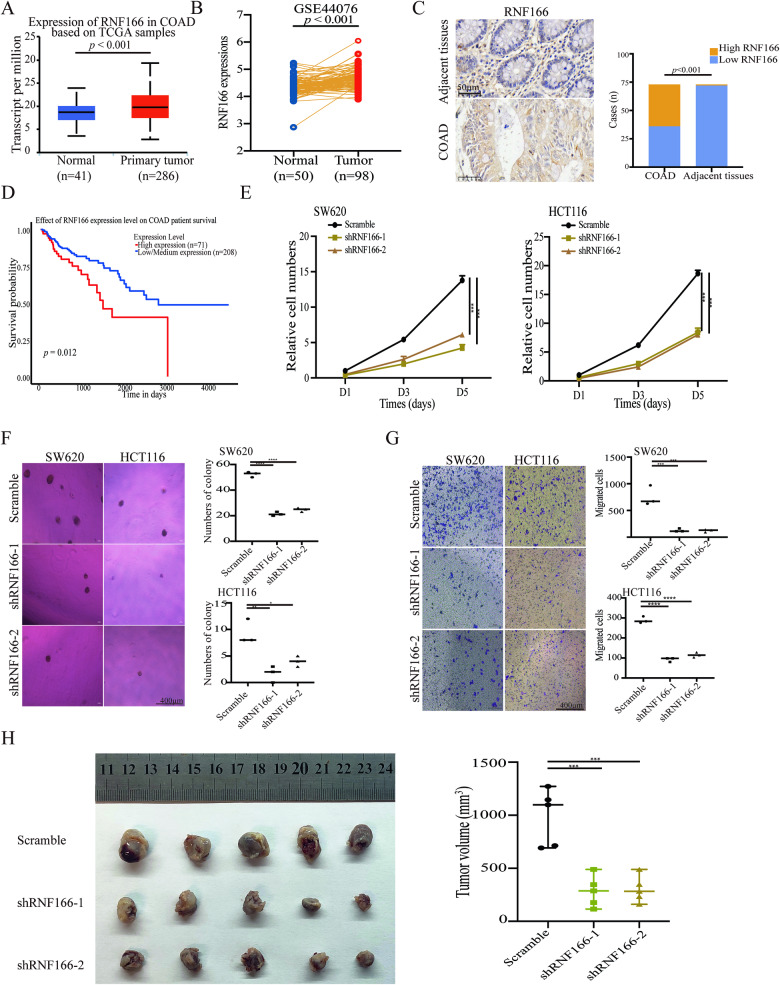
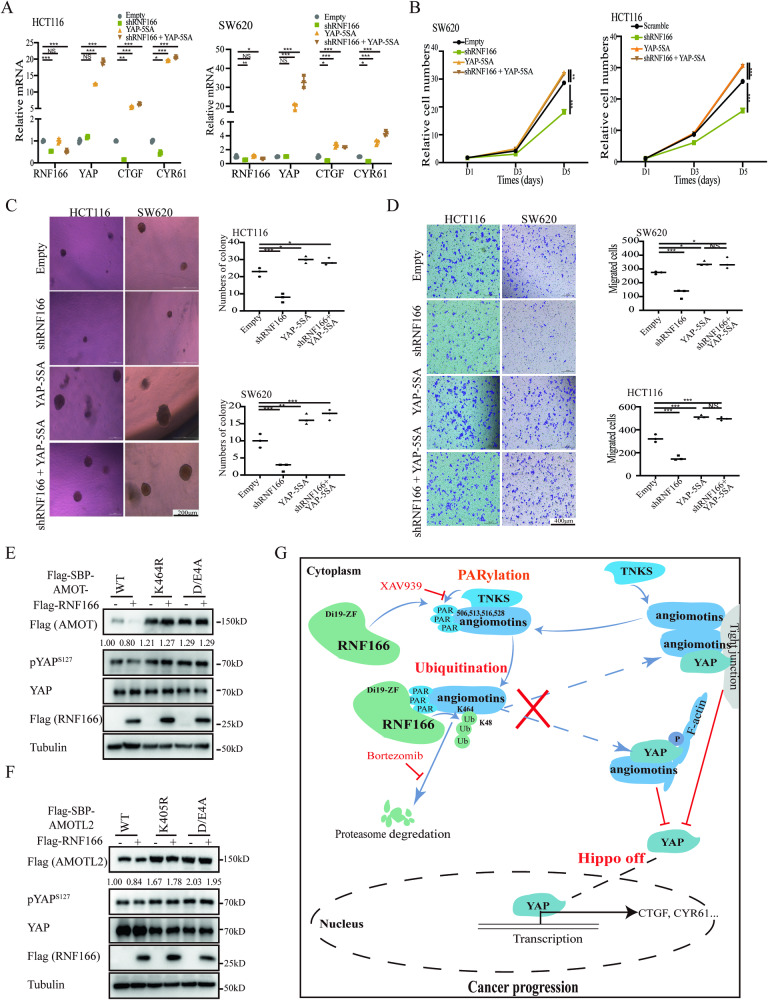
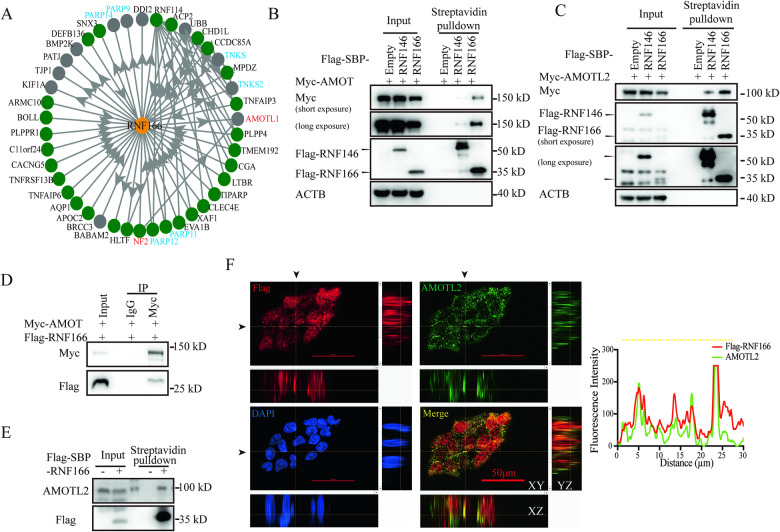
Activation of the Hippo pathway by angiomotins to limit colorectal cancer progression is prevalent, whereas the regulation of angiomotins remains elusive. In this study, we uncover the involvement of an upregulated E3 ubiquitin ligase called RNF166, which destabilizes angiomotins, activates YAP, and is associated with a poor prognosis in colorectal cancer patients. Mechanistically, RNF166 specifically recognizes PARsylated angiomotin, a modification mediated by tankyrase at specific amino acid residues (D506, E513, E516, and E528). The tankyrase inhibitor XAV939, effectively prevents RNF166-dependent destabilization of angiomotins and subsequent activation of YAP. Additionally, YAP-5SA, a constitutively active form of YAP, rescues colorectal cancer progression following knockdown of RNF166. Importantly, the C-terminus of RNF66, particularly the Di19-ZF domain, is the crucial region responsible for recognizing ADP-ribosylated angiomotins. Together, this work not only sheds light on the regulation of the Hippo pathway in colorectal cancer but also uncovers a novel poly(ADP-ribose)-binding domain, which may serve as a potential therapeutic target for intervention.
血管生成素运动蛋白激活 Hippo 通路以限制结直肠癌进展是普遍存在的,而血管生成素运动蛋白的调节仍然难以捉摸。在这项研究中,我们揭示了一种上调的 E3 泛素连接酶 RNF166 的参与,它使血管生成素运动蛋白不稳定,激活 YAP,并与结直肠癌患者的预后不良相关。从机制上讲,RNF166 特异性识别 PAR 化的血管生成素运动蛋白,这种修饰由特定氨基酸残基(D506、E513、E516 和 E528)上的 tankyrase 介导。tankyrase 抑制剂 XAV939 可有效阻止 RNF166 依赖性的血管生成素运动蛋白不稳定及其随后的 YAP 激活。此外,YAP-5SA,一种 YAP 的组成活性形式,可挽救 RNF166 敲低后结直肠癌的进展。重要的是,RNF66 的 C 端,特别是 Di19-ZF 结构域,是识别 ADP-ribosylated 血管生成素运动蛋白的关键区域。总之,这项工作不仅揭示了结直肠癌中 Hippo 通路的调节机制,还揭示了一种新型的多聚(ADP-核糖)结合域,它可能成为干预的潜在治疗靶点。