Institut universitaire de cardiologie et de pneumologie de Québec-Université Laval, Quebec City, QC, Canada.
Department of Molecular Biology, Medical Biochemistry and Pathology, Université Laval, Quebec City, QC, Canada.
Nat Commun. 2024 Mar 18;15(1):2407. doi: 10.1038/s41467-024-46639-4.
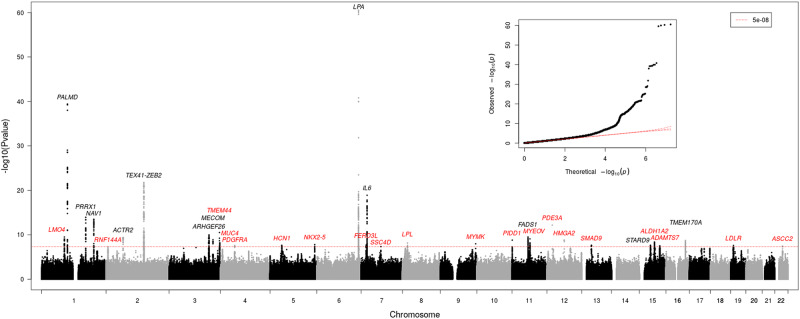
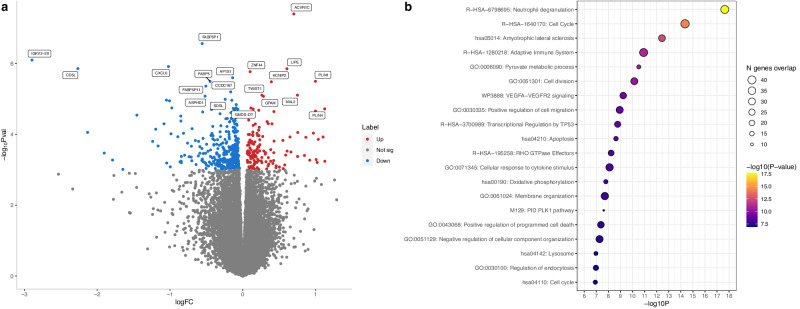
There is currently no medical therapy to prevent calcific aortic valve stenosis (CAVS). Multi-omics approaches could lead to the identification of novel molecular targets. Here, we perform a genome-wide association study (GWAS) meta-analysis including 14,819 cases among 941,863 participants of European ancestry. We report 32 genomic loci, among which 20 are novel. RNA sequencing of 500 human aortic valves highlights an enrichment in expression regulation at these loci and prioritizes candidate causal genes. Homozygous genotype for a risk variant near TWIST1, a gene involved in endothelial-mesenchymal transition, has a profound impact on aortic valve transcriptomics. We identify five genes outside of GWAS loci by combining a transcriptome-wide association study, colocalization, and Mendelian randomization analyses. Using cross-phenotype and phenome-wide approaches, we highlight the role of circulating lipoproteins, blood pressure and inflammation in the disease process. Our findings pave the way for the development of novel therapies for CAVS.
目前尚无预防钙化性主动脉瓣狭窄(CAVS)的医学疗法。多组学方法可能会发现新的分子靶标。在这里,我们进行了一项全基因组关联研究(GWAS)荟萃分析,包括欧洲血统的 941,863 名参与者中的 14,819 例病例。我们报告了 32 个基因组位点,其中 20 个是新的。对 500 个人类主动脉瓣的 RNA 测序突出显示了这些位点的表达调控富集,并优先考虑候选因果基因。涉及血管内皮-间充质转化的 TWIST1 附近风险变异的纯合基因型对主动脉瓣转录组学有深远影响。我们通过结合全转录组关联研究、共定位和孟德尔随机化分析,在 GWAS 位点之外识别出五个基因。使用跨表型和表型全基因组方法,我们强调了循环脂蛋白、血压和炎症在疾病过程中的作用。我们的发现为 CAVS 的新型疗法的开发铺平了道路。