Kazakova Maria, Ivanova Tsvetomira, Dikov Dorian, Molander Diana, Simitchiev Kiril, Sbirkov Yordan, Dzhambov Angel M, Sarafian Victoria
Department of Medical Biology, Medical University- Plovdiv, Plovdiv, 4000, Bulgaria.
Department of General and Clinical Pathology, Grand Hospital de l'Este Francilien, Medical Faculty, Jossigny, 77600, France.
Heliyon. 2024 Mar 7;10(5):e27570. doi: 10.1016/j.heliyon.2024.e27570. eCollection 2024 Mar 15.
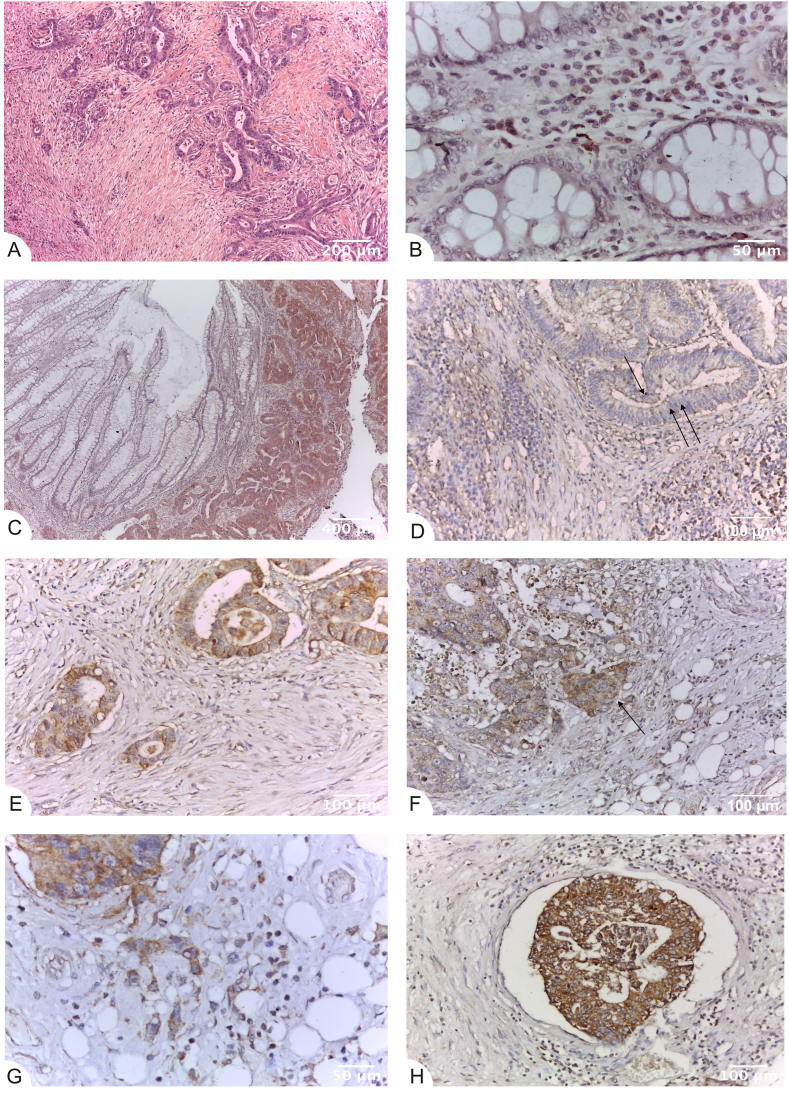
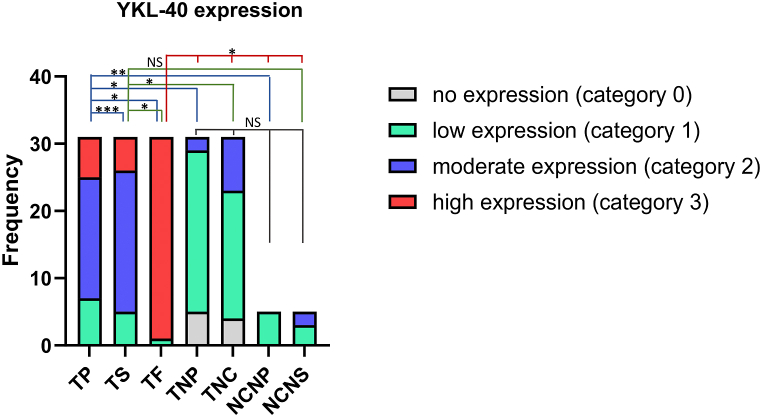
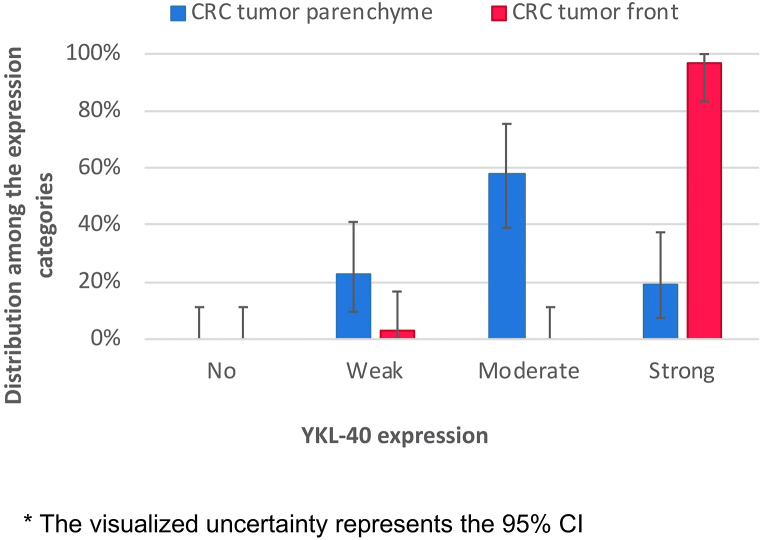
Тhe poor prognosis of patients initially diagnosed at an advanced stage of colorectal cancer (CRC) and the heterogeneity within the same tumor stage define the need for additional predictive biomarkers. Tumor buds are proposed as a poor prognostic factor for CRC, however, they are still not implemented into routine pathology reporting. In turn, the chitinase-3-like protein 1 (CHI3L1) also known as YKL-40, is regarded as a candidate circulating biomarker and therapeutic target in CRC. The aim of our study was to investigate tissue YKL-40 localization and tumor budding in CRC. Thirty-one CRC patients and normal colonic tissues were examined. The correlation between YKL-40 levels, tumor budding and clinocopathological parameters was evaluated by polychoric correlation analysis. The immunohistochemical assessment revealed high YKL-40 expression in CRC in contrast to normal mucosa. Specifically, intense YKL-40 staining was detected in the front of tumor invasion compared with tumor parenchyma and noncancerous tissue. We present novel data for increased YKL-40 expression in tumor buds within the front of tumor invasion. We assume that the combination of this morphological parameter with the tissue level of the pleotropic YKL-40 glycoprotein could serve as a future prognostic biomarker for CRC stratification and treatment.
最初被诊断为晚期结直肠癌(CRC)的患者预后较差,且同一肿瘤分期内存在异质性,这就决定了需要额外的预测生物标志物。肿瘤芽被认为是CRC的一个不良预后因素,然而,它们仍未被纳入常规病理报告中。反过来,几丁质酶-3样蛋白1(CHI3L1),也被称为YKL-40,被视为CRC的一种候选循环生物标志物和治疗靶点。我们研究的目的是调查CRC中组织YKL-40的定位和肿瘤芽。对31例CRC患者和正常结肠组织进行了检查。通过多列相关分析评估YKL-40水平、肿瘤芽与临床病理参数之间的相关性。免疫组织化学评估显示,与正常黏膜相比,CRC中YKL-40表达较高。具体而言,与肿瘤实质和非癌组织相比,在肿瘤浸润前沿检测到强烈的YKL-40染色。我们提供了新的数据表明在肿瘤浸润前沿的肿瘤芽中YKL-40表达增加。我们认为,这种形态学参数与多效性YKL-40糖蛋白的组织水平相结合,可能作为未来CRC分层和治疗的预后生物标志物。