Wang Tianfeng, Fang Xiaowei, Sheng Ximei, Li Meng, Mei Yulin, Mei Qing, Pan Aijun
Department of Critical Care Medicine, The First Affiliated Hospital of USTC, Division of Life Science and Medicine, University of Science and Technology of China, Hefei, Anhui Province, 230001, China.
WanNan Medical College, Wuhu, Anhui, 241002, China.
Heliyon. 2024 Mar 3;10(5):e27379. doi: 10.1016/j.heliyon.2024.e27379. eCollection 2024 Mar 15.
Cuproptosis is a copper-dependent cell death that is connected to the development and immune response of multiple diseases. However, the function of cuproptosis in the immune characteristics of sepsis remains unclear.
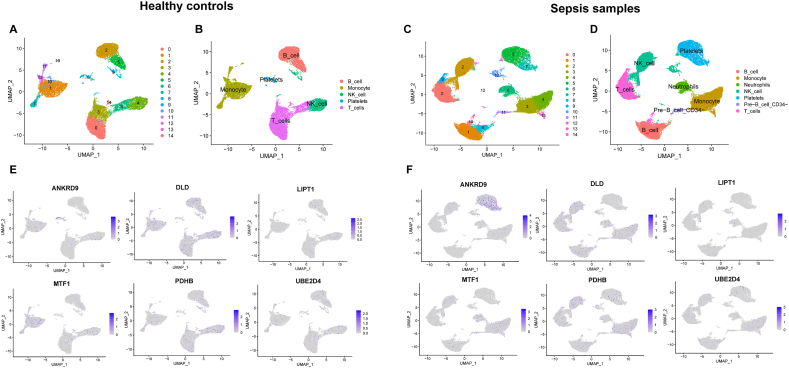
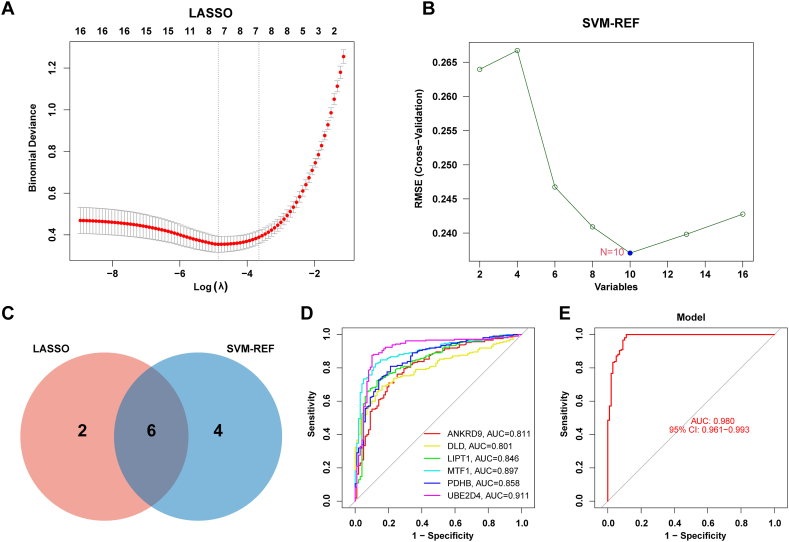
We obtained two sepsis datasets (GSE9960 and GSE134347) from the GEO database and classified the raw data with R packages. Cuproptosis-related genes were manually curated, and differentially expressed cuproptosis-related genes (DECuGs) were identified. Afterwards, we applied enrichment analysis and identified key DECuGs by performing machine learning techniques. Then, the immune cell infiltrations and correlation between DECuGs and immunocyte features were created by the CIBERSORT algorithm. Subsequently, unsupervised hierarchical clustering analysis was performed based on key DECuGs. We then constructed a ceRNA network based on key DECuGs by using multi-step computational strategies and predicted potential drugs in the DrugBank database. Finally, the role of these key genes in immune cells was validated at the single-cell RNA level between septic patients and healthy controls.
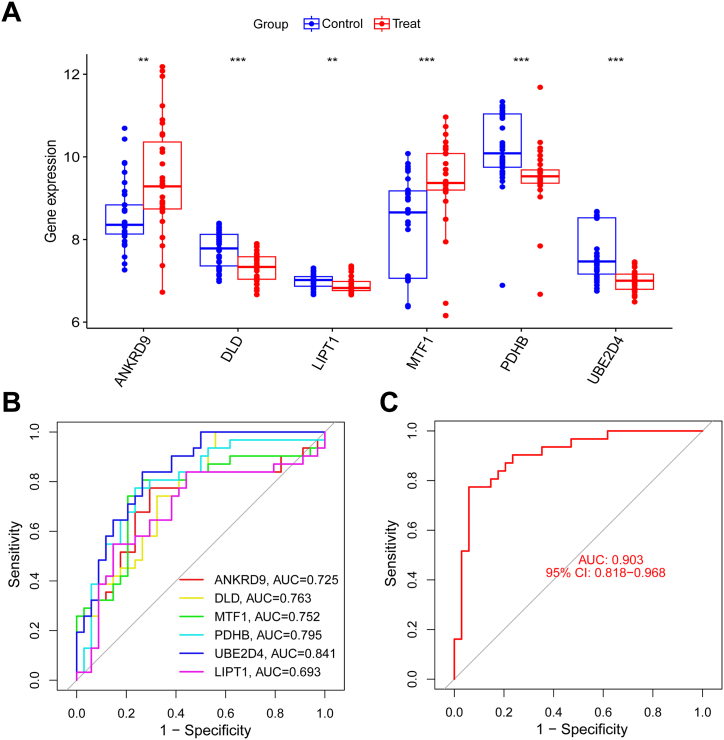
Overall, 16 DECuGs were obtained, and most of them had lower expression levels in sepsis samples. Afterwards, we obtained six key DECuGs by performing machine learning. Then, the LIPT1-T-cell CD4 memory resting was the most positively correlated DECuG-immunocyte pair. Subsequently, two different subclusters were identified by six DECuGs. Bioinformatics analysis revealed that there were different immune characteristics between the two subclusters. Moreover, we identified the key lncRNA OIP5-AS1 within the ceRNA network and obtained 4 drugs that may represent novel drugs for sepsis. Finally, these key DECuGs were statistically significantly dysregulated in another validation set and showed a major distribution in monocytes, T cells, B cells, NK cells and platelets at the single-cell RNA level.
These findings suggest that cuproptosis might promote the progression of sepsis by affecting the immune system and metabolic dysfunction, which provides a new direction for understanding potential pathogenic processes and therapeutic targets in sepsis.
铜死亡是一种依赖铜的细胞死亡方式,与多种疾病的发生发展及免疫反应相关。然而,铜死亡在脓毒症免疫特征中的作用尚不清楚。
我们从基因表达综合数据库(GEO)获取了两个脓毒症数据集(GSE9960和GSE134347),并用R软件包对原始数据进行分类。人工整理与铜死亡相关的基因,鉴定差异表达的铜死亡相关基因(DECuGs)。随后,我们进行富集分析,并通过机器学习技术鉴定关键的DECuGs。然后,使用CIBERSORT算法分析免疫细胞浸润情况以及DECuGs与免疫细胞特征之间的相关性。接着,基于关键的DECuGs进行无监督层次聚类分析。我们还通过多步骤计算策略构建了基于关键DECuGs的ceRNA网络,并在药物银行数据库中预测潜在药物。最后,在脓毒症患者和健康对照之间的单细胞RNA水平上验证了这些关键基因在免疫细胞中的作用。
总体而言,共获得16个DECuGs,其中大多数在脓毒症样本中表达水平较低。之后,通过机器学习获得了6个关键的DECuGs。其中,LIPT1-静息CD4记忆T细胞是相关性最强的DECuG-免疫细胞对。随后,6个DECuGs鉴定出两个不同的亚群。生物信息学分析显示,两个亚群具有不同的免疫特征。此外,我们在ceRNA网络中鉴定出关键的长链非编码RNA OIP5-AS1,并获得了4种可能代表脓毒症新型药物的药物。最后,这些关键的DECuGs在另一个验证集中存在统计学显著的失调,并且在单细胞RNA水平上主要分布于单核细胞、T细胞、B细胞、自然杀伤细胞和血小板中。
这些发现表明,铜死亡可能通过影响免疫系统和代谢功能障碍促进脓毒症的进展,这为理解脓毒症潜在的致病过程和治疗靶点提供了新方向。