Ultrahuman Healthcare Private Limited, No. 799, V K Paradise Sector2, HSR Layout Bengaluru, Bangalore, Karnataka, 560102, India.
Sci Rep. 2024 Mar 18;14(1):6490. doi: 10.1038/s41598-024-56933-2.
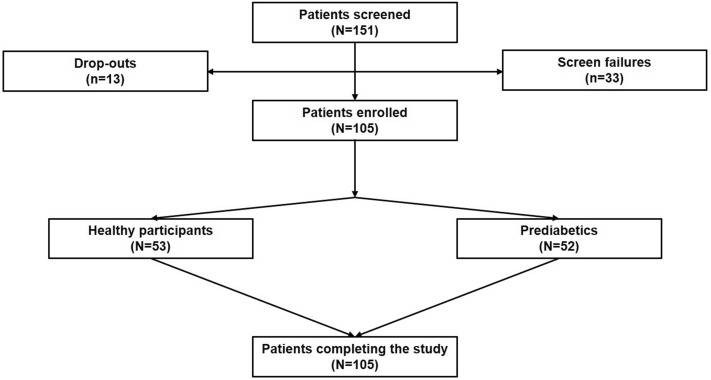
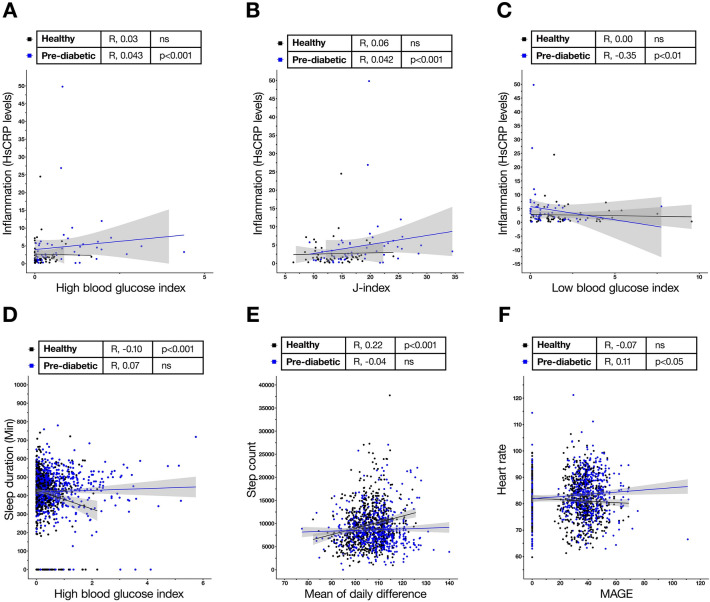
Continuous glucose monitoring (CGM) device adoption in non- and pre-diabetics for preventive healthcare has uncovered a paucity of benchmarking data on glycemic control and insulin resistance for the high-risk Indian/South Asian demographic. Furthermore, the correlational efficacy between digital applications-derived health scores and glycemic indices lacks clear supportive evidence. In this study, we acquired glycemic variability (GV) using the Ultrahuman (UH) M1 CGM, and activity metrics via the Fitbit wearable for Indians/South Asians with normal glucose control (non-diabetics) and those with pre-diabetes (N = 53 non-diabetics, 52 pre-diabetics) for 14 days. We examined whether CGM metrics could differentiate between the two groups, assessed the relationship of the UH metabolic score (MetSc) with clinical biomarkers of dysglycemia (OGTT, HbA1c) and insulin resistance (HOMA-IR); and tested which GV metrics maximally correlated with inflammation (Hs-CRP), stress (cortisol), sleep, step count and heart rate. We found significant inter-group differences for mean glucose levels, restricted time in range (70-110 mg/dL), and GV-by-SD, all of which improved across days. Inflammation was strongly linked with specific GV metrics in pre-diabetics, while sleep and activity correlated modestly in non-diabetics. Finally, MetSc displayed strong inverse relationships with insulin resistance and dysglycemia markers. These findings present initial guidance GV data of non- and pre-diabetic Indians and indicate that digitally-derived metabolic scores can positively influence glucose management.
连续血糖监测(CGM)设备在非糖尿病和糖尿病前期患者中的采用,揭示了针对高风险印度/南亚人群的血糖控制和胰岛素抵抗的基准数据不足。此外,数字应用程序衍生的健康评分与血糖指数之间的相关性效力缺乏明确的支持证据。在这项研究中,我们使用 Ultrahuman(UH)M1 CGM 获得了血糖变异性(GV),并通过 Fitbit 可穿戴设备获得了活动指标,用于研究血糖正常控制(非糖尿病)的印度/南亚人和有糖尿病前期(N = 53 名非糖尿病患者,52 名糖尿病前期患者)的患者,为期 14 天。我们检查了 CGM 指标是否可以区分两组,评估了 UH 代谢评分(MetSc)与血糖异常(OGTT、HbA1c)和胰岛素抵抗(HOMA-IR)的临床生物标志物的关系;并测试了哪些 GV 指标与炎症(Hs-CRP)、压力(皮质醇)、睡眠、步数和心率的相关性最强。我们发现两组之间的平均血糖水平、限制在范围内的时间(70-110mg/dL)和 GV 标准差存在显著差异,所有这些指标都在几天内有所改善。炎症与糖尿病前期患者的特定 GV 指标密切相关,而睡眠和活动在非糖尿病患者中相关性较弱。最后,MetSc 与胰岛素抵抗和血糖异常标志物呈强烈的负相关。这些发现为非糖尿病和糖尿病前期的印度人提供了初步的 GV 数据指导,并表明数字衍生的代谢评分可以积极影响血糖管理。