The Barcelona Institute for Global Health, Hospital Clínic, University of Barcelona, C/ del Rosselló, Barcelona, 171, 08036, Spain.
BMC Med. 2024 Mar 18;22(1):125. doi: 10.1186/s12916-024-03333-y.
Highlighted by the rise of COVID-19, climate change, and conflict, socially vulnerable populations are least resilient to disaster. In infectious disease management, mathematical models are a commonly used tool. Researchers should include social vulnerability in models to strengthen their utility in reflecting real-world dynamics. We conducted a scoping review to evaluate how researchers have incorporated social vulnerability into infectious disease mathematical models.
The methodology followed the Joanna Briggs Institute and updated Arksey and O'Malley frameworks, verified by the PRISMA-ScR checklist. PubMed, Clarivate Web of Science, Scopus, EBSCO Africa Wide Information, and Cochrane Library were systematically searched for peer-reviewed published articles. Screening and extracting data were done by two independent researchers.
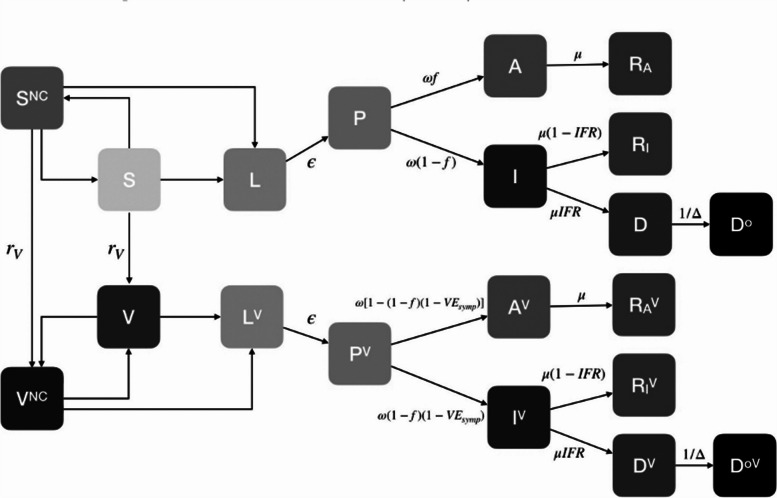
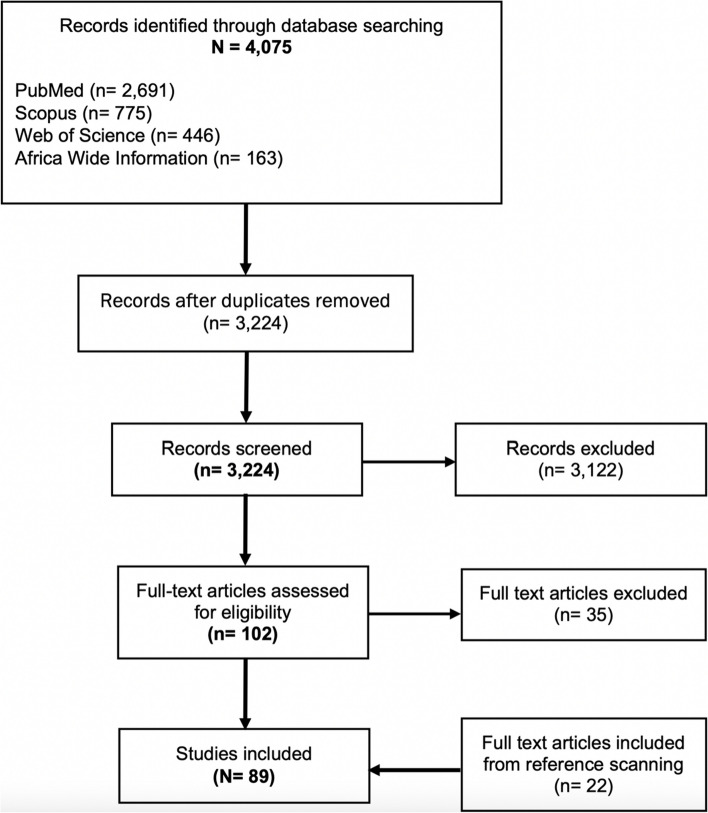
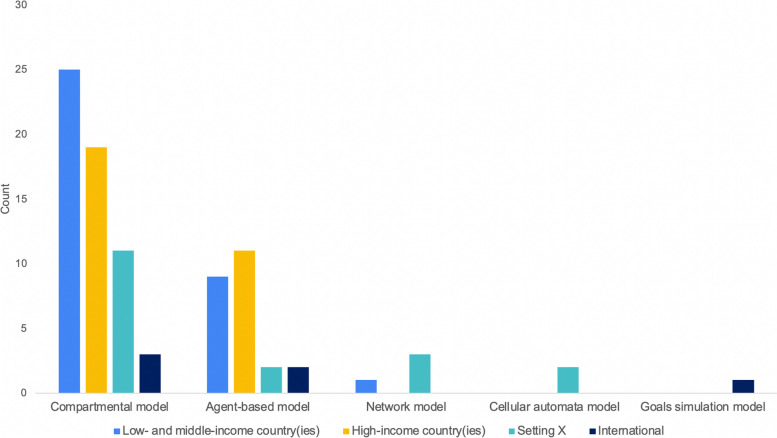
Of 4075 results, 89 articles were identified. Two-thirds of articles used a compartmental model (n = 58, 65.2%), with a quarter using agent-based models (n = 24, 27.0%). Overall, routine indicators, namely age and sex, were among the most frequently used measures (n = 42, 12.3%; n = 22, 6.4%, respectively). Only one measure related to culture and social behaviour (0.3%). For compartmental models, researchers commonly constructed distinct models for each level of a social vulnerability measure and included new parameters or influenced standard parameters in model equations (n = 30, 51.7%). For all agent-based models, characteristics were assigned to hosts (n = 24, 100.0%), with most models including age, contact behaviour, and/or sex (n = 18, 75.0%; n = 14, 53.3%; n = 10, 41.7%, respectively).
Given the importance of equitable and effective infectious disease management, there is potential to further the field. Our findings demonstrate that social vulnerability is not considered holistically. There is a focus on incorporating routine demographic indicators but important cultural and social behaviours that impact health outcomes are excluded. It is crucial to develop models that foreground social vulnerability to not only design more equitable interventions, but also to develop more effective infectious disease control and elimination strategies. Furthermore, this study revealed the lack of transparency around data sources, inconsistent reporting, lack of collaboration with local experts, and limited studies focused on modelling cultural indicators. These challenges are priorities for future research.
新冠疫情、气候变化和冲突凸显出,社会弱势群体在应对灾害方面的适应能力最差。在传染病管理中,数学模型是一种常用的工具。研究人员应该在模型中纳入社会脆弱性,以增强模型在反映现实世界动态方面的实用性。我们进行了一项范围综述,以评估研究人员将社会脆弱性纳入传染病数学模型的情况。
本研究遵循 Joanna Briggs 研究所的方法,并更新了 Arksey 和 O'Malley 框架,经 PRISMA-ScR 清单验证。通过系统检索了同行评议的已发表文章,检索范围包括 PubMed、Clarivate Web of Science、Scopus、EBSCO Africa Wide Information 和 Cochrane Library。由两名独立的研究人员进行筛选和提取数据。
在 4075 项研究结果中,有 89 篇文章符合纳入标准。其中,三分之二的文章(n=58,65.2%)使用了房室模型,四分之一的文章(n=24,27.0%)使用了基于代理的模型。总体而言,常规指标,即年龄和性别,是最常使用的指标之一(n=42,12.3%;n=22,6.4%)。仅有一项指标与文化和社会行为有关(0.3%)。对于房室模型,研究人员通常为社会脆弱性指标的每个级别构建单独的模型,并在模型方程中添加新的参数或影响标准参数(n=30,51.7%)。对于所有基于代理的模型,研究人员都将特征分配给宿主(n=24,100.0%),大多数模型都包含年龄、接触行为和/或性别(n=18,75.0%;n=14,53.3%;n=10,41.7%)。
鉴于公平有效管理传染病的重要性,该领域有进一步发展的潜力。我们的研究结果表明,社会脆弱性没有得到全面考虑。虽然研究人员关注纳入常规人口统计指标,但却忽略了影响健康结果的重要文化和社会行为。必须开发突出社会脆弱性的模型,不仅要设计更公平的干预措施,还要制定更有效的传染病控制和消除策略。此外,本研究还揭示了数据来源缺乏透明度、报告不一致、缺乏与当地专家的合作以及缺乏关注文化指标建模的研究等挑战。这些挑战是未来研究的重点。