Cusquisibán-Alcantara Yessica, Toledo-Garrido Cesia, Calizaya-Milla Yaquelin E, Carranza-Cubas Sandra P, Saintila Jacksaint
Research Group for Nutrition and Lifestyle, School of Human Nutrition, Universidad Peruana Unión, Lima, Perú.
School of Medicine, Faculty of Health Sciences, Universidad Señor de Sipán, Chiclayo, Perú.
J Multidiscip Healthc. 2024 Mar 13;17:1111-1125. doi: 10.2147/JMDH.S440195. eCollection 2024.
Non-communicable diseases in adults and anemia in children represent a major global public health problem, with multiple causes including poor dietary quality. However, nutrition education interventions can empower individuals to make appropriate dietary changes.
To evaluate the impact of a nutritional education intervention on nutrition knowledge (NK), healthy eating index (HEI), and biochemical profile in families in the community in Peru.
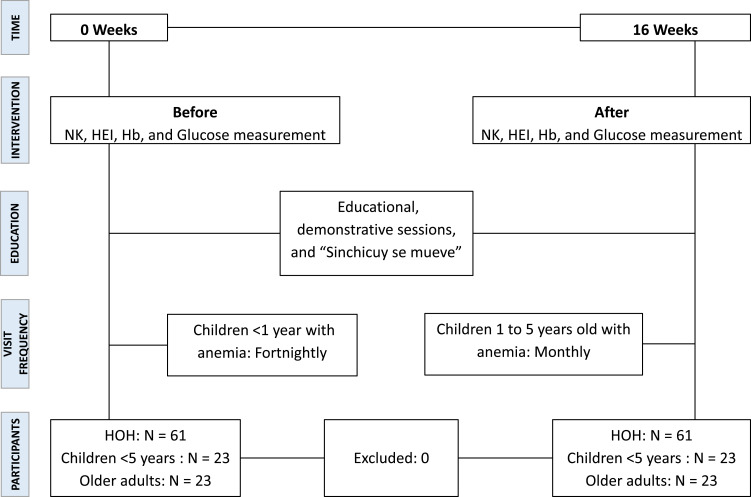
A pre-experimental study was conducted in the community of Sinchicuy, located on the banks of the Amazon River, Iquitos, Peru. Nutrition education was provided over a 16-week period to a total of 61 heads of household (23 children under 5 years of age and 23 older adults). Fasting glucose and hemoglobin (Hb) concentration analyses were also carried out before and after the intervention.
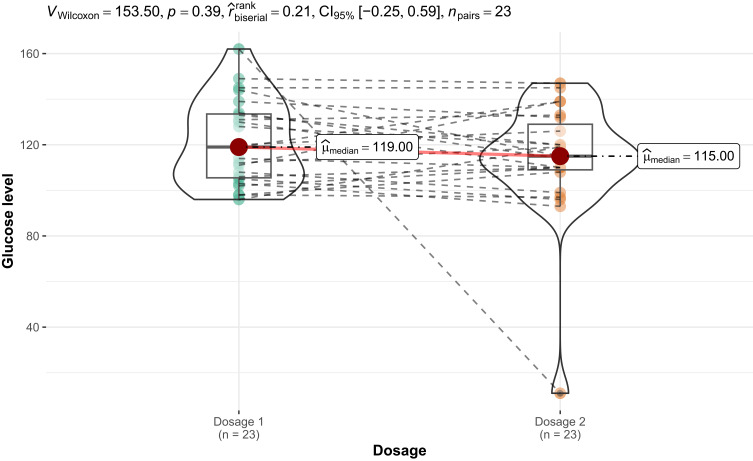
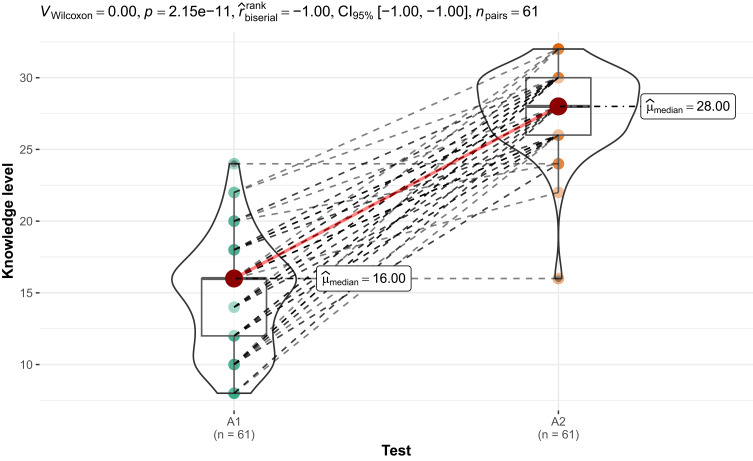
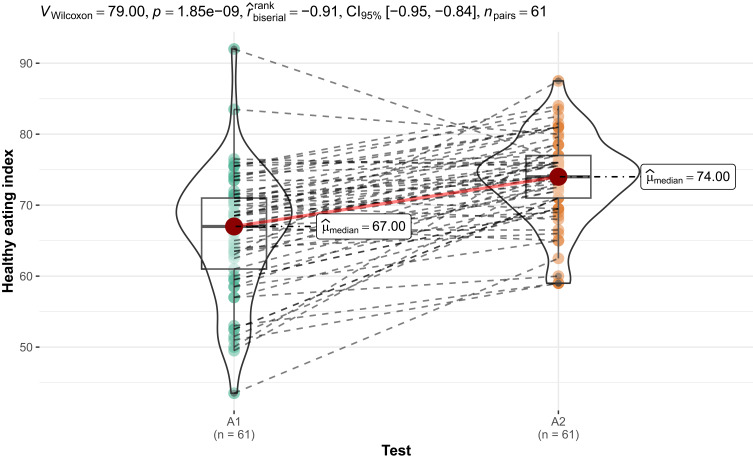
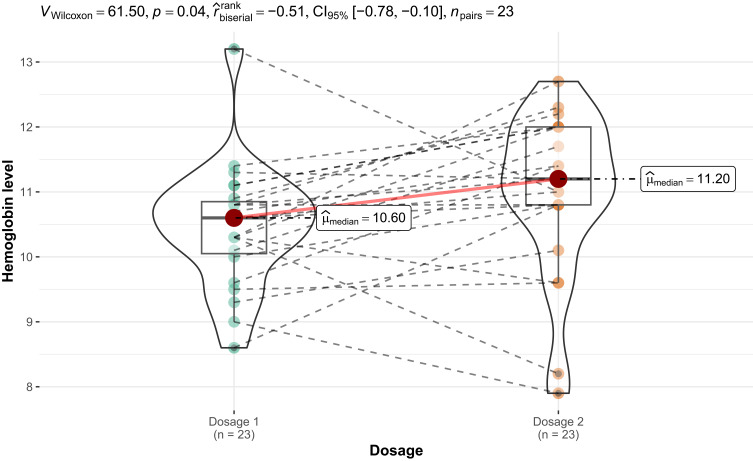
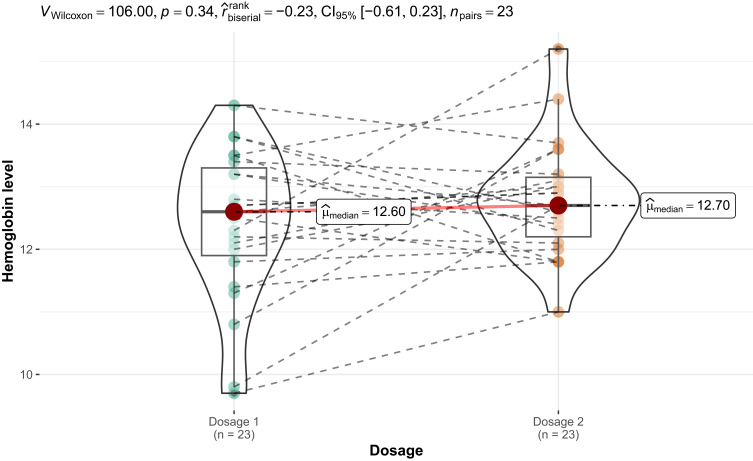
After the intervention, a significant improvement in the NK score was observed, increasing by 90% (p < 0.001). Additionally, the average HEI scores experienced a significant increase, rising by approximately 11.4% (p < 0.001). In children under 5 years of age, the Hb level showed a significant increase of 5.1% (p = 0.017). However, no statistically significant difference in glucose concentration was observed in older adults after the intervention.
The findings of this study indicated a positive impact on NK, HEI, and Hb in heads of households, older adults, and children under five in a rural community where there is limited access to basic services.
成人非传染性疾病和儿童贫血是全球主要的公共卫生问题,其病因众多,包括饮食质量差。然而,营养教育干预可以使个人有能力做出适当的饮食改变。
评估营养教育干预对秘鲁社区家庭的营养知识(NK)、健康饮食指数(HEI)和生化指标的影响。
在秘鲁伊基托斯亚马逊河畔的辛奇库伊社区进行了一项预实验研究。在16周的时间里,共对61户家庭的户主(23名5岁以下儿童和23名老年人)进行了营养教育。干预前后还进行了空腹血糖和血红蛋白(Hb)浓度分析。
干预后,NK得分显著提高,增加了90%(p<0.001)。此外,平均HEI得分显著增加,上升了约11.4%(p<0.001)。在5岁以下儿童中,Hb水平显著提高了5.1%(p=0.017)。然而,干预后老年人的血糖浓度未观察到统计学上的显著差异。
本研究结果表明,在基本服务获取有限的农村社区,营养教育干预对户主、老年人和5岁以下儿童的NK、HEI和Hb产生了积极影响。