Xu Fang, Zheng Caiyan, Xu Weihui, Zhang Shiyao, Liu Shanshan, Chen Xiaopeng, Yao Kai
Institute of Visual Neuroscience and Stem Cell Engineering, Wuhan University of Science and Technology, Wuhan, China.
College of Life Sciences and Health, Wuhan University of Science and Technology, Wuhan, China.
Front Pharmacol. 2024 Mar 6;15:1364135. doi: 10.3389/fphar.2024.1364135. eCollection 2024.
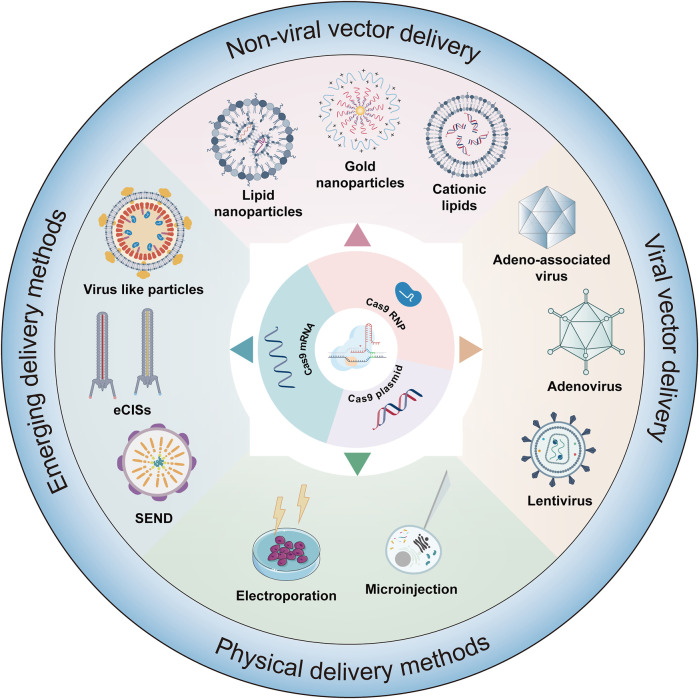
The rapid evolution of gene editing technology has markedly improved the outlook for treating genetic diseases. Base editing, recognized as an exceptionally precise genetic modification tool, is emerging as a focus in the realm of genetic disease therapy. We provide a comprehensive overview of the fundamental principles and delivery methods of cytosine base editors (CBE), adenine base editors (ABE), and RNA base editors, with a particular focus on their applications and recent research advances in the treatment of genetic diseases. We have also explored the potential challenges faced by base editing technology in treatment, including aspects such as targeting specificity, safety, and efficacy, and have enumerated a series of possible solutions to propel the clinical translation of base editing technology. In conclusion, this article not only underscores the present state of base editing technology but also envisions its tremendous potential in the future, providing a novel perspective on the treatment of genetic diseases. It underscores the vast potential of base editing technology in the realm of genetic medicine, providing support for the progression of gene medicine and the development of innovative approaches to genetic disease therapy.
基因编辑技术的迅速发展显著改善了治疗遗传疾病的前景。碱基编辑作为一种极其精确的基因修饰工具,正成为遗传疾病治疗领域的一个焦点。我们全面概述了胞嘧啶碱基编辑器(CBE)、腺嘌呤碱基编辑器(ABE)和RNA碱基编辑器的基本原理和递送方法,特别关注它们在遗传疾病治疗中的应用和最新研究进展。我们还探讨了碱基编辑技术在治疗中面临的潜在挑战,包括靶向特异性、安全性和有效性等方面,并列举了一系列可能的解决方案,以推动碱基编辑技术的临床转化。总之,本文不仅强调了碱基编辑技术的现状,还展望了其未来的巨大潜力,为遗传疾病的治疗提供了新的视角。它强调了碱基编辑技术在遗传医学领域的巨大潜力,为基因医学的发展和遗传疾病治疗创新方法的开发提供了支持。