Channing Division of Network Medicine, Brigham and Women's Hospital and Harvard Medical School, Boston, MA, USA.
These authors contributed equally.
Eur Respir J. 2024 May 2;63(5). doi: 10.1183/13993003.01232-2023. Print 2024 May.
Respiratory virus-induced inflammation is the leading cause of asthma exacerbation, frequently accompanied by induction of interferon-stimulated genes (). How asthma-susceptibility genes modulate cellular response upon viral infection by fine-tuning induction and subsequent airway inflammation in genetically susceptible asthma patients remains largely unknown.
To decipher the functions of gasdermin B (encoded by ) in respiratory virus-induced lung inflammation.
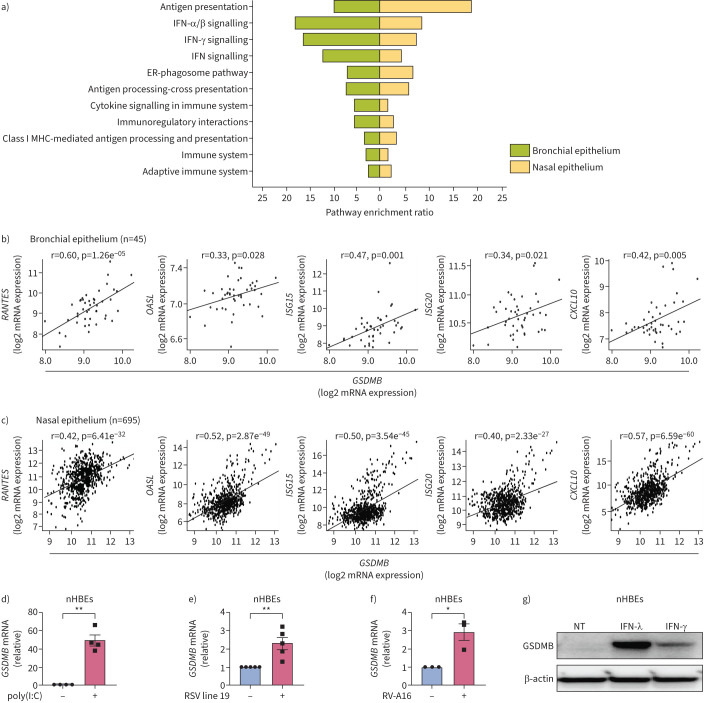
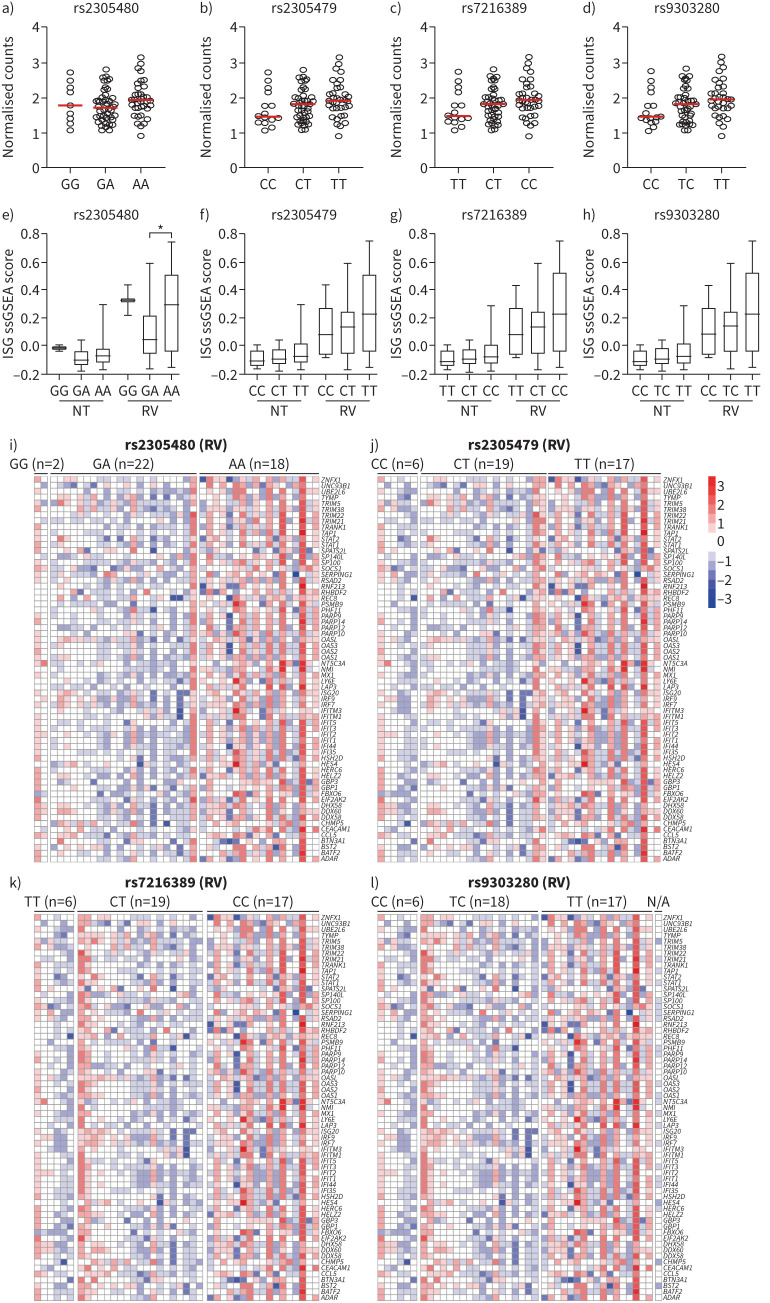
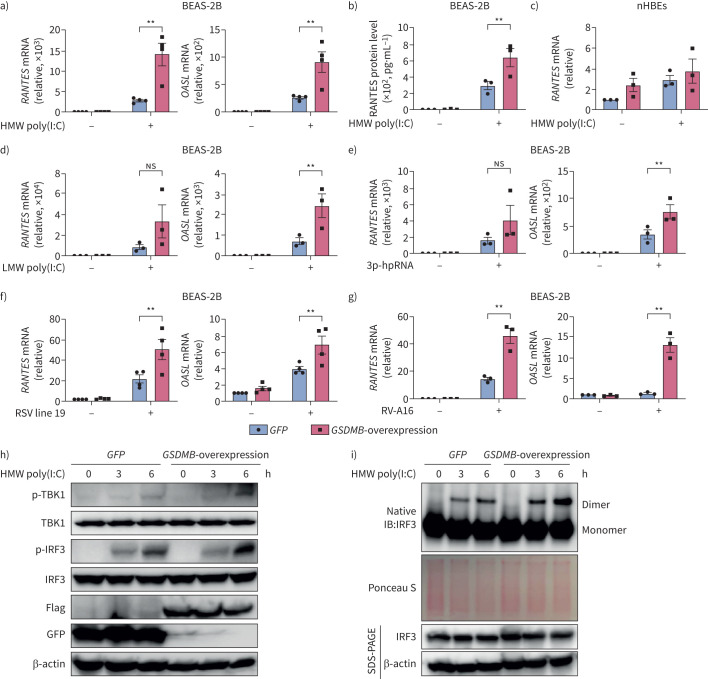
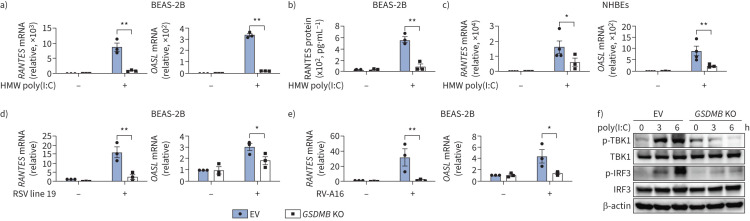
In two independent cohorts, we analysed expression correlation between and . In human bronchial epithelial cell line or primary bronchial epithelial cells, we generated -overexpressing and -deficient cells. A series of quantitative PCR, ELISA and co-immunoprecipitation assays were performed to determine the function and mechanism of for induction. We also generated a novel transgenic mouse line with inducible expression of human unique gene in airway epithelial cells and infected the mice with respiratory syncytial virus to determine the role of in respiratory syncytial virus-induced lung inflammation .
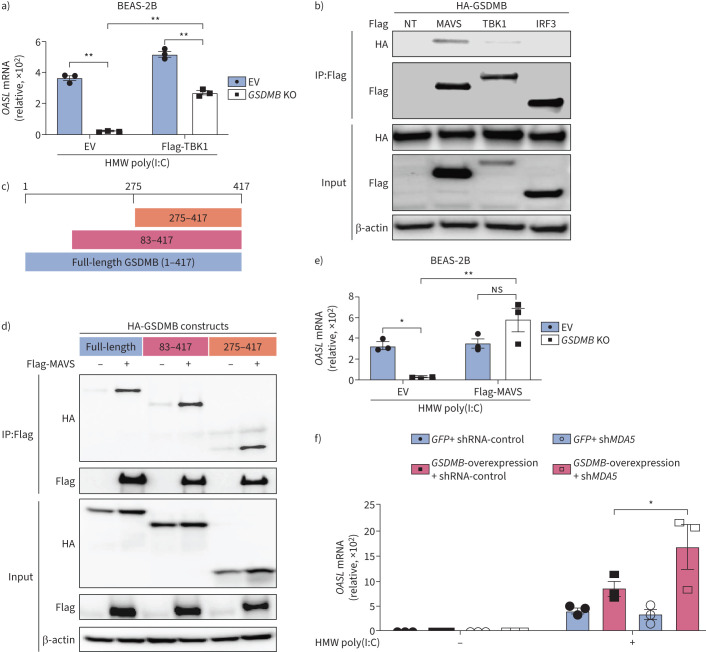
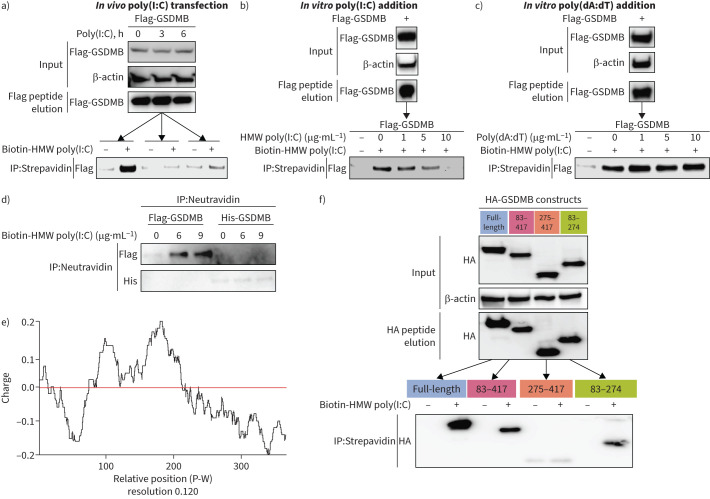
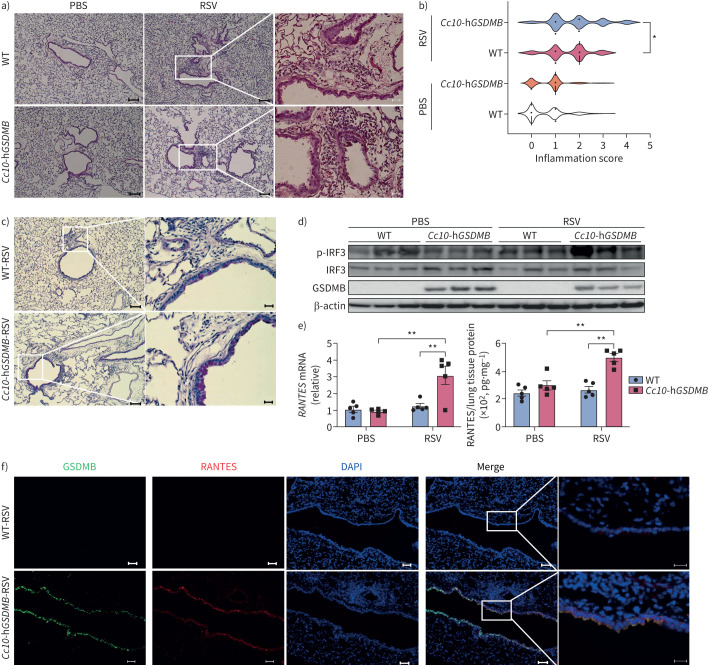
is one of the most significant asthma-susceptibility genes at 17q21 and acts as a novel RNA sensor, promoting mitochondrial antiviral-signalling protein (MAVS)-TANK binding kinase 1 (TBK1) signalling and subsequent inflammation. In airway epithelium, is induced by respiratory viral infections. Expression of and significantly correlated in respiratory epithelium from two independent asthma cohorts. Notably, inducible expression of human in mouse airway epithelium led to enhanced induction and increased airway inflammation with mucus hypersecretion upon respiratory syncytial virus infection.
promotes expression and airway inflammation upon respiratory virus infection, thereby conferring asthma risk in risk allele carriers.
呼吸道病毒引起的炎症是哮喘恶化的主要原因,常伴有干扰素刺激基因的诱导。哮喘易感基因如何通过精细调节诱导和随后在遗传易感哮喘患者中的气道炎症,来调节病毒感染时的细胞反应,在很大程度上仍然未知。
解析 gasdermin B(由 编码)在呼吸道病毒引起的肺部炎症中的作用。
在两个独立的队列中,我们分析了 和 之间的表达相关性。在人支气管上皮细胞系或原代支气管上皮细胞中,我们生成了 -过表达和 -缺陷细胞。进行了一系列定量 PCR、ELISA 和共免疫沉淀测定,以确定 对 诱导的功能和机制。我们还生成了一种新型的转基因小鼠系,其气道上皮细胞中可诱导表达人独特的 基因,并感染呼吸道合胞病毒,以确定 在呼吸道合胞病毒诱导的肺部炎症中的作用。
是 17q21 上最重要的哮喘易感基因之一,作为一种新型的 RNA 传感器,促进线粒体抗病毒信号蛋白(MAVS)-TANK 结合激酶 1(TBK1)信号和随后的炎症。在气道上皮细胞中,呼吸道病毒感染可诱导 的表达。来自两个独立哮喘队列的呼吸道上皮细胞中 和 的表达显著相关。值得注意的是,在小鼠气道上皮细胞中诱导表达人 导致 诱导增强,并在呼吸道合胞病毒感染时导致气道炎症和黏液高分泌增加。
在呼吸道病毒感染时促进 的表达和气道炎症,从而使风险等位基因携带者具有哮喘风险。