Women's Biomedical Research Institute, Icahn School of Medicine at Mount Sinai, New York, New York, 10029, USA.
Department of Obstetrics, Gynecology and Reproductive Sciences, Icahn School of Medicine at Mount Sinai, New York, New York, 10029, USA.
NPJ Biofilms Microbiomes. 2024 Mar 21;10(1):28. doi: 10.1038/s41522-024-00502-y.
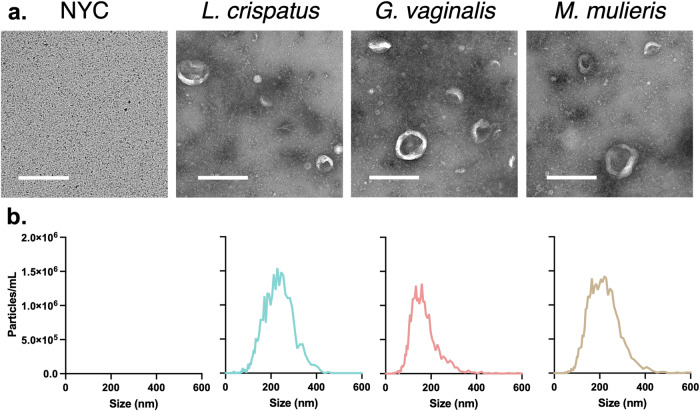
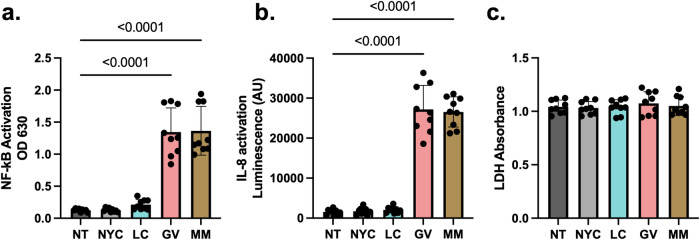
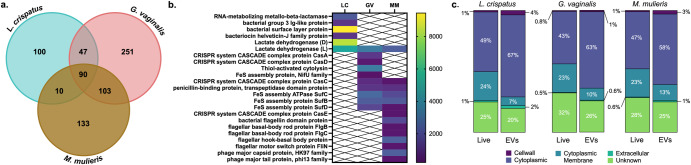
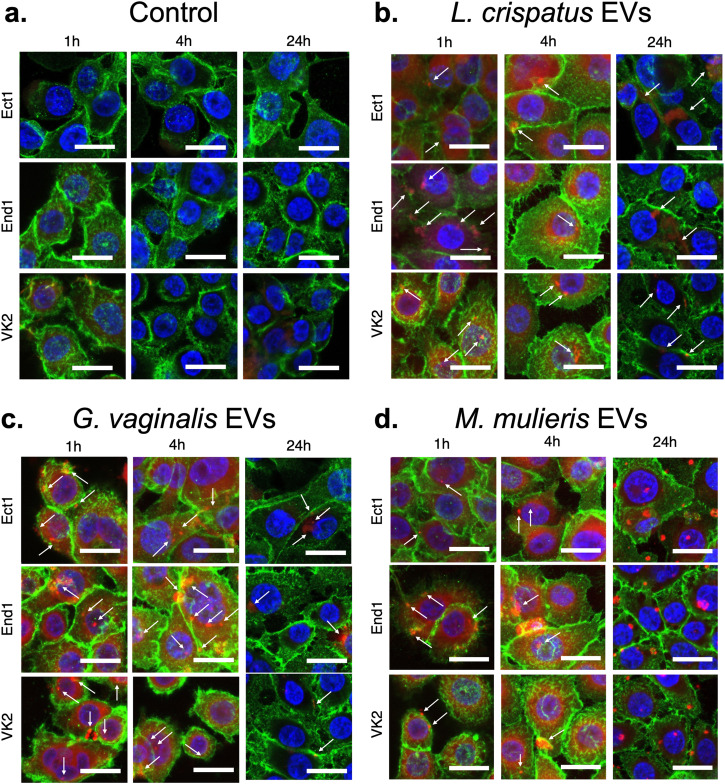
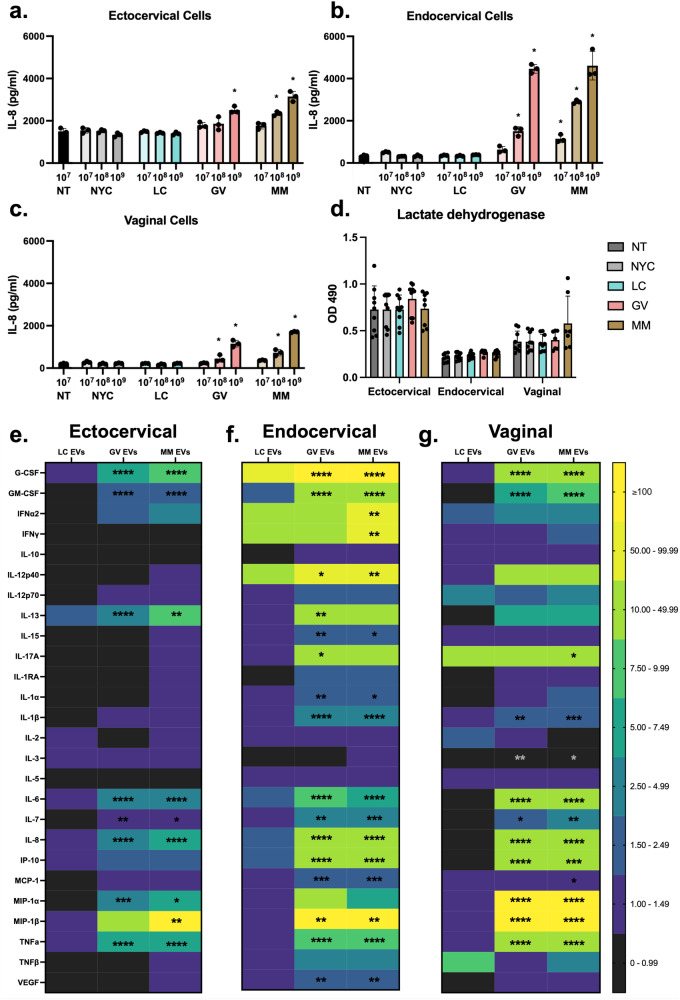
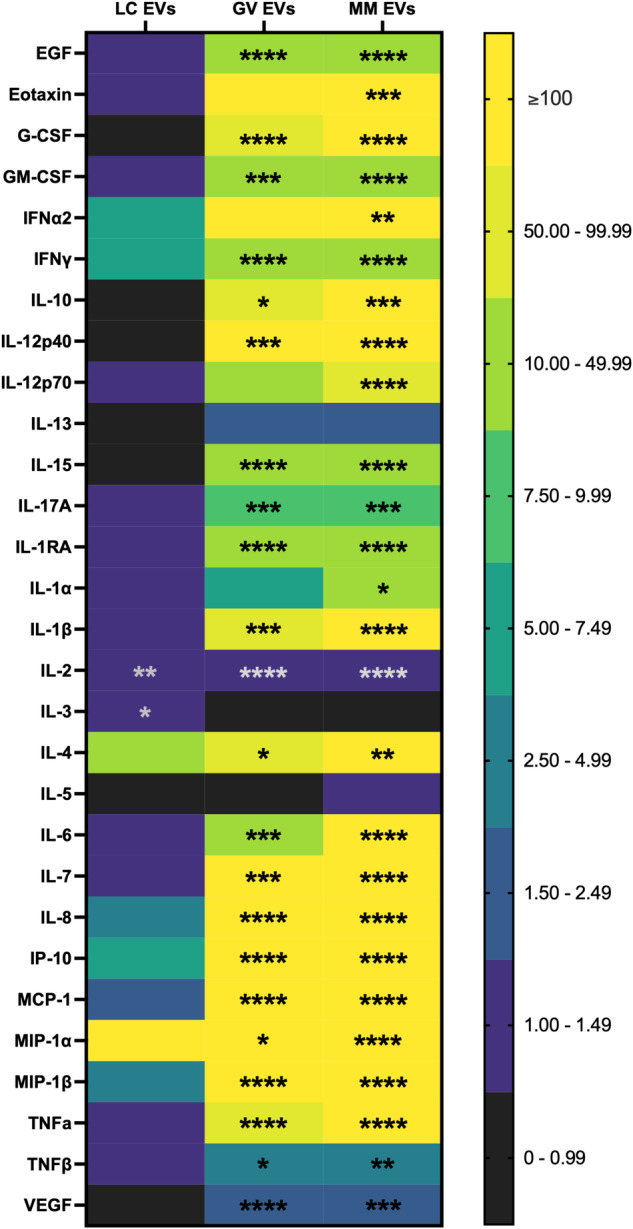
Colonization of the vaginal space with bacteria such as Gardnerella vaginalis and Mobiluncus mulieris is associated with increased risk for STIs, bacterial vaginosis, and preterm birth, while Lactobacillus crispatus is associated with optimal reproductive health. Although host-microbe interactions are hypothesized to contribute to reproductive health and disease, the bacterial mediators that are critical to this response remain unclear. Bacterial extracellular vesicles (bEVs) are proposed to participate in host-microbe communication by providing protection of bacterial cargo, delivery to intracellular targets, and ultimately induction of immune responses from the host. We evaluated the proteome of bEVs produced in vitro from G. vaginalis, M. mulieris, and L. crispatus, identifying specific proteins of immunologic interest. We found that bEVs from each bacterial species internalize within cervical and vaginal epithelial cells, and that epithelial and immune cells express a multi-cytokine response when exposed to bEVs from G. vaginalis and M. mulieris but not L. crispatus. Further, we demonstrate that the inflammatory response induced by G. vaginalis and M. mulieris bEVs is TLR2-specific. Our results provide evidence that vaginal bacteria communicate with host cells through secreted bEVs, revealing a mechanism by which bacteria lead to adverse reproductive outcomes associated with inflammation. Elucidating host-microbe interactions in the cervicovaginal space will provide further insight into the mechanisms contributing to microbiome-mediated adverse outcomes and may reveal new therapeutic targets.
细菌如阴道加德纳菌和阴道动弯杆菌定植于阴道空间与性传播感染、细菌性阴道病和早产风险增加相关,而卷曲乳杆菌则与最佳生殖健康相关。尽管宿主-微生物相互作用被认为与生殖健康和疾病有关,但对于这一反应至关重要的细菌介质仍不清楚。细菌细胞外囊泡(bEVs)被认为通过提供细菌货物的保护、向细胞内靶标传递以及最终诱导宿主的免疫反应,参与宿主-微生物通讯。我们评估了体外从阴道加德纳菌、阴道动弯杆菌和卷曲乳杆菌产生的 bEVs 的蛋白质组,鉴定了具有免疫意义的特定蛋白质。我们发现,来自每种细菌的 bEVs 在内皮细胞内内化,并且当暴露于阴道加德纳菌和阴道动弯杆菌的 bEVs 时,上皮细胞和免疫细胞表达多细胞因子反应,但不暴露于卷曲乳杆菌的 bEVs。此外,我们证明了阴道加德纳菌和阴道动弯杆菌 bEVs 诱导的炎症反应是 TLR2 特异性的。我们的结果提供了证据,表明阴道细菌通过分泌的 bEVs 与宿主细胞通讯,揭示了细菌导致与炎症相关的不良生殖结局的机制。阐明宫颈阴道空间中的宿主-微生物相互作用将进一步深入了解微生物组介导的不良结局的机制,并可能揭示新的治疗靶点。