Department of Drug Design and Pharmacology, University of Copenhagen, Jagtvej 160, 2100, Copenhagen, Denmark.
Pharmacovigilance and Clinical Research, International Centre for Pesticides and Health Risk Prevention, Department of Biomedical and Clinical Sciences (DIBIC), ASST Fatebenefratelli-Sacco University Hospital, Università Degli Studi Di Milano, Milan, Italy.
J Neurol. 2024 Jun;271(6):3417-3425. doi: 10.1007/s00415-024-12300-9. Epub 2024 Mar 22.
The prevalence of major and mild cognitive impairment (CI) in type-2 diabetes older patients is 15-25% and 30-60%, respectively, thus affecting quality of life and health outcomes. There is, therefore, the need of head-to-head studies aiming at identifying the optimal treatment for individuals with type-2 diabetes at increased risk of mild and major CI. This study focuses on the risk of developing mild and major CI in Danish patients treated with dipeptidyl peptidase-4 inhibitors (DPP-4i) and glucagon-like peptide-1 analogues (GLP-1a) using administrative and healthcare registers.
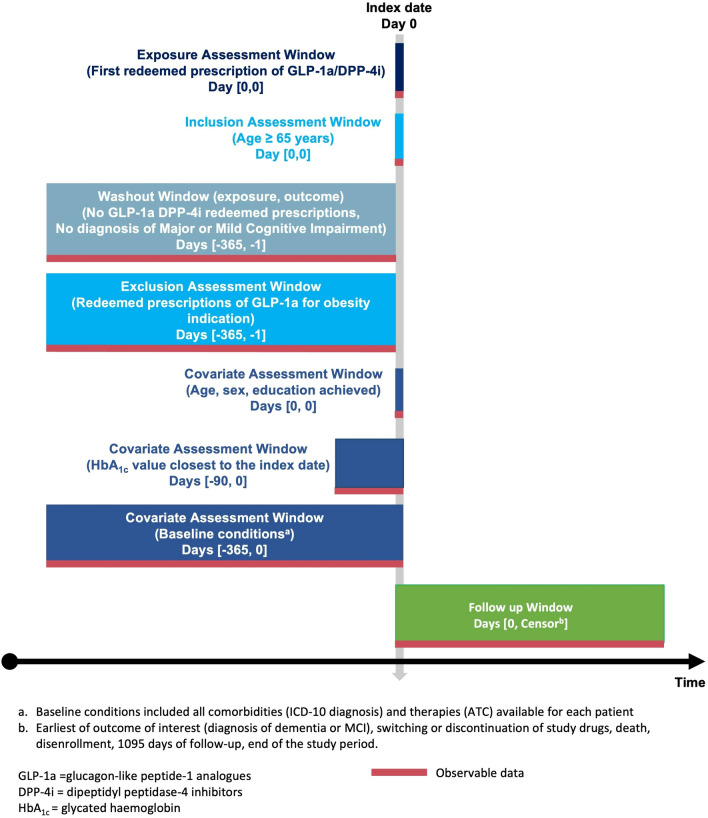
An active comparator design with a 3-year follow-up period was used. The main outcome was the hospital admission with a diagnosis of mild CI or major CI. Multivariate Cox Regression analysis was performed using the high-dimensional propensity score to obtain adjusted Hazard Ratio (HR) estimates. Inverse probability of treatment weighting (IPTW) and marginal structured model were used to calculate risk differences while accounting for the variations of confounders throughout the follow-up period.
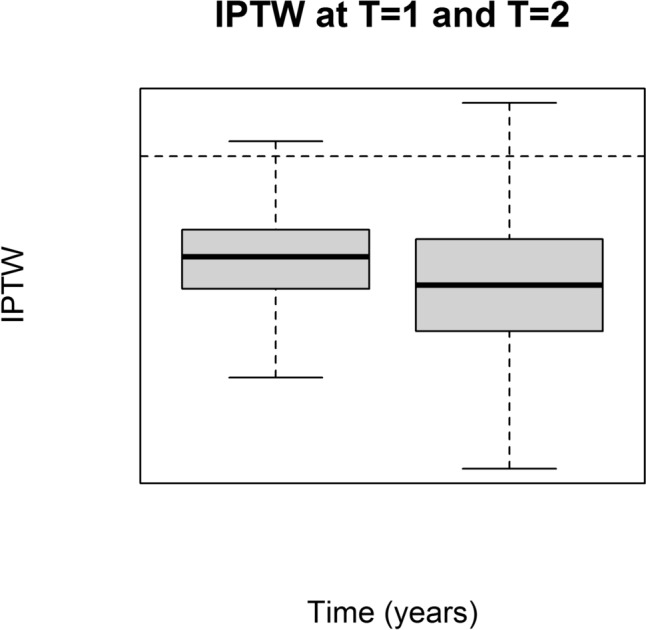
Our results show a significant higher risk of major CI between DPP-4i and GLP-1a in unadjusted [HR (95% CI) = 3.13 (2.45-4.00), p < 0.001] and adjusted analyses [HR (95% CI) = 1.58 (1.22-2.06), p = 0.001]. No statistically significant differences were observed for mild CI. IPTW resulted stable throughout the follow-up period. Marginal structure modeling (β (95% CI) = 0.022 (0.020-0.024), p < 0.001) resulted in a higher risk of major CI for DPP-4i when compared to GLP-1a.
DPP-4i was associated with an increased risk of developing major CI when compared to GLP-1a among older individuals with type-2 diabetes.
2 型糖尿病老年患者中,严重和轻度认知障碍(CI)的患病率分别为 15-25%和 30-60%,这会影响生活质量和健康结果。因此,需要进行头对头研究,以确定患有 2 型糖尿病且有发生轻度和严重 CI 风险的个体的最佳治疗方法。本研究使用行政和医疗登记处,关注丹麦患者使用二肽基肽酶-4 抑制剂(DPP-4i)和胰高血糖素样肽-1 类似物(GLP-1a)治疗后发生轻度和严重 CI 的风险。
采用 3 年随访的活性对照设计。主要结局是因轻度 CI 或严重 CI 住院治疗。使用高维倾向评分进行多变量 Cox 回归分析,以获得调整后的危险比(HR)估计值。逆概率治疗加权(IPTW)和边缘结构模型用于计算风险差异,同时考虑了整个随访期间混杂因素的变化。
我们的研究结果表明,在未调整分析中(HR(95%CI)=3.13(2.45-4.00),p<0.001)和调整分析中(HR(95%CI)=1.58(1.22-2.06),p=0.001),DPP-4i 和 GLP-1a 治疗之间,严重 CI 的风险显著更高。未观察到轻度 CI 的统计学显著差异。整个随访期间,IPTW 均保持稳定。边缘结构建模(β(95%CI)=0.022(0.020-0.024),p<0.001)结果表明,与 GLP-1a 相比,DPP-4i 治疗与严重 CI 风险增加相关。
与 GLP-1a 相比,DPP-4i 与 2 型糖尿病老年患者发生严重 CI 的风险增加相关。