Panettieri Reynold, Lugogo Njira, Corren Jonathan, Ambrose Christopher S
Rutgers Institute for Translational Medicine and Science, Rutgers University, New Brunswick, NJ, USA.
Michigan Medicine Asthma Program, University of Michigan, Ann Arbor, MI, USA.
J Asthma Allergy. 2024 Mar 19;17:219-236. doi: 10.2147/JAA.S342391. eCollection 2024.
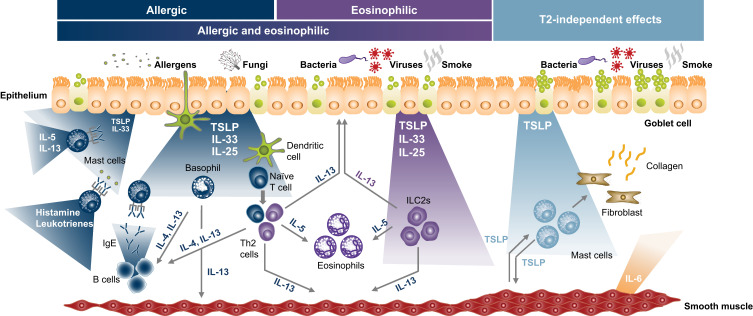
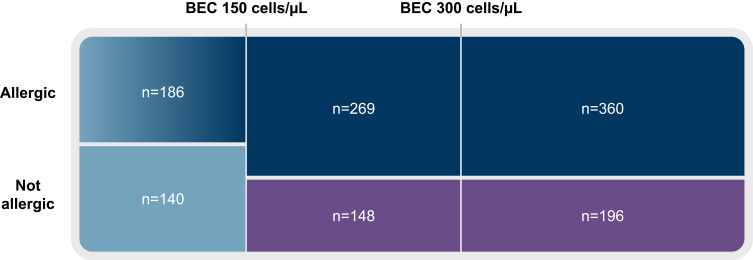
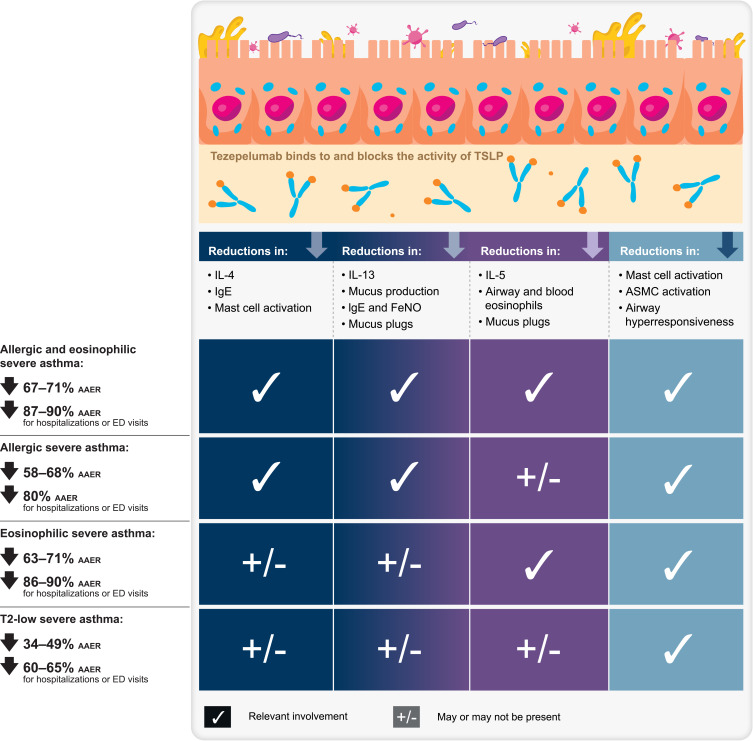
Asthma is a heterogeneous inflammatory disease of the airways, affecting many children, adolescents, and adults worldwide. Up to 10% of people with asthma have severe disease, associated with a higher risk of hospitalizations, greater healthcare costs, and poorer outcomes. Patients with severe asthma generally require high-dose inhaled corticosteroids and additional controller medications to achieve disease control; however, many patients remain uncontrolled despite this intensive treatment. The treatment of severe uncontrolled asthma has improved with greater understanding of asthma pathways and phenotypes as well as the advent of targeted biologic therapies. Tezepelumab, a monoclonal antibody, blocks thymic stromal lymphopoietin, an epithelial cytokine that has multifaceted effects on the initiation and persistence of asthma inflammation and pathophysiology. Unlike other biologic treatments, tezepelumab has demonstrated efficacy across severe asthma phenotypes, with the magnitude of effects varying by phenotype. Here we describe the anti-inflammatory effects and efficacy of tezepelumab across the most relevant phenotypes of severe asthma. Across clinical studies, tezepelumab reduced annualized asthma exacerbation rates versus placebo by 63-71% in eosinophilic severe asthma, by 58-68% in allergic severe asthma, by 67-71% in allergic and eosinophilic severe asthma, by 34-49% in type 2-low asthma, and by 31-41% in oral corticosteroid-dependent asthma. Furthermore, in all these asthma phenotypes, tezepelumab demonstrated higher efficacy in reducing exacerbations requiring hospitalizations or emergency department visits versus placebo. In patients with severe uncontrolled asthma, who commonly have multiple drivers of inflammation and disease, tezepelumab may modulate airway inflammation more extensively, as other available biologics block only specific downstream components of the inflammatory cascade.
哮喘是一种气道的异质性炎症性疾病,影响着全球许多儿童、青少年和成年人。高达10%的哮喘患者患有严重疾病,这与更高的住院风险、更高的医疗费用以及更差的预后相关。重度哮喘患者通常需要高剂量吸入性糖皮质激素和额外的控制药物来实现疾病控制;然而,尽管进行了这种强化治疗,许多患者的病情仍然无法得到控制。随着对哮喘发病机制和表型的深入了解以及靶向生物疗法的出现,重度未控制哮喘的治疗有了改善。tezepelumab是一种单克隆抗体,可阻断胸腺基质淋巴细胞生成素,这是一种上皮细胞因子,对哮喘炎症的起始和持续以及病理生理学具有多方面影响。与其他生物治疗不同,tezepelumab已在重度哮喘的各种表型中显示出疗效,其效果大小因表型而异。在此,我们描述tezepelumab在重度哮喘最相关表型中的抗炎作用和疗效。在各项临床研究中,与安慰剂相比,tezepelumab使嗜酸性粒细胞性重度哮喘的年化哮喘加重率降低了63%-71%,使过敏性重度哮喘降低了58%-68%,使过敏性和嗜酸性粒细胞性重度哮喘降低了67%-71%,使2型低哮喘降低了34%-49%,使口服糖皮质激素依赖型哮喘降低了31%-41%。此外,在所有这些哮喘表型中,与安慰剂相比,tezepelumab在减少需要住院或急诊就诊的加重发作方面显示出更高的疗效。在重度未控制哮喘患者中,这些患者通常有多种炎症和疾病驱动因素,tezepelumab可能更广泛地调节气道炎症,因为其他可用的生物制剂仅阻断炎症级联反应的特定下游成分。