Nautiyal Astha, Thakur Manoj
Department of Biochemistry, Indian Institute of Science, Bangalore 560012, India.
Sri Venkateswara College, Benito Juarez Road, University of Delhi, New Delhi 110021, India.
ACS Omega. 2024 Feb 27;9(11):12515-12538. doi: 10.1021/acsomega.3c09866. eCollection 2024 Mar 19.
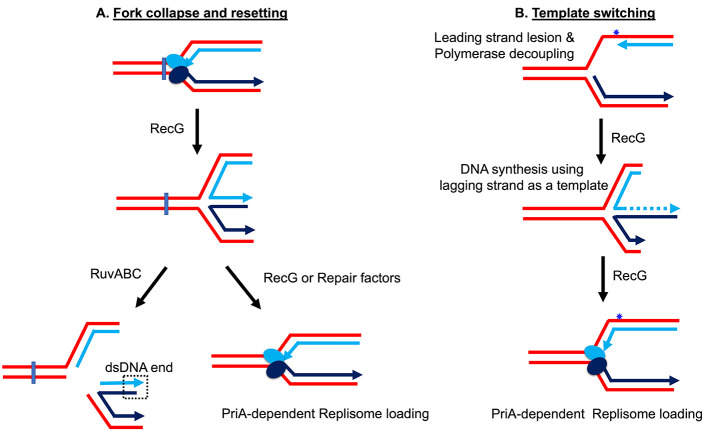
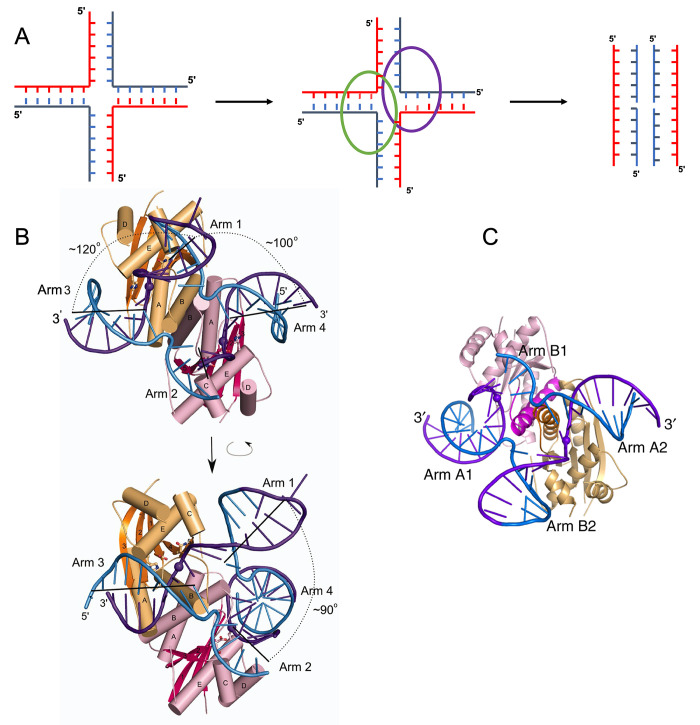
Cells are continually exposed to a multitude of internal and external stressors, which give rise to various types of DNA damage. To protect the integrity of their genetic material, cells are equipped with a repertoire of repair proteins that engage in various repair mechanisms, facilitated by intricate networks of protein-protein and protein-DNA interactions. Among these networks is the homologous recombination (HR) system, a molecular repair mechanism conserved in all three domains of life. On one hand, HR ensures high-fidelity, template-dependent DNA repair, while on the other hand, it results in the generation of combinatorial genetic variations through allelic exchange. Despite substantial progress in understanding this pathway in bacteria, yeast, and humans, several critical questions remain unanswered, including the molecular processes leading to the exchange of DNA segments, the coordination of protein binding, conformational switching during branch migration, and the resolution of Holliday Junctions (HJs). This Review delves into our current understanding of the HR pathway in bacteria, shedding light on the roles played by various proteins or their complexes at different stages of HR. In the first part of this Review, we provide a brief overview of the end resection processes and the strand-exchange reaction, offering a concise depiction of the mechanisms that culminate in the formation of HJs. In the latter half, we expound upon the alternative methods of branch migration and HJ resolution more comprehensively and holistically, considering the historical research timelines. Finally, when we consolidate our knowledge about HR within the broader context of genome replication and the emergence of resistant species, it becomes evident that the HR pathway is indispensable for the survival of bacteria in diverse ecological niches.
细胞不断暴露于多种内部和外部应激源,这些应激源会导致各种类型的DNA损伤。为了保护其遗传物质的完整性,细胞配备了一系列修复蛋白,这些蛋白通过复杂的蛋白质-蛋白质和蛋白质-DNA相互作用网络参与各种修复机制。这些网络中包括同源重组(HR)系统,这是一种在生命的所有三个域中都保守的分子修复机制。一方面,HR确保高保真、依赖模板的DNA修复,另一方面,它通过等位基因交换导致组合遗传变异的产生。尽管在理解细菌、酵母和人类中的这一途径方面取得了重大进展,但仍有几个关键问题未得到解答,包括导致DNA片段交换的分子过程、蛋白质结合的协调、分支迁移过程中的构象转换以及霍利迪连接(HJs)的解决。本综述深入探讨了我们目前对细菌中HR途径的理解,揭示了各种蛋白质或其复合物在HR不同阶段所起的作用。在本综述的第一部分,我们简要概述了末端切除过程和链交换反应,简要描述了最终形成HJs的机制。在后者部分,我们更全面、更整体地阐述了分支迁移和HJ解决的替代方法,并考虑了历史研究时间线。最后,当我们在基因组复制和抗性物种出现的更广泛背景下巩固我们对HR的认识时,很明显HR途径对于细菌在不同生态位中的生存是不可或缺的。