Rodrigues Marisa A, Dauphin-Villemant Chantal, Paris Margot, Kapun Martin, Mitchell Esra Durmaz, Kerdaffrec Envel, Flatt Thomas
Department of Ecology and Evolution, University of Lausanne, Lausanne, Switzerland.
Department of Biology, University of Fribourg, Fribourg, Switzerland.
Evol Lett. 2023 Nov 21;8(2):295-310. doi: 10.1093/evlett/qrad059. eCollection 2024 Apr.
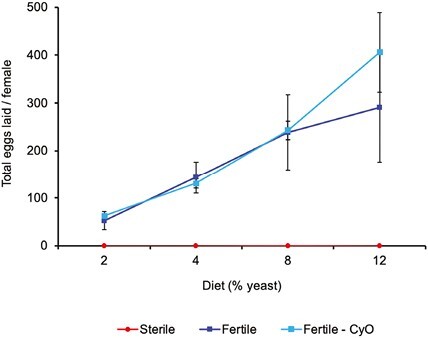
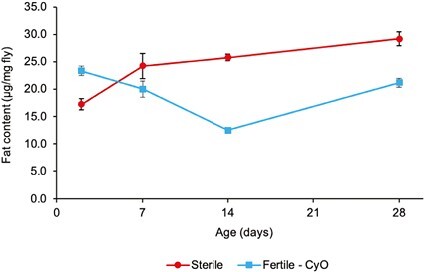
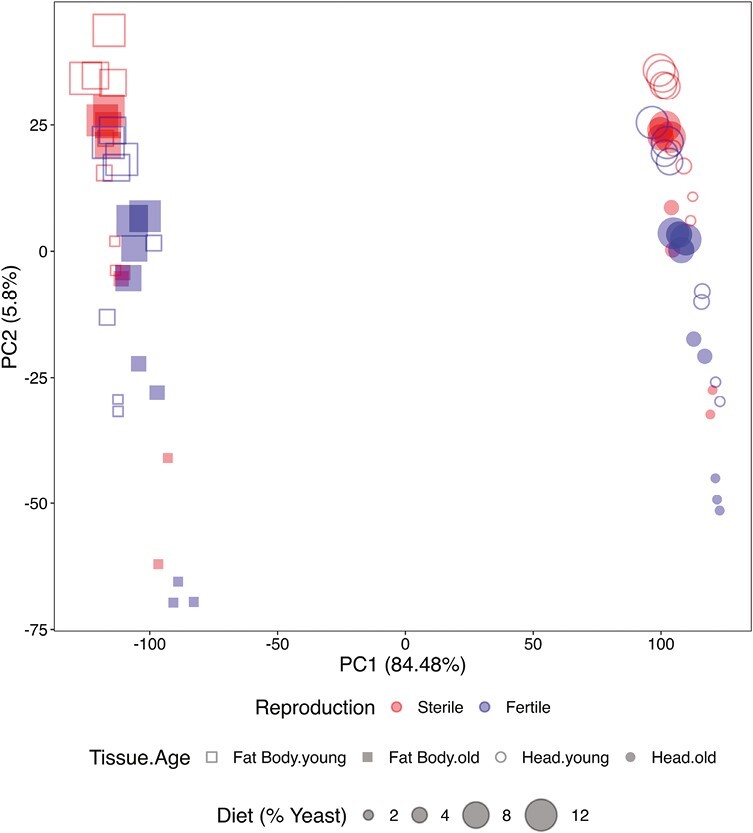
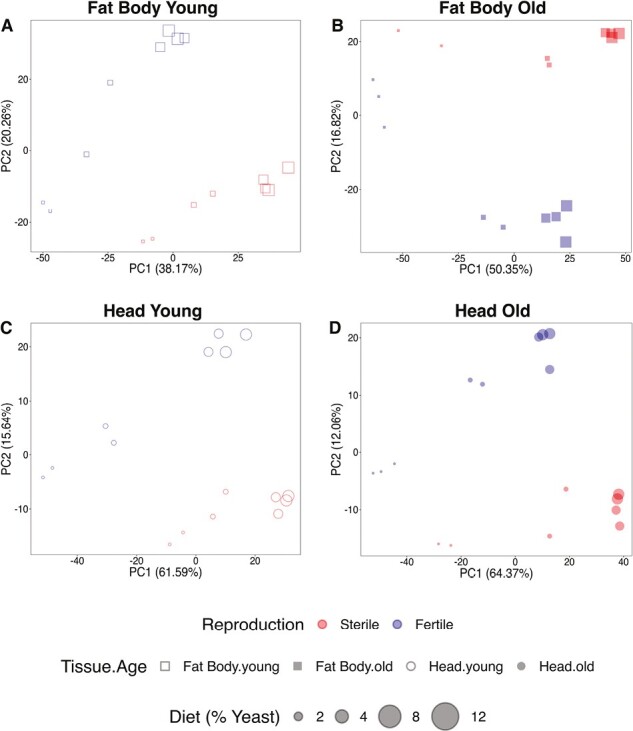
Little is known about the metabolic basis of life-history trade-offs but lipid stores seem to play a pivotal role. During reproduction, an energetically highly costly process, animals mobilize fat reserves. Conversely, reduced or curtailed reproduction promotes lipid storage in many animals. Systemic signals from the gonad seem to be involved: lacking germline stem cells display endocrine changes, have increased fat stores and are long-lived. Similarly, germline-ablated exhibit major somatic physiological changes, but whether and how germline loss affects lipid metabolism remains largely unclear. Here we show that germline-ablated flies have profoundly altered energy metabolism at the transcriptional level and store excess fat as compared to fertile flies. Germline activity thus constrains or represses fat accumulation, and this effect is conserved between flies and worms. More broadly, our findings confirm that lipids represent a major energetic currency in which costs of reproduction are paid.
关于生活史权衡的代谢基础,我们所知甚少,但脂质储存似乎起着关键作用。在繁殖过程中,这是一个能量消耗极高的过程,动物会动用脂肪储备。相反,繁殖减少或受限会促进许多动物的脂质储存。性腺发出的全身信号似乎也参与其中:缺乏生殖系干细胞会出现内分泌变化、脂肪储备增加且寿命延长。同样,生殖系被切除的个体表现出主要的体细胞生理变化,但生殖系缺失是否以及如何影响脂质代谢在很大程度上仍不清楚。在这里,我们表明,与可育果蝇相比,生殖系被切除的果蝇在转录水平上能量代谢发生了深刻变化,并储存了多余的脂肪。因此,生殖系活动会限制或抑制脂肪积累,这种效应在果蝇和线虫之间是保守的。更广泛地说,我们的研究结果证实,脂质是支付繁殖成本的一种主要能量货币。