Ahmed Omar B, Bahwerth Fayez S, Alsafi Radi, Elsebaei Eman A, Ebid Gamal T, Theyab Abdulrhaman, Assaggaf Hamza
Environmental and Health Research, Umm Al-Qura University, Makkah, SAU.
Laboratory, King Faisal Hospital, Makkah, SAU.
Cureus. 2024 Feb 24;16(2):e54809. doi: 10.7759/cureus.54809. eCollection 2024 Feb.
Methicillin-resistant (MRSA) has become a major public health problem all over the world. After the 2019 coronavirus illness (COVID-19), the pandemic may have influenced research priorities and resource allocation, potentially affecting the ability to monitor MRSA trends.
The study aimed to evaluate the prevalence of including MRSA infections, and their antimicrobial susceptibilities over the years 2019 and 2020 in a tertiary hospital in Makkah City, KSA.
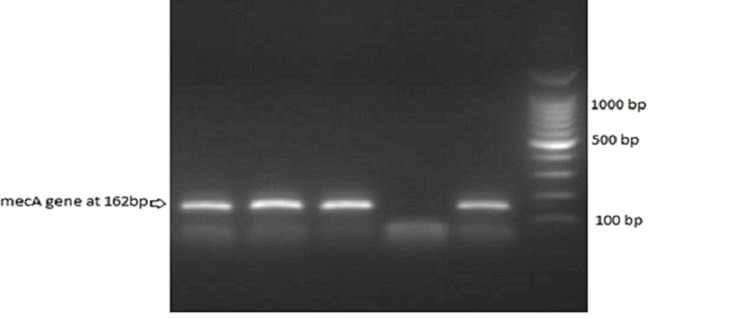
A total of 2128 and 1515 laboratory (lab) samples were collected during the years 2019 and 2020, respectively. From these samples, the prevalence of including MRSA, and their antibiotic susceptibility were identified using standard, automated, and molecular microbiological methods.
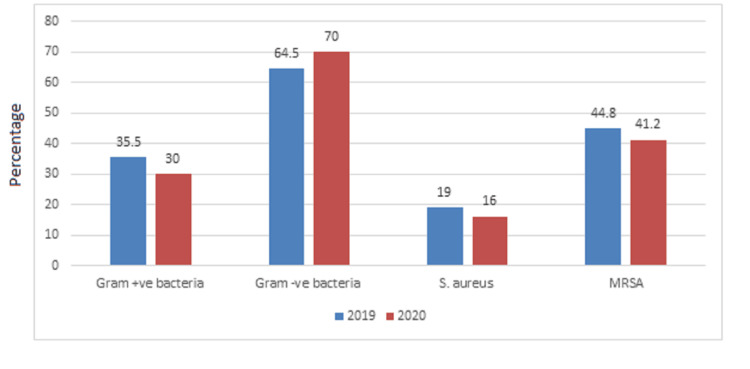
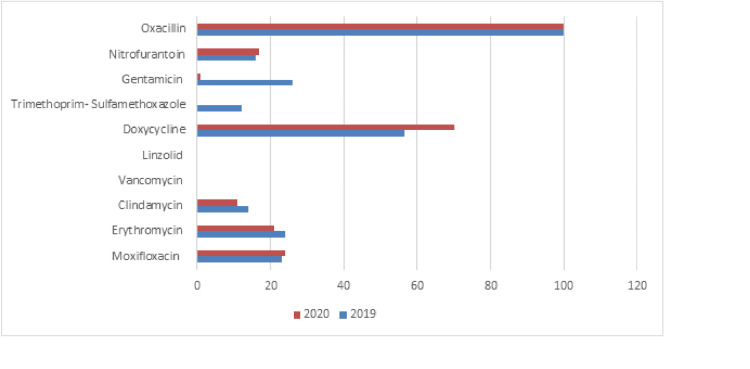
The present study shows that the lab prevalence of all S. during 2019 was found to be 35.5%, of which MRSA was 44.8%. During 2020, the frequency of strains was 16%, of which MRSA was 41.2%. The most common MRSA isolated during both years were colonizing pus swabs and urine samples. The results showed that MRSA susceptibility against antimicrobial agents in 2019 was as follows: vancomycin (100%), linezolid (100%), trimethoprim-sulfamethoxazole (88%), and doxycycline (34.2%). The MRSA strains isolated during 2020 were as follows: vancomycin (100%), linezolid (96%), trimethoprim-sulfamethoxazole (100%), and doxycycline (24.3%). There was no significant difference in the incidence and antimicrobial resistance rates of MRSA over the two years.
It was concluded that the prevalence rates of MRSA have not increased in 2020 when compared to 2019. Vancomycin, linezolid, trimethoprim-sulfamethoxazole, and doxycycline remain susceptible to the positive collected MRSA strains. There was no significant difference between the prevalence and antimicrobial resistance rates of MRSA between 2019 and 2020. Continued research efforts are needed to address this persistent public health threat. Strategies to control the spread of MRSA should include early detection of MRSA and surveillance, even during pandemics.
耐甲氧西林金黄色葡萄球菌(MRSA)已成为全球主要的公共卫生问题。2019冠状病毒病(COVID-19)之后,这场大流行可能影响了研究重点和资源分配,潜在地影响了监测MRSA趋势的能力。
本研究旨在评估沙特阿拉伯麦加市一家三级医院在2019年和2020年期间包括MRSA感染在内的金黄色葡萄球菌感染的患病率及其抗菌药敏情况。
2019年和2020年分别共收集了2128份和1515份实验室样本。从这些样本中,使用标准、自动化和分子微生物学方法确定包括MRSA在内的金黄色葡萄球菌的患病率及其抗生素敏感性。
本研究表明,2019年所有金黄色葡萄球菌的实验室患病率为35.5%,其中MRSA为44.8%。2020年,金黄色葡萄球菌菌株的检出率为16%,其中MRSA为41.2%。这两年分离出的最常见的MRSA是定植于脓液拭子和尿液样本中的菌株。结果显示,2019年MRSA对抗菌药物的敏感性如下:万古霉素(100%)、利奈唑胺(100%)、甲氧苄啶-磺胺甲恶唑(88%)和多西环素(34.2%)。2020年分离出的MRSA菌株情况如下:万古霉素(100%)、利奈唑胺(96%)、甲氧苄啶-磺胺甲恶唑(100%)和多西环素(24.3%)。两年间MRSA的发病率和抗菌耐药率无显著差异。
得出的结论是,与2019年相比,2020年MRSA的患病率没有增加。万古霉素、利奈唑胺、甲氧苄啶-磺胺甲恶唑和多西环素对所收集的阳性MRSA菌株仍敏感。2019年和2020年MRSA的患病率和抗菌耐药率之间没有显著差异。需要持续开展研究工作来应对这一持续存在的公共卫生威胁。控制MRSA传播的策略应包括即使在大流行期间也要对MRSA进行早期检测和监测。