Department of General Practice, Hainan Affiliated Hospital of Hainan Medical University, Hainan General Hospital, Haikou, Hainan, 570311, People's Republic of China.
Department of General Diseases, Hainan Chengmei Hospital, Haikou, Hainan, 570300, People's Republic of China.
Int J Chron Obstruct Pulmon Dis. 2024 Mar 21;19:799-813. doi: 10.2147/COPD.S442191. eCollection 2024.
Chronic obstructive pulmonary disease (COPD) is a common respiratory disorder in pulmonology. Chuanbeimu (CBM) is a traditional Chinese medicinal herb for treating COPD and has been widely utilized in clinical practice. However, the mechanism of CBM in the treatment of COPD remains incompletely understood. This study aims to investigate the underlying therapeutic mechanism of CBM for COPD using network pharmacology and experimental approaches.
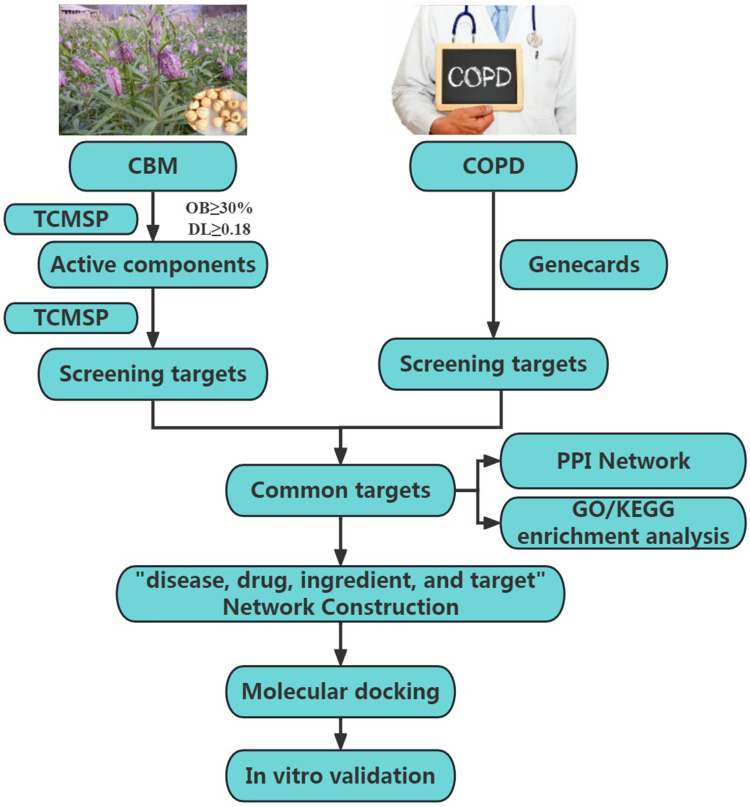
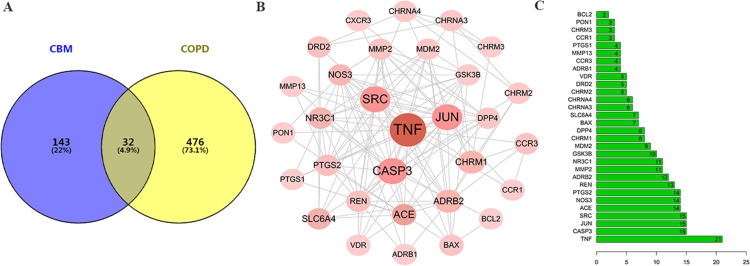
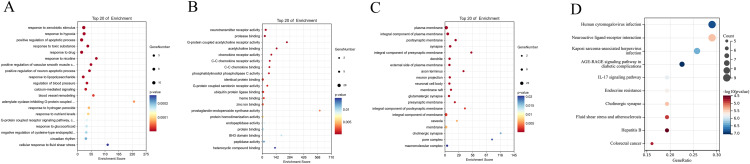
Active ingredients and their targets were obtained from the Traditional Chinese Medicine Systems Pharmacology database. COPD-associated targets were retrieved from the GeneCards database. The common targets for CBM and COPD were identified through Venn diagram analysis. Protein-protein interaction (PPI) networks and disease-herb-ingredient-target networks were constructed. Subsequently, the results of the network pharmacology were validated by molecular docking and in vitro experiments.
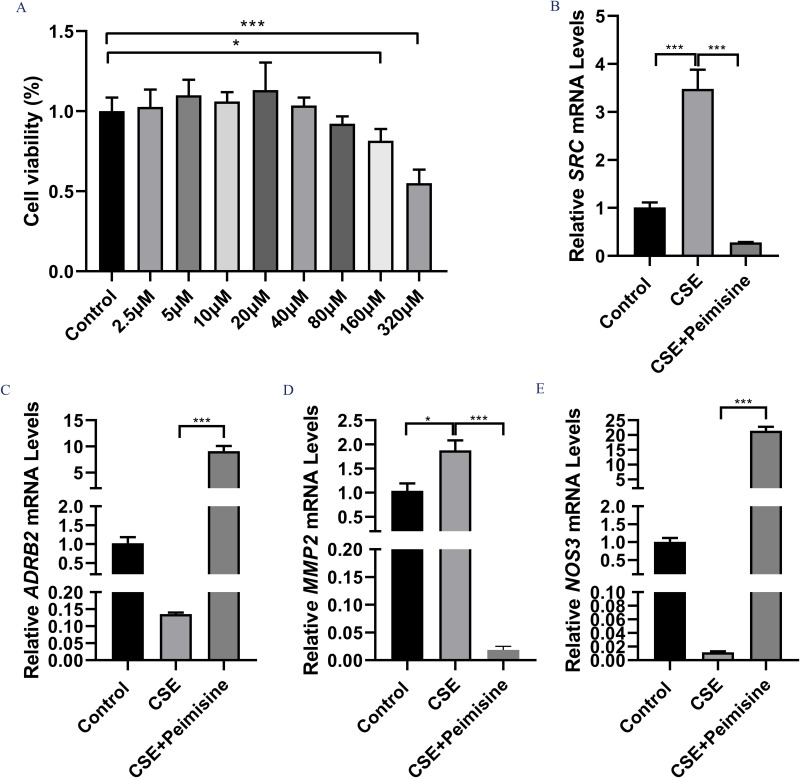
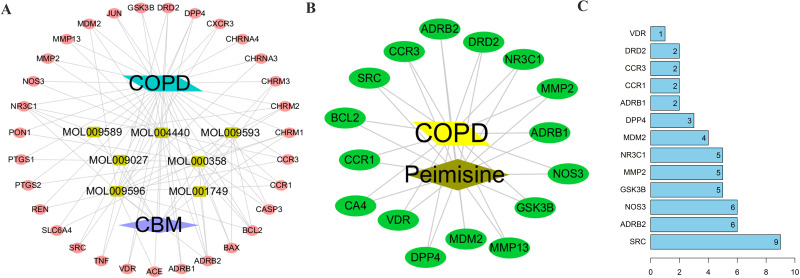
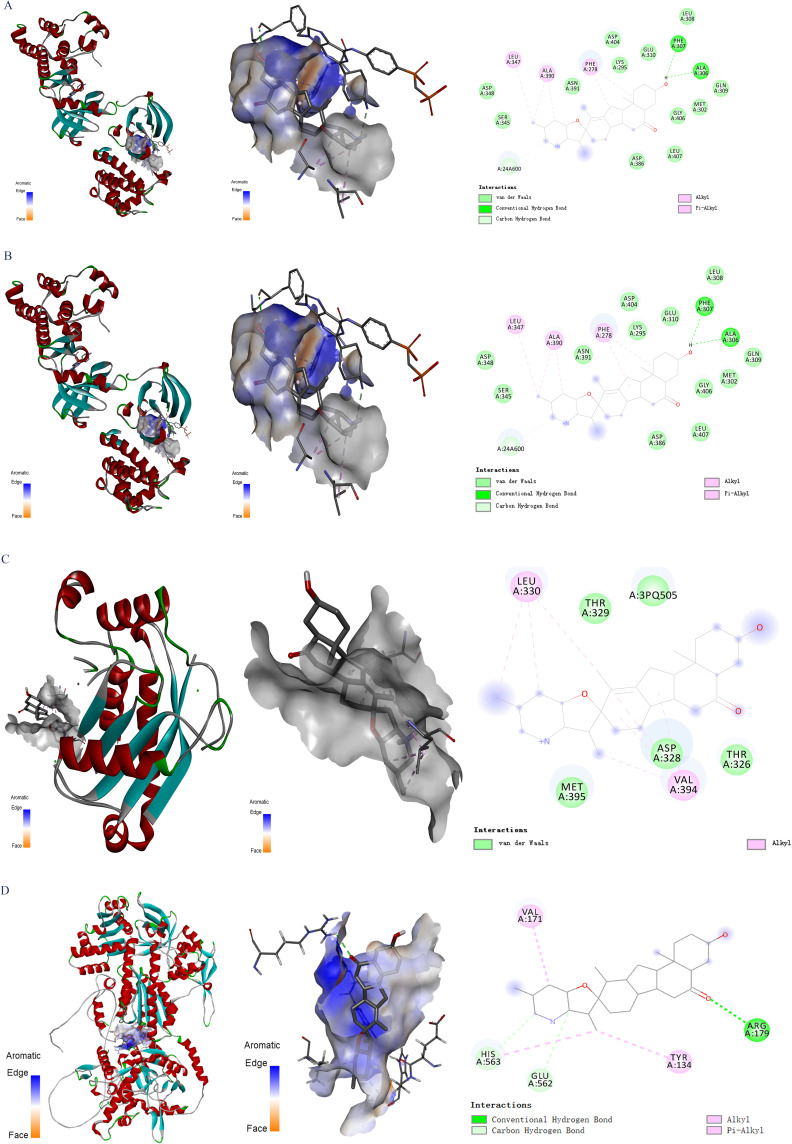
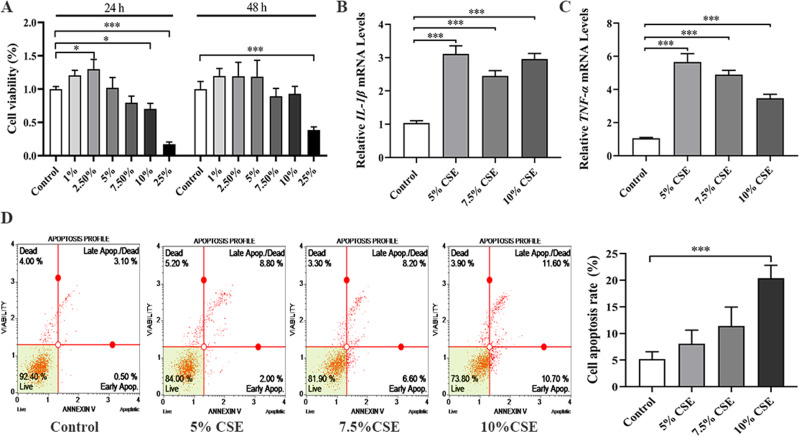
Seven active ingredients and 32 potential targets for CBM were identified as closely associated with COPD. The results of the disease-herb-ingredient-target network and PPI network showed that peimisine emerged as the core ingredient, and , and were the potential targets for CBM in treating COPD. Molecular docking analysis confirmed that peimisine exhibited high binding affinity with , and . In vitro experiments demonstrated that peimisine significantly upregulated the expression of and and downregulated the expression of and .
These findings indicate that CBM may modulate the expression of , and , thereby exerting a protective effect against COPD.
慢性阻塞性肺疾病(COPD)是呼吸科常见的呼吸系统疾病。川白芷(CBM)是一种治疗 COPD 的中药,已广泛应用于临床实践。然而,CBM 治疗 COPD 的机制仍不完全清楚。本研究旨在通过网络药理学和实验方法探讨 CBM 治疗 COPD 的潜在治疗机制。
从中药系统药理学数据库中获取活性成分及其靶点,从 GeneCards 数据库中检索 COPD 相关靶点。通过 Venn 图分析鉴定 CBM 和 COPD 的共同靶点。构建蛋白质-蛋白质相互作用(PPI)网络和疾病-草药-成分-靶点网络。随后,通过分子对接和体外实验验证网络药理学的结果。
鉴定出 7 种 CBM 活性成分和 32 个潜在靶点与 COPD 密切相关。疾病-草药-成分-靶点网络和 PPI 网络的结果表明,贝母辛是 CBM 治疗 COPD 的核心成分,而 、 、 是 CBM 治疗 COPD 的潜在靶点。分子对接分析证实贝母辛与 、 具有较高的结合亲和力。体外实验表明,贝母辛能显著上调 、 的表达,下调 、 的表达。
这些发现表明 CBM 可能通过调节 、 和 的表达发挥对 COPD 的保护作用。