Meng Qingtao, Han Jian, Wang Peng, Jia Chenxu, Guan Mingyang, Zhang Bolun, Zhao Wenzhi
Department of Orthopedics, The Second Affiliated Hospital of Dalian Medical University, Dalian 116028, China.
Department of Orthopedics, Dalian NO.3 People's Hospital, Dalian 116091, China.
J Bone Oncol. 2024 Mar 16;45:100594. doi: 10.1016/j.jbo.2024.100594. eCollection 2024 Apr.
Osteosarcoma, a tumor that originates from bone cells, has a poor prognosis and a high degree of malignancy. Anlotinib, a small-molecule multi-target tyrosine kinase inhibitor (TKI), is the first-line drug in treating osteosarcoma, especially in late-stage osteosarcoma. However, patients often develop resistance after using anlotinib for a certain period, which poses a challenge to its further clinical application. Recently, several TKIs, for instance regorafenib and cabozantinib, have showed clinical interest in treating osteosarcoma and target both vascular endothelial growth factor receptor (VEGFR) and mesenchymal epithelial transition factor (c-MET). Therefore, the identification of new TKI warrants further investigation.
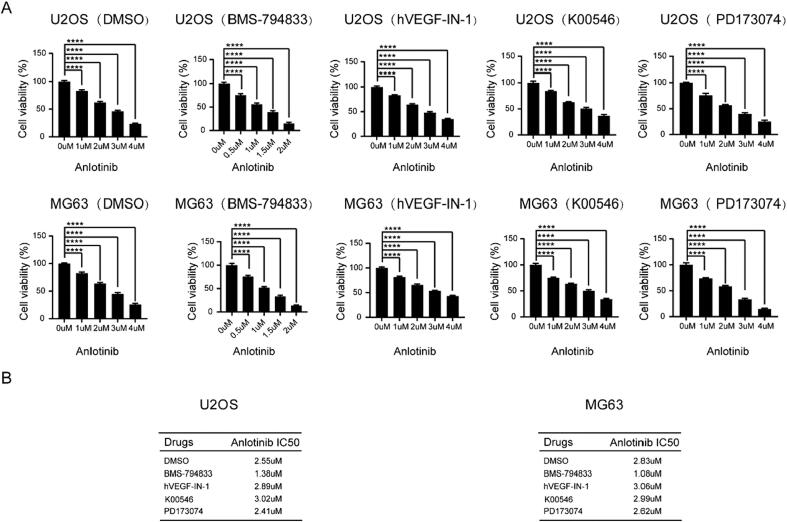
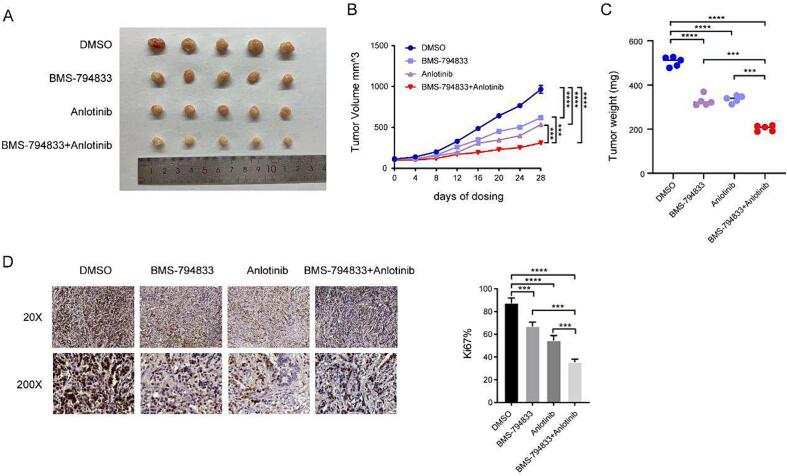
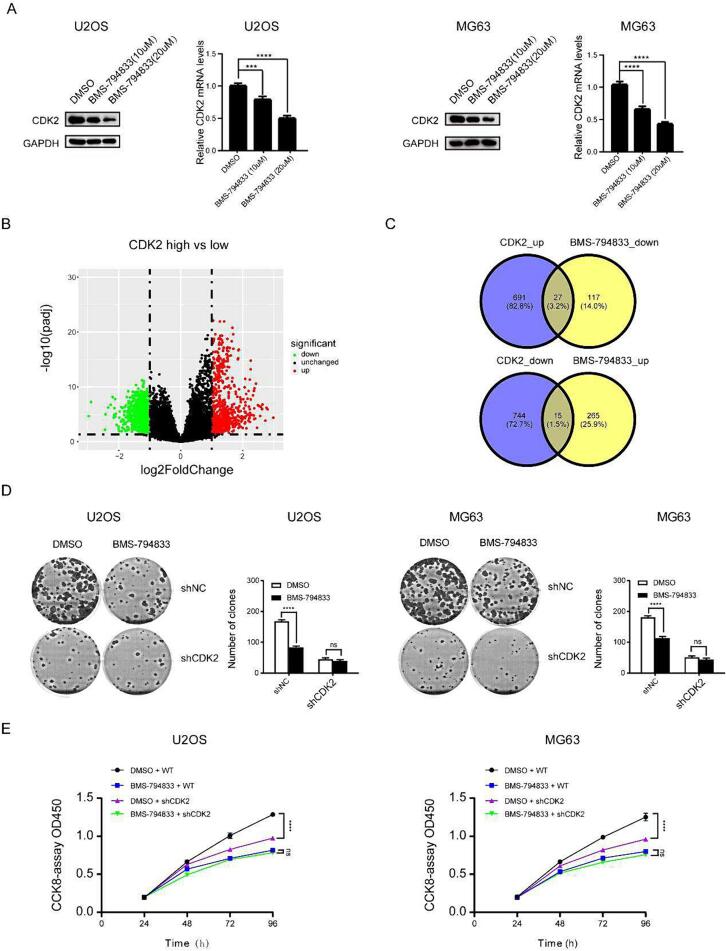
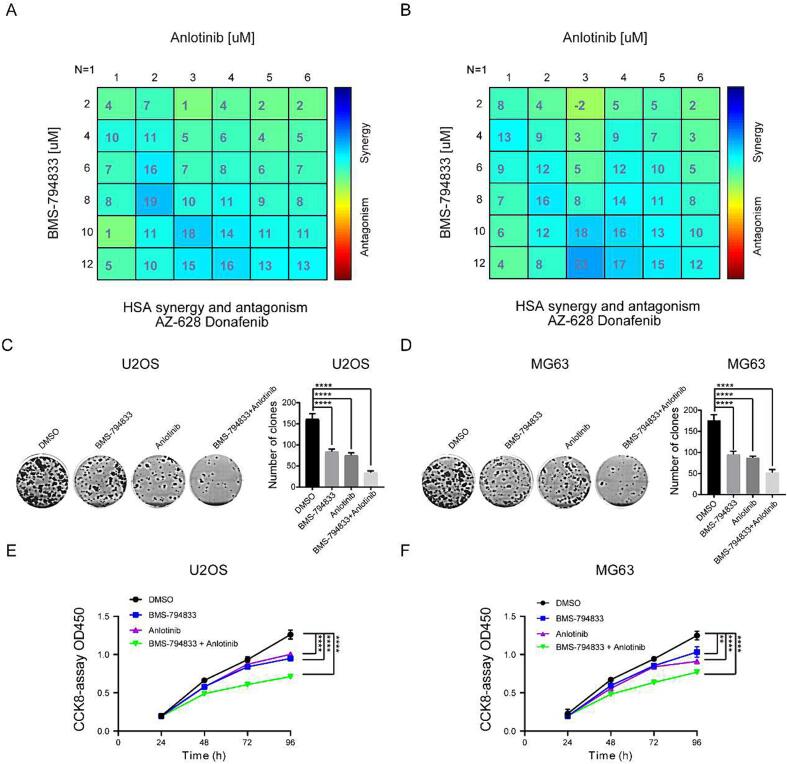
We performed CCK8 aasays to confirm that BMS-794833 sensitization osteosarcoma cells to anlotinib. Bioinformatics analysis and rescue experiments showed that the reduce of resistance were dependent on the VEGFR/Ras/CDK2 pathway. Cell line based xenograft model were used to demonstrate that BMS-794833 and anlotinib could synergistically treat OS.
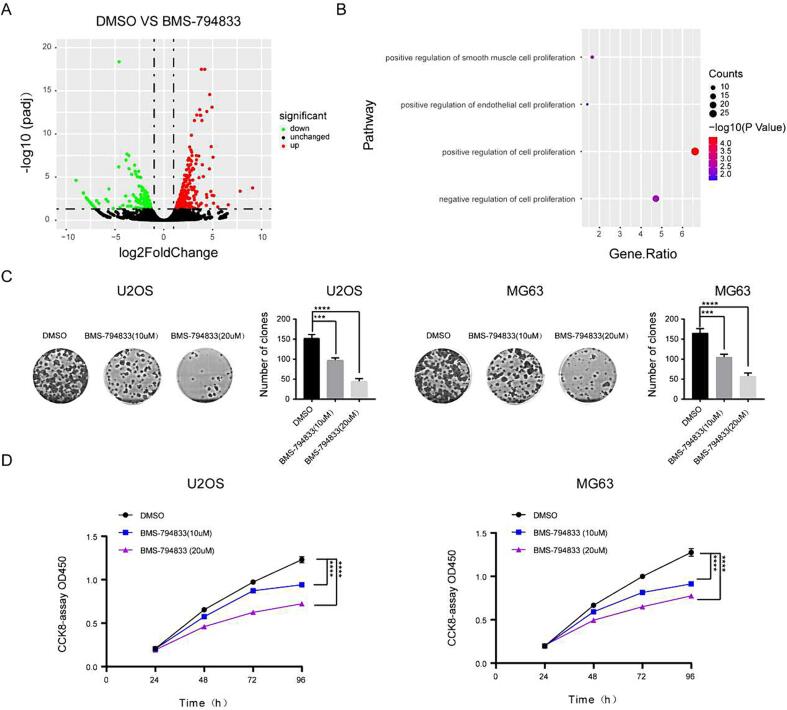
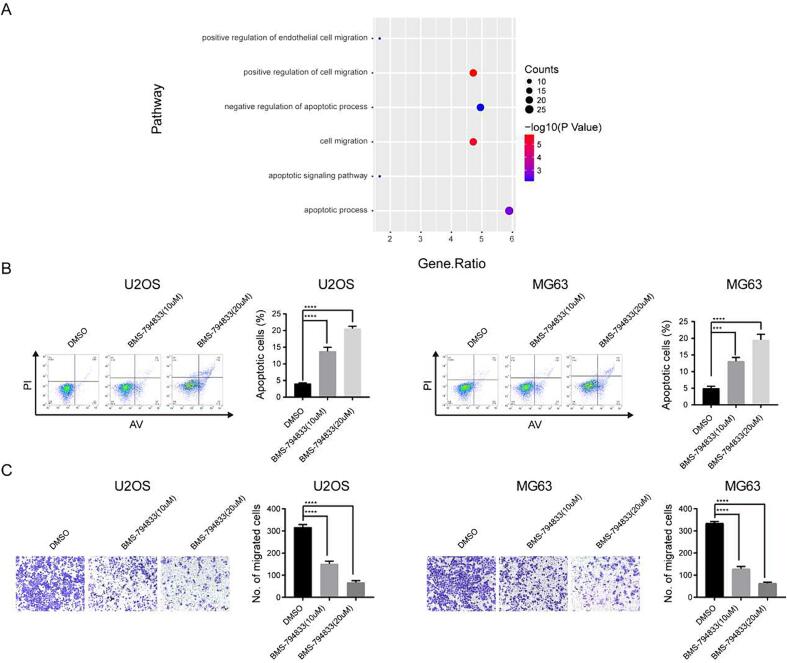
Here, we found that BMS-794833 reduced anlotinib resistance in osteosarcoma by targeting the VEGFR/Ras/CDK2 pathway. CCK8 assay showed that BMS-794833 significantly improved the resistance of osteosarcoma cells to anlotinib. The results of rescue experiments showed that the regulatory effects of BMS-794833 on the proliferation and drug resistance of osteosarcoma cells were dependent on the VEGFR/Ras/CDK2 pathway. In addition, BMS-794833 affected the resistance of osteosarcoma cells to anlotinib through epithelial-mesenchymal transition (EMT) and apoptosis pathways. More importantly, BMS-794833 and anlotinib exerted synergistic therapeutic effects against osteosarcoma .
Altogether, this study reveals a new (VEGFR)-targeting drug that can be combined with anlotinib for the treatment of osteosarcoma, which provides an important theoretical basis for overcoming anlotinib resistance.
骨肉瘤是一种起源于骨细胞的肿瘤,预后较差,恶性程度高。安罗替尼是一种小分子多靶点酪氨酸激酶抑制剂(TKI),是治疗骨肉瘤的一线药物,尤其是晚期骨肉瘤。然而,患者在使用安罗替尼一段时间后往往会产生耐药性,这对其进一步的临床应用构成挑战。最近,几种TKI,如瑞戈非尼和卡博替尼,在治疗骨肉瘤方面显示出临床应用前景,且靶向血管内皮生长因子受体(VEGFR)和间充质上皮转化因子(c-MET)。因此,鉴定新的TKI值得进一步研究。
我们进行CCK8实验以证实BMS-794833使骨肉瘤细胞对安罗替尼敏感。生物信息学分析和挽救实验表明,耐药性的降低依赖于VEGFR/Ras/CDK2途径。基于细胞系的异种移植模型用于证明BMS-794833和安罗替尼可协同治疗骨肉瘤。
在此,我们发现BMS-794833通过靶向VEGFR/Ras/CDK2途径降低骨肉瘤对安罗替尼的耐药性。CCK8实验表明,BMS-794833显著提高了骨肉瘤细胞对安罗替尼的耐药性。挽救实验结果表明,BMS-794833对骨肉瘤细胞增殖和耐药性的调节作用依赖于VEGFR/Ras/CDK2途径。此外,BMS-794833通过上皮-间质转化(EMT)和凋亡途径影响骨肉瘤细胞对安罗替尼的耐药性。更重要的是,BMS-794833和安罗替尼对骨肉瘤发挥协同治疗作用。
总之,本研究揭示了一种新的靶向(VEGFR)药物,可与安罗替尼联合用于治疗骨肉瘤,这为克服安罗替尼耐药性提供了重要的理论依据。