The First Clinical Medical College, Gannan Medical University, Ganzhou, China.
Cancer Control. 2024 Jan-Dec;31:10732748241241162. doi: 10.1177/10732748241241162.
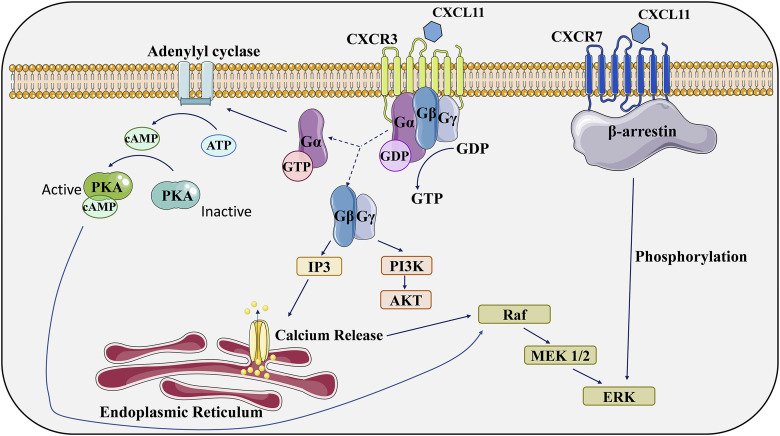
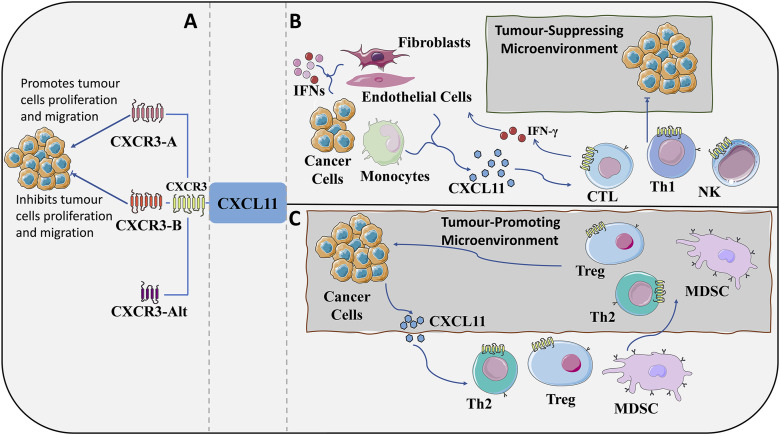
Chemokine ligand 11 is a member of the CXC chemokine family and exerts its biological function mainly through binding to CXCR3 and CXCR7. The gene is ubiquitously overexpressed in various human malignant tumors; however, its specific mechanisms vary among different cancer types. Recent studies have found that CXCL11 is involved in the activation of multiple oncogenic signaling pathways and is closely related to tumorigenesis, progression, chemotherapy tolerance, immunotherapy efficacy, and poor prognosis. Depending on the specific expression of its receptor subtype, CXCL11 also has a complex 2-fold role in tumours; therefore, directly targeting the structure-function of CXCL11 and its receptors may be a challenging task. In this review, we summarize the biological functions of CXCL11 and its receptors and their roles in various types of malignant tumors and point out the directions for clinical applications.
趋化因子配体 11 是 CXC 趋化因子家族的一员,主要通过与 CXCR3 和 CXCR7 结合发挥其生物学功能。该基因在各种人类恶性肿瘤中广泛过表达,但在不同癌症类型中的具体机制有所不同。最近的研究发现,CXCL11 参与了多种致癌信号通路的激活,与肿瘤发生、进展、化疗耐药、免疫治疗疗效和不良预后密切相关。根据其受体亚型的特定表达,CXCL11 在肿瘤中也具有复杂的双重作用;因此,直接针对 CXCL11 及其受体的结构-功能进行靶向可能是一项具有挑战性的任务。在这篇综述中,我们总结了 CXCL11 及其受体的生物学功能及其在各种恶性肿瘤中的作用,并指出了其临床应用的方向。