Department of Pathology, Wayne State University School of Medicine, Detroit, MI 48202, USA.
Department of Ophthalmology, Visual and Anatomical Sciences, Wayne State University School of Medicine, Detroit, MI 48202, USA.
Cells. 2024 Mar 12;13(6):495. doi: 10.3390/cells13060495.
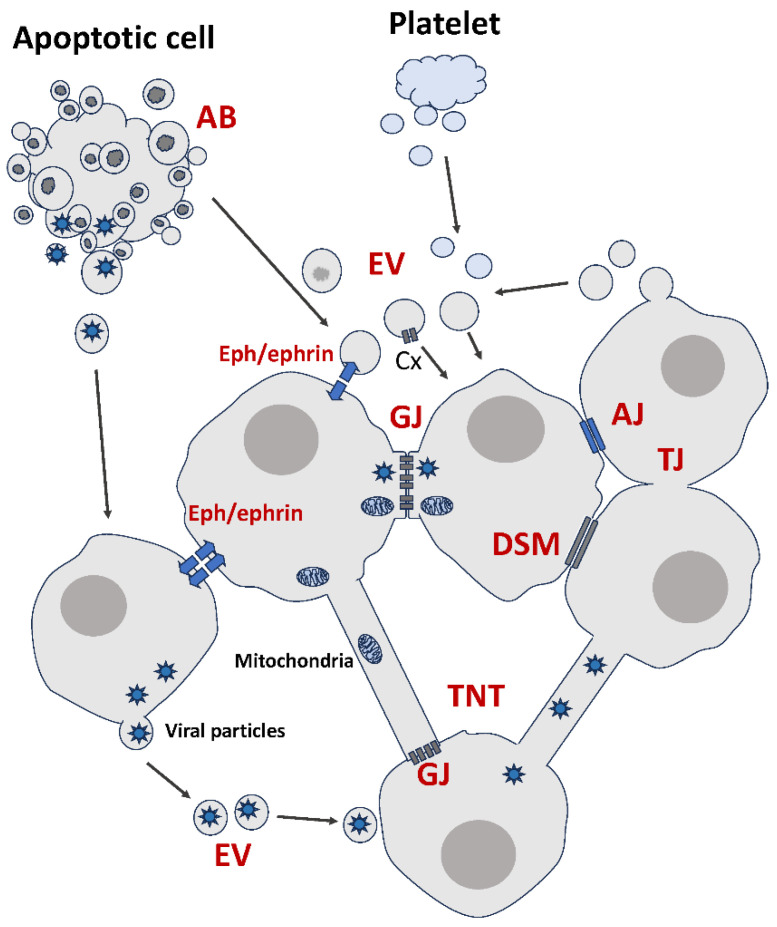
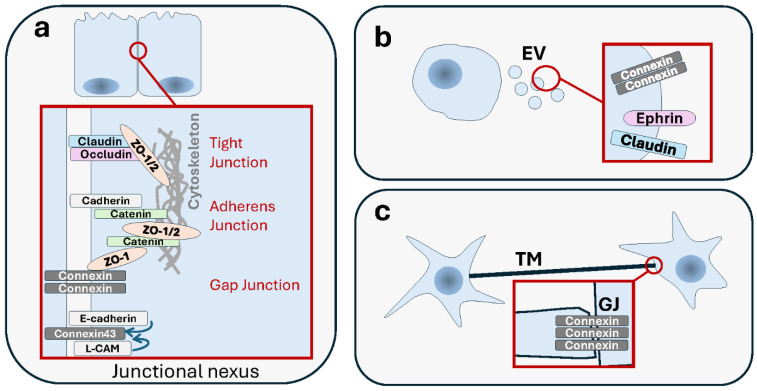
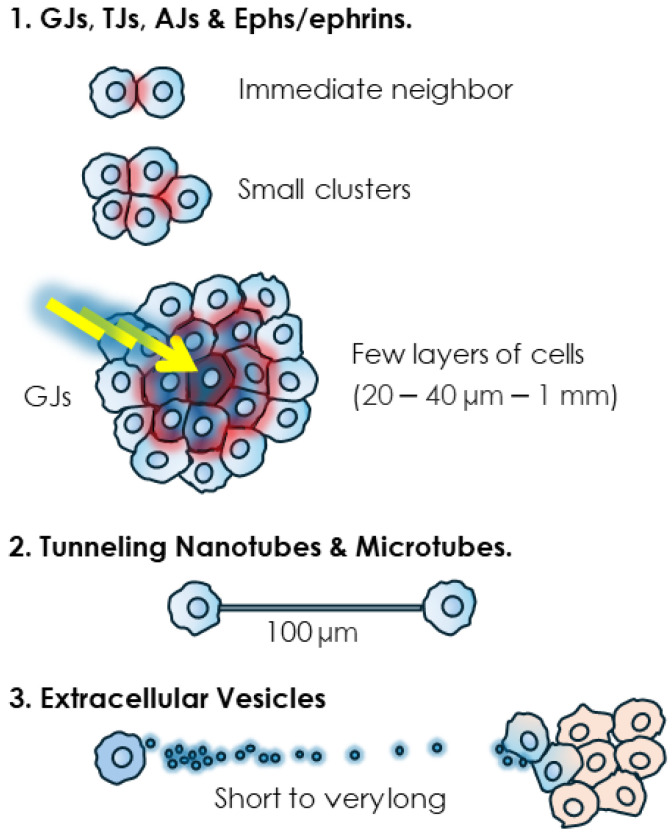
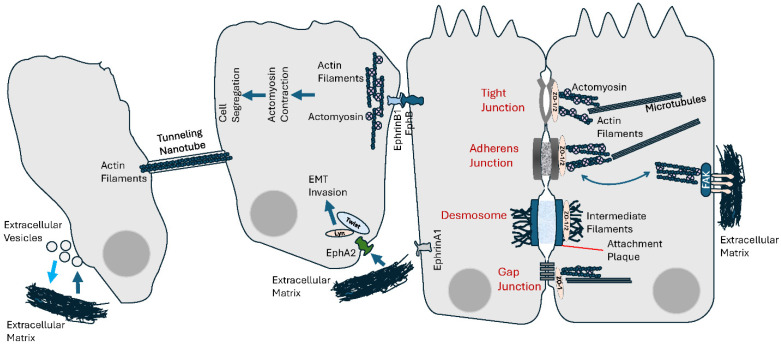
From the moment a cell is on the path to malignant transformation, its interaction with other cells from the microenvironment becomes altered. The flow of molecular information is at the heart of the cellular and systemic fate in tumors, and various processes participate in conveying key molecular information from or to certain cancer cells. For instance, the loss of tight junction molecules is part of the signal sent to cancer cells so that they are no longer bound to the primary tumors and are thus free to travel and metastasize. Upon the targeting of a single cell by a therapeutic drug, gap junctions are able to communicate death information to by-standing cells. The discovery of the importance of novel modes of cell-cell communication such as different types of extracellular vesicles or tunneling nanotubes is changing the way scientists look at these processes. However, are they all actively involved in different contexts at the same time or are they recruited to fulfill specific tasks? What does the multiplicity of modes mean for the overall progression of the disease? Here, we extend an open invitation to think about the overall significance of these questions, rather than engage in an elusive attempt at a systematic repertory of the mechanisms at play.
从细胞开始恶性转化的那一刻起,它与微环境中其他细胞的相互作用就发生了改变。分子信息的流动是肿瘤中细胞和全身命运的核心,各种过程都参与了从特定癌细胞或向其传递关键分子信息的过程。例如,紧密连接分子的丢失是向癌细胞发出信号的一部分,使它们不再与原发性肿瘤结合,从而可以自由迁移和转移。当治疗药物靶向单个细胞时,间隙连接能够将死亡信息传递给旁观者细胞。新型细胞间通讯方式(如不同类型的细胞外囊泡或隧道纳米管)的重要性的发现正在改变科学家看待这些过程的方式。然而,它们是否同时都在不同的情况下积极参与,还是被招募来完成特定的任务?这些模式的多样性对疾病的整体进展意味着什么?在这里,我们邀请大家思考这些问题的整体意义,而不是试图系统地梳理其中的作用机制。