Xu Jingyuan, Kenar James A
Plant Polymer Research, National Center for Agricultural Utilization Research, Agricultural Research Service, US Department of Agriculture, 1815 North University Street, Peoria, IL 61604, USA.
Functional Food Research, National Center for Agricultural Utilization Research, Agricultural Research Service, US Department of Agriculture, 1815 North University Street, Peoria, IL 61604, USA.
Gels. 2024 Feb 28;10(3):171. doi: 10.3390/gels10030171.
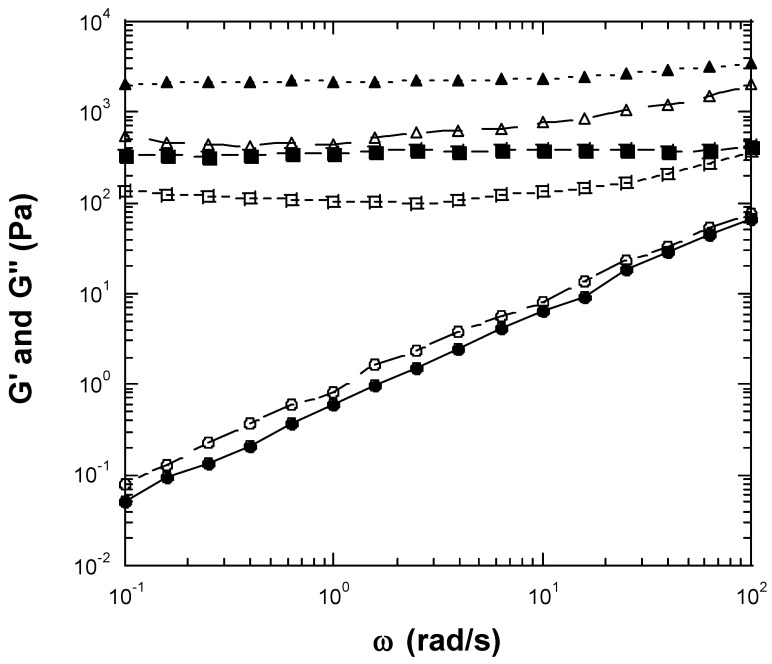
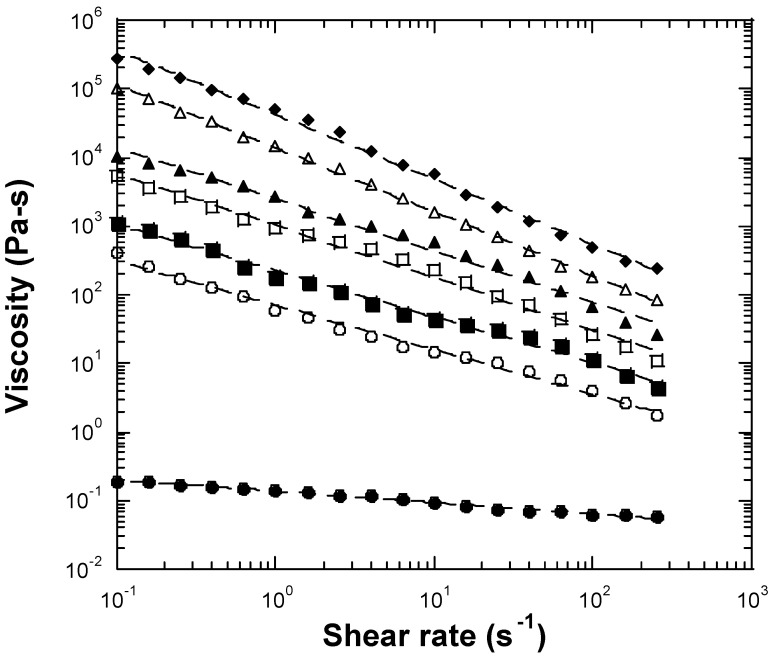
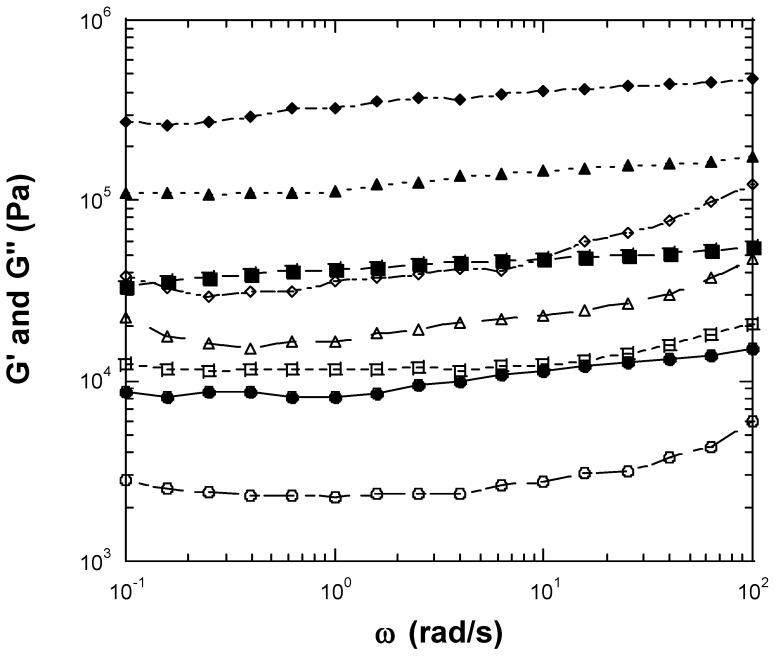
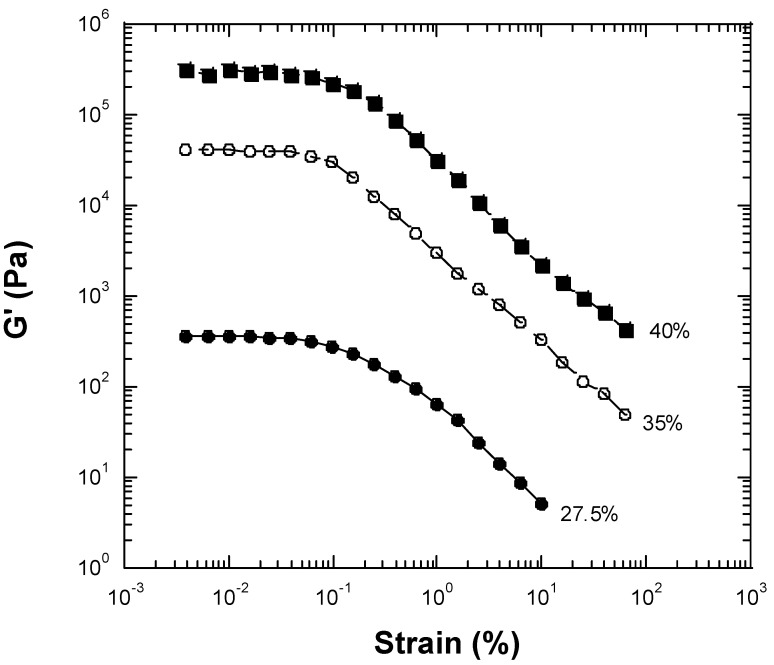
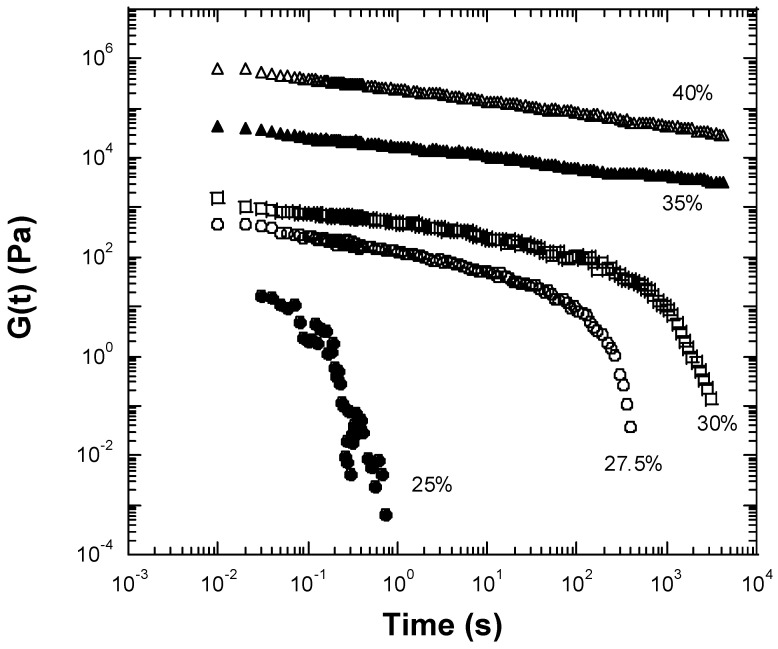
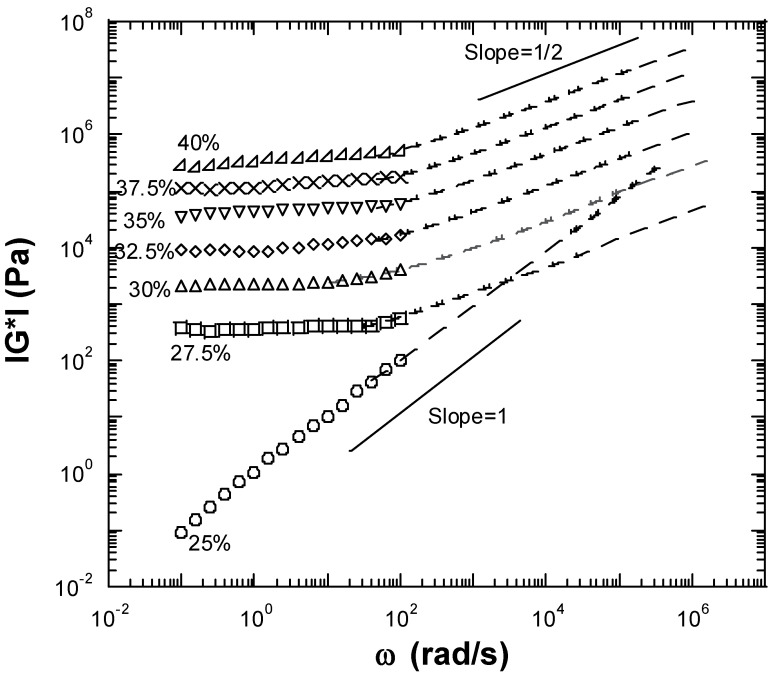
As a soluble fiber, inulin is present in many plants and has many applications in food and non-food products. In this work, we investigated the rheological properties of inulin dispersions at seven concentrations. The linear viscoelastic properties of inulin were determined using a conventional mechanical rheometer. At 25 wt%, inulin exhibited fluid-like viscoelastic liquid behavior. However, when concentrations were ≥27.5 wt%, inulin exhibited gel-like viscoelastic properties. The viscoelastic properties (moduli and viscosities) increased with increasing inulin concentration. The high-frequency linear rheological properties of inulin were also investigated using the modern light scattering technique, diffusion wave spectroscopy (DWS). The diffusion wave spectroscopy (DWS) measurements showed the amplitude of complex moduli (|G*(ω)|) of inulin gels (≥27.5 wt%) to be proportional to ½ power law of the frequency, which suggests inulin gels behave similarly to flexible polymers. The non-linear steady shear experiments demonstrated that inulin exhibited shear-thinning behavior that was well fitted by a power law constitutive model. The trend of the power law exponent from the experiments indicated that the shear-thinning extent for inulin was greater as the inulin concentration increased. The results of this work indicated that the properties of inulin gel can be manipulated by altering its concentration. Therefore, the desired inulin product can be designed accordingly. These results can be used to direct further food and non-food applications, such as wound healing materials for inulin gels.
作为一种可溶性纤维,菊粉存在于许多植物中,并在食品和非食品产品中有许多应用。在这项工作中,我们研究了七种浓度下菊粉分散体的流变特性。菊粉的线性粘弹性特性使用传统的机械流变仪进行测定。在25 wt%时,菊粉表现出类似流体的粘弹性液体行为。然而,当浓度≥27.5 wt%时,菊粉表现出类似凝胶的粘弹性特性。粘弹性特性(模量和粘度)随着菊粉浓度的增加而增加。还使用现代光散射技术扩散波谱(DWS)研究了菊粉的高频线性流变特性。扩散波谱(DWS)测量表明,菊粉凝胶(≥27.5 wt%)的复模量幅值(|G*(ω)|)与频率的1/2幂律成正比,这表明菊粉凝胶的行为类似于柔性聚合物。非线性稳态剪切实验表明,菊粉表现出剪切变稀行为,可用幂律本构模型很好地拟合。实验中幂律指数的趋势表明,菊粉的剪切变稀程度随着菊粉浓度的增加而更大。这项工作的结果表明,菊粉凝胶的特性可以通过改变其浓度来控制。因此,可以据此设计出所需的菊粉产品。这些结果可用于指导进一步的食品和非食品应用,例如菊粉凝胶的伤口愈合材料。