Kokot Anna, Gadakh Sachin, Saha Indrajit, Gajda Ewa, Łaźniewski Michał, Rakshit Somnath, Sengupta Kaustav, Mollah Ayatullah Faruk, Denkiewicz Michał, Górczak Katarzyna, Claesen Jürgen, Burzykowski Tomasz, Plewczynski Dariusz
Department of Clinical Molecular Biology, Medical University of Bialystok, 15-089 Bialystok, Poland.
Centre of New Technologies, University of Warsaw, 02-097 Warszawa, Poland.
Curr Issues Mol Biol. 2024 Mar 21;46(3):2713-2740. doi: 10.3390/cimb46030171.
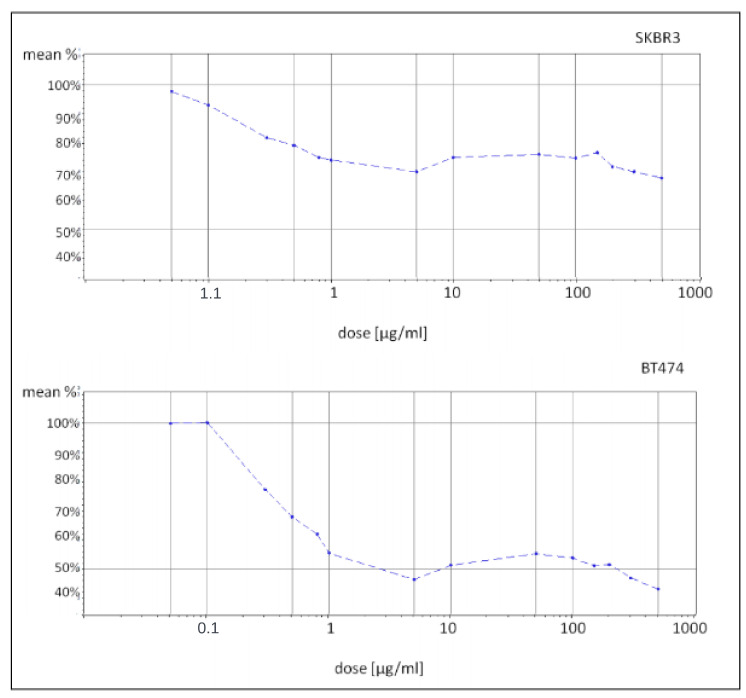
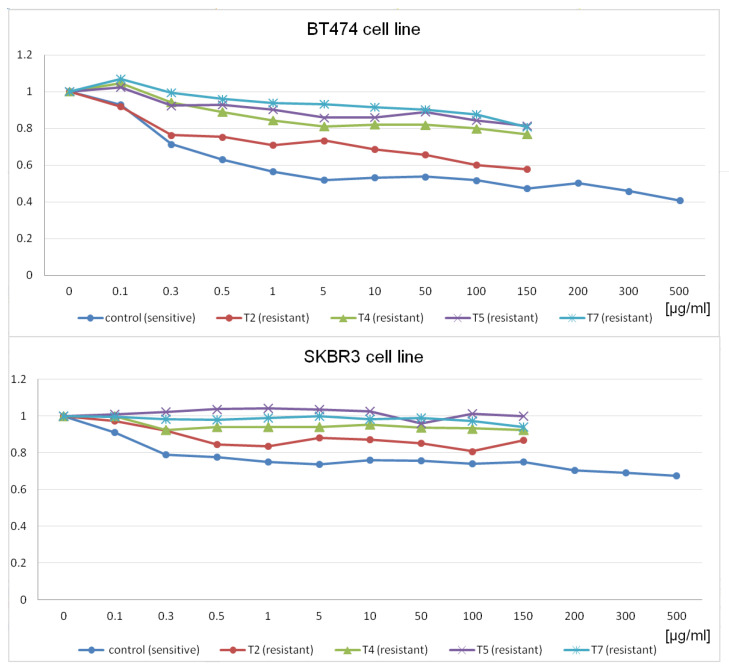
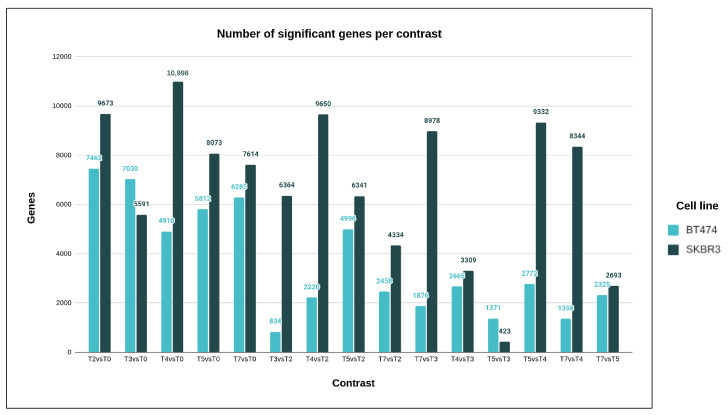
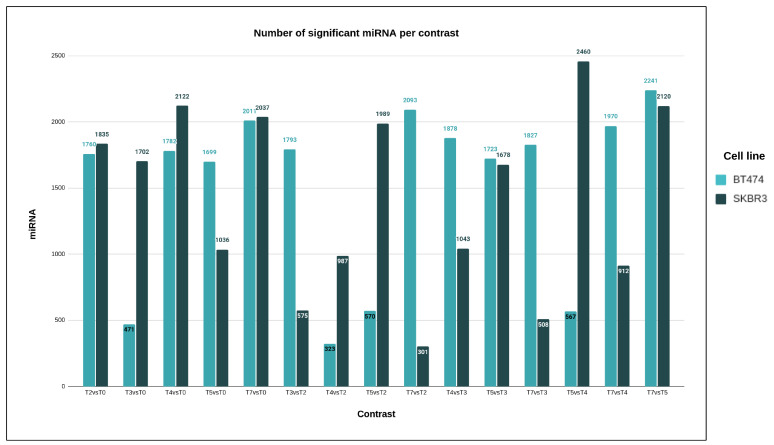
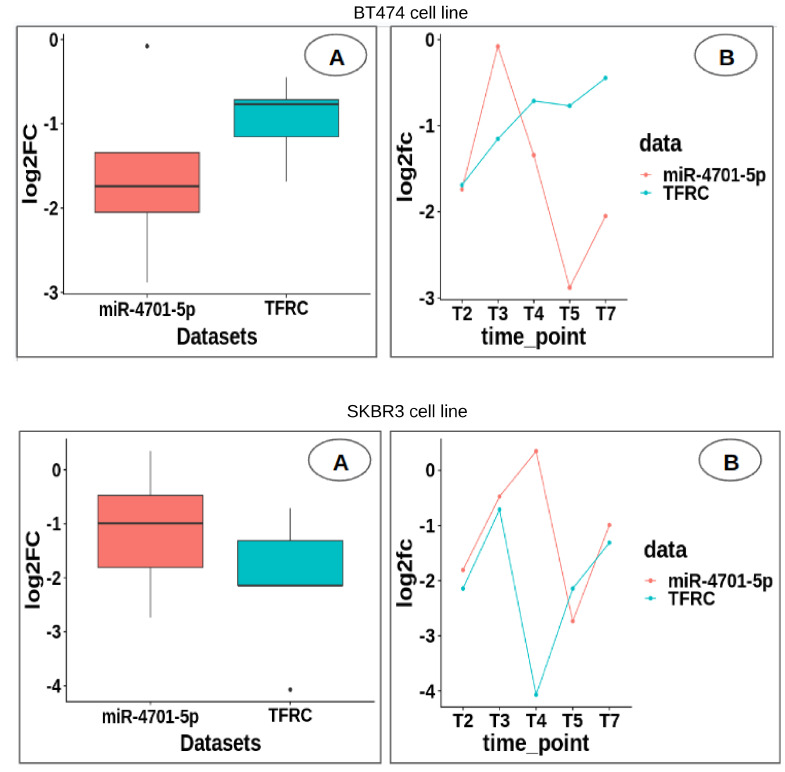
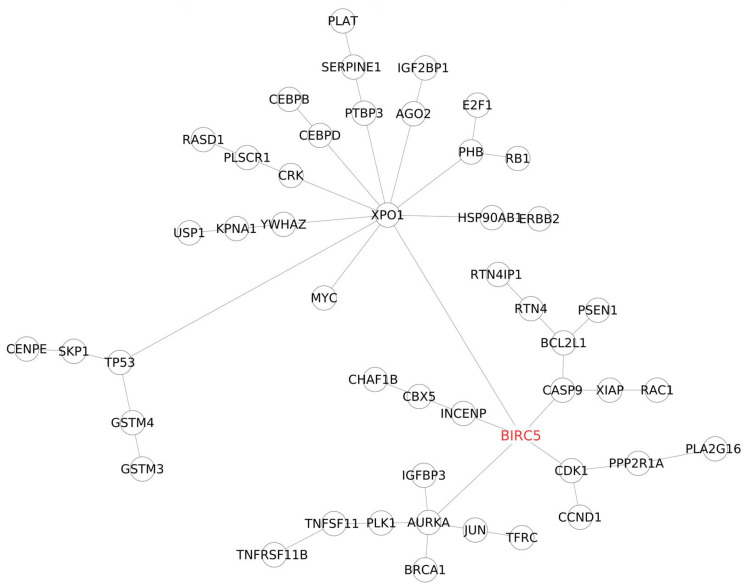
HER2-positive breast cancer is one of the most prevalent forms of cancer among women worldwide. Generally, the molecular characteristics of this breast cancer include activation of human epidermal growth factor receptor-2 (HER2) and hormone receptor activation. HER2-positive is associated with a higher death rate, which led to the development of a monoclonal antibody called trastuzumab, specifically targeting HER2. The success rate of HER2-positive breast cancer treatment has been increased; however, drug resistance remains a challenge. This fact motivated us to explore the underlying molecular mechanisms of trastuzumab resistance. For this purpose, a two-fold approach was taken by considering well-known breast cancer cell lines SKBR3 and BT474. In the first fold, trastuzumab treatment doses were optimized separately for both cell lines. This was done based on the proliferation rate of cells in response to a wide variety of medication dosages. Thereafter, each cell line was cultivated with a steady dosage of herceptin for several months. During this period, six time points were selected for further in vitro analysis, ranging from the untreated cell line at the beginning to a fully resistant cell line at the end of the experiment. In the second fold, nucleic acids were extracted for further high throughput-based microarray experiments of gene and microRNA expression. Such expression data were further analyzed in order to infer the molecular mechanisms involved in the underlying development of trastuzumab resistance. In the list of differentially expressed genes and miRNAs, multiple genes (e.g., , , , and ) and miRNAs (e.g., hsa miR 574 3p, hsa miR 4530, and hsa miR 197 3p) responsible for trastuzumab resistance were found. Downstream analysis showed that , , and were also targeted by hsa-miR-8485. Moreover, it indicated that miR-4701-5p was highly expressed as compared to in the SKBR3 cell line. These results unveil key genes and miRNAs as molecular regulators for trastuzumab resistance.
人表皮生长因子受体2(HER2)阳性乳腺癌是全球女性中最常见的癌症形式之一。一般来说,这种乳腺癌的分子特征包括人表皮生长因子受体-2(HER2)的激活和激素受体激活。HER2阳性与较高的死亡率相关,这促使人们开发了一种名为曲妥珠单抗的单克隆抗体,专门针对HER2。HER2阳性乳腺癌的治疗成功率有所提高;然而,耐药性仍然是一个挑战。这一事实促使我们探索曲妥珠单抗耐药的潜在分子机制。为此,我们采用了一种双重方法,考虑了著名的乳腺癌细胞系SKBR3和BT474。在第一步中,分别针对这两种细胞系优化曲妥珠单抗治疗剂量。这是根据细胞对各种药物剂量的增殖率来进行的。此后,每个细胞系用稳定剂量的赫赛汀培养数月。在此期间,选择了六个时间点进行进一步的体外分析,从实验开始时未处理的细胞系到实验结束时完全耐药的细胞系。在第二步中,提取核酸用于进一步基于高通量的基因和微小RNA表达微阵列实验。对这些表达数据进行进一步分析,以推断曲妥珠单抗耐药潜在发展过程中涉及的分子机制。在差异表达基因和微小RNA列表中,发现了多个负责曲妥珠单抗耐药的基因(例如, 、 、 、 和 )和微小RNA(例如,hsa miR 574 3p、hsa miR 4530和hsa miR 197 3p)。下游分析表明, 、 和 也受到hsa-miR-8485的靶向作用。此外,结果表明,与SKBR3细胞系中的 相比,miR-4701-5p高表达。这些结果揭示了关键基因和微小RNA作为曲妥珠单抗耐药的分子调节因子。