Department of Surgery, School of Clinical Medicine, The University of Hong Kong, Hong Kong SAR, China.
Dr. Li Dak-Sum Research Centre, The University of Hong Kong, Hong Kong SAR, China.
Toxins (Basel). 2024 Mar 11;16(3):144. doi: 10.3390/toxins16030144.
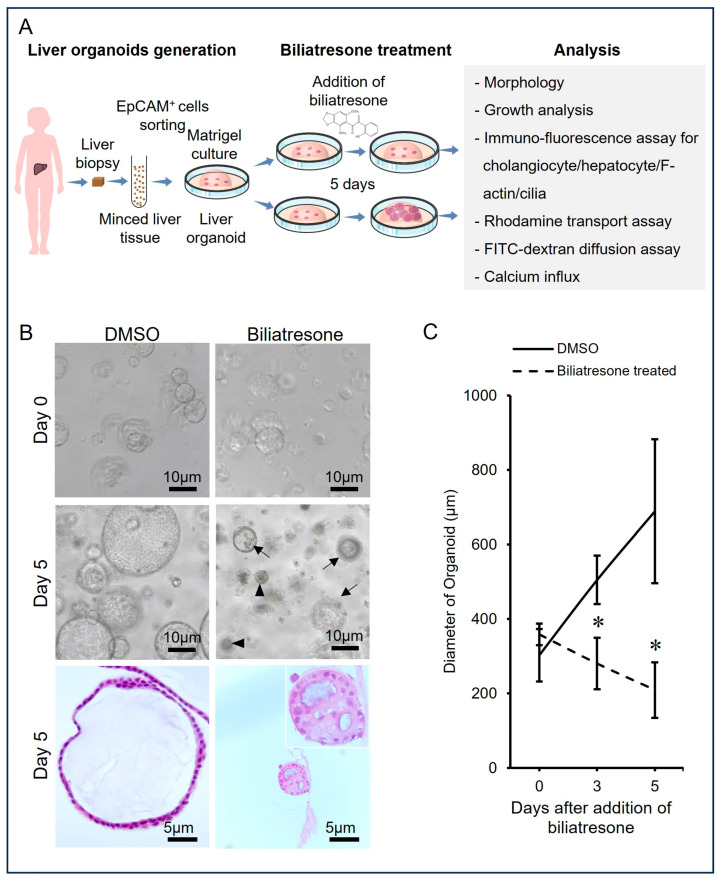
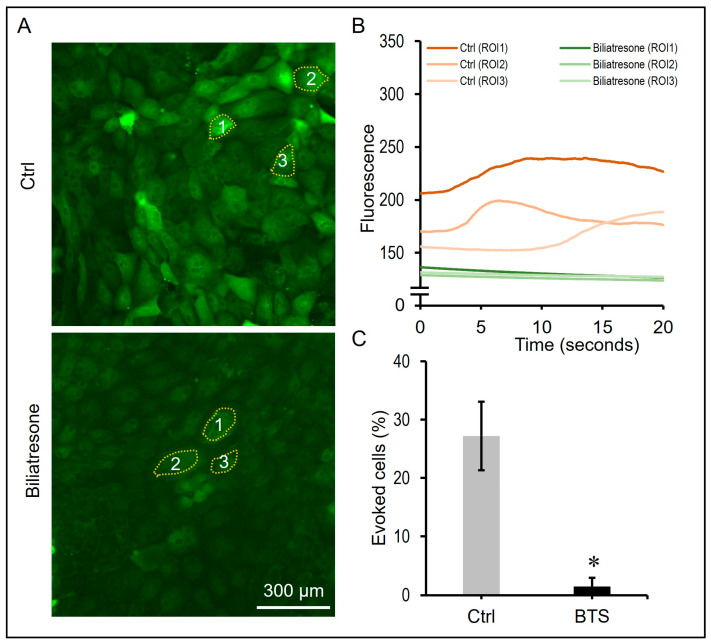
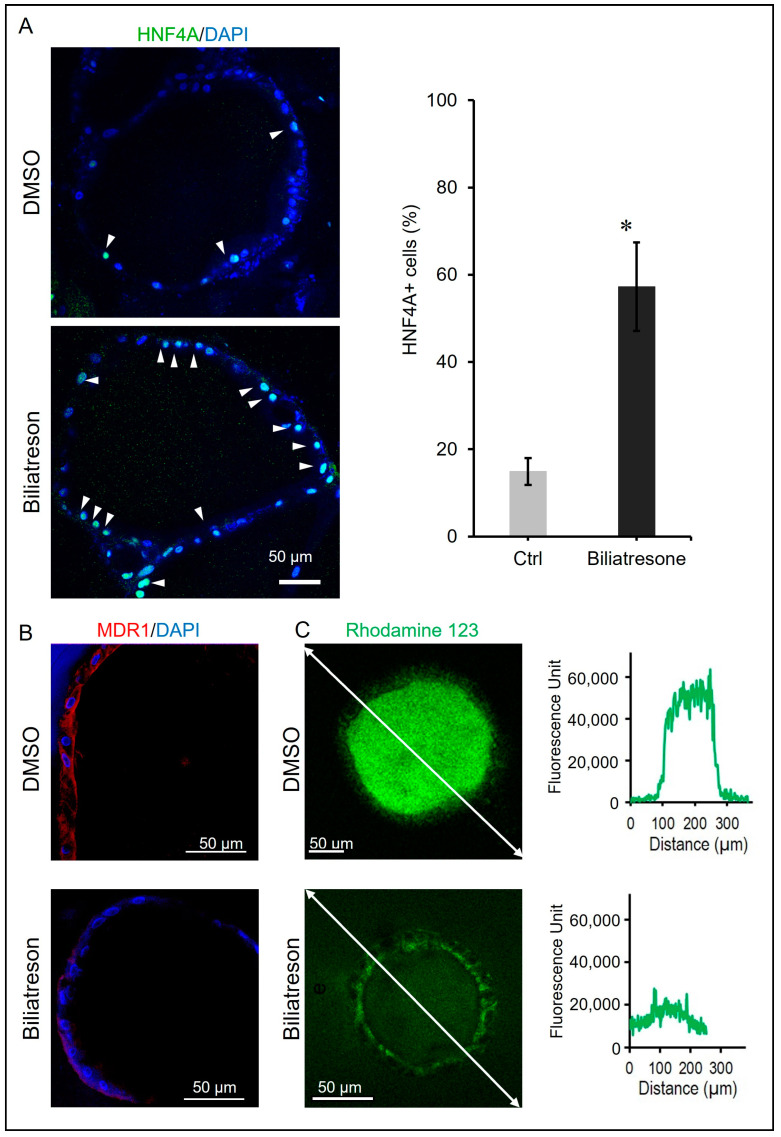
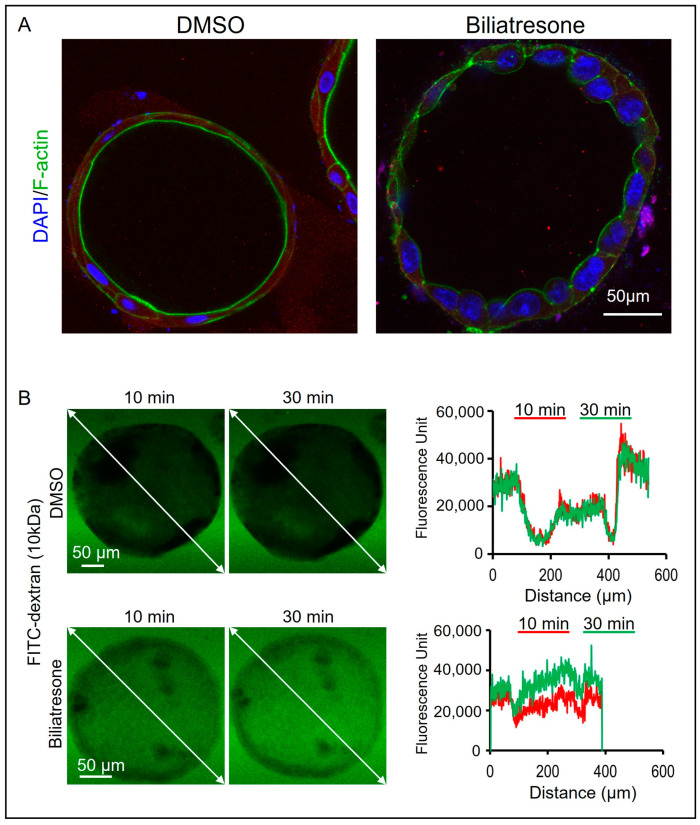
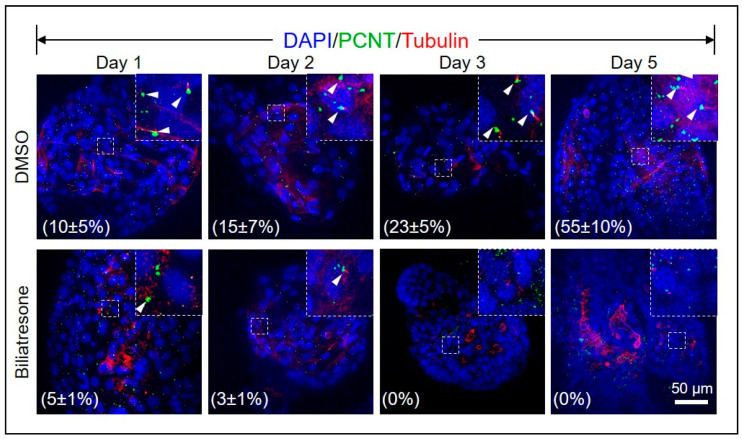
Biliary atresia (BA) is a poorly understood and devastating obstructive bile duct disease of newborns. Biliatresone, a plant toxin, causes BA-like syndrome in some animals, but its relevance in humans is unknown. To validate the hypothesis that biliatresone exposure is a plausible BA disease mechanism in humans, we treated normal human liver organoids with biliatresone and addressed its adverse effects on organoid development, functions and cellular organization. The control organoids (without biliatresone) were well expanded and much bigger than biliatresone-treated organoids. Expression of the cholangiocyte marker CK19 was reduced, while the hepatocyte marker HFN4A was significantly elevated in biliatresone-treated organoids. ZO-1 (a tight junction marker) immunoreactivity was localized at the apical intercellular junctions in control organoids, while it was markedly reduced in biliatresone-treated organoids. Cytoskeleton F-actin was localized at the apical surface of the control organoids, but it was ectopically expressed at the apical and basal sides in biliatresone-treated organoids. Cholangiocytes of control organoids possess primary cilia and elicit cilia mechanosensory function. The number of ciliated cholangiocytes was reduced, and cilia mechanosensory function was hampered in biliatresone-treated organoids. In conclusion, biliatresone induces morphological and developmental changes in human liver organoids resembling those of our previously reported BA organoids, suggesting that environmental toxins could contribute to BA pathogenesis.
先天性胆道闭锁(BA)是一种病因尚未完全阐明的新生儿期严重的肝外胆管阻塞性疾病。植物毒素 biliatresone 可导致部分动物出现类似 BA 的综合征,但在人类中的相关性尚不清楚。为了验证 biliatresone 暴露是人类 BA 发病机制的一个合理假说,我们用 biliatresone 处理正常的人源肝类器官,并研究其对类器官发育、功能和细胞组织的不良影响。未经 biliatresone 处理的对照类器官(无 biliatresone)能很好地扩增且比 biliatresone 处理的类器官大很多。在 biliatresone 处理的类器官中,胆管细胞标志物 CK19 的表达减少,而肝细胞标志物 HFN4A 则显著升高。在对照类器官中,紧密连接标志物 ZO-1 的免疫反应定位于顶端细胞间连接,而在 biliatresone 处理的类器官中则明显减少。细胞骨架 F-肌动蛋白定位于对照类器官的顶端表面,但在 biliatresone 处理的类器官中则异位表达于顶端和基底侧。对照类器官的胆管细胞具有初级纤毛,并发挥纤毛机械感觉功能。biliatresone 处理的类器官中,有丝分裂纤毛的胆管细胞数量减少,纤毛机械感觉功能受损。总之,biliatresone 诱导人源肝类器官发生类似于我们之前报道的 BA 类器官的形态和发育变化,表明环境毒素可能导致 BA 发病机制。