Department of Research, Dr. Heitor Vieira Dourado Tropical Medicine Foundation, Manaus, Brazil.
School of Health Sciences, Amazonas State University, Manaus, Brazil.
PLoS Negl Trop Dis. 2024 Mar 27;18(3):e0012072. doi: 10.1371/journal.pntd.0012072. eCollection 2024 Mar.
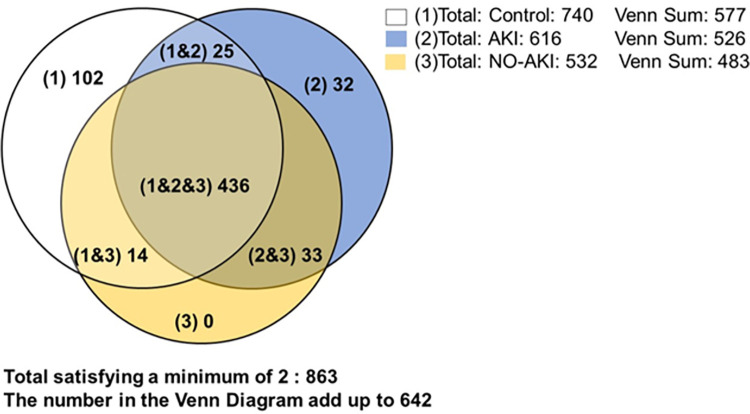
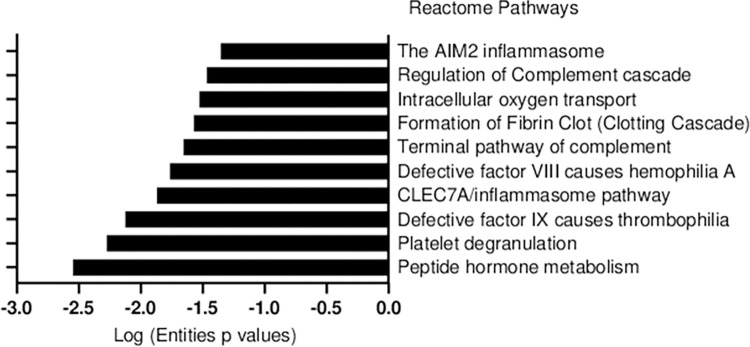
Acute kidney injury (AKI) is a critical systemic complication caused by Bothrops envenoming, a neglected health problem in the Brazilian Amazon. Understanding the underlying mechanisms leading to AKI is crucial for effectively mitigating the burden of this complication. This study aimed to characterize the urinary protein profile of Bothrops atrox snakebite victims who developed AKI. We analyzed three groups of samples collected on admission: healthy subjects (controls, n = 10), snakebite victims who developed AKI (AKI, n = 10), and those who did not evolve to AKI (No-AKI, n = 10). Using liquid-chromatography tandem mass spectrometry, we identified and quantified (label-free) 1190 proteins. A panel of 65 proteins was identified exclusively in the urine of snakebite victims, with 32 exclusives to the AKI condition. Proteins more abundant or exclusive in AKI's urine were associated with acute phase response, endopeptidase inhibition, complement cascade, and inflammation. Notable proteins include serotransferrin, SERPINA-1, alpha-1B-glycoprotein, and NHL repeat-containing protein 3. Furthermore, evaluating previously reported biomarkers candidates for AKI and renal injury, we found retinol-binding protein, beta-2-microglobulin, cystatin-C, and hepcidin to be significant in cases of AKI induced by Bothrops envenoming. This work sheds light on physiological disturbances caused by Bothrops envenoming, highlighting potential biological processes contributing to AKI. Such insights may aid in better understanding and managing this life-threatening complication.
急性肾损伤(AKI)是由矛头蝮蛇咬伤引起的一种严重的全身并发症,是巴西亚马逊地区被忽视的健康问题。了解导致 AKI 的潜在机制对于有效减轻这一并发症的负担至关重要。本研究旨在描述发生 AKI 的矛头蝮蛇咬伤患者的尿蛋白谱。我们分析了入院时收集的三组样本:健康受试者(对照组,n = 10)、发生 AKI 的蛇伤患者(AKI 组,n = 10)和未发展为 AKI 的患者(非 AKI 组,n = 10)。使用液相色谱串联质谱法,我们鉴定和定量了(无标签)1190 种蛋白质。在蛇伤患者的尿液中鉴定出了一组 65 种蛋白,其中 32 种蛋白仅存在于 AKI 条件下。AKI 尿液中丰度更高或更具特异性的蛋白与急性期反应、内肽酶抑制、补体级联和炎症有关。值得注意的蛋白包括转铁蛋白、SERPINA-1、α-1B-糖蛋白和 NHL 重复蛋白 3。此外,评估先前报道的 AKI 和肾损伤候选生物标志物,我们发现视黄醇结合蛋白、β-2-微球蛋白、胱抑素 C 和肝素在由矛头蝮蛇咬伤引起的 AKI 中具有显著意义。这项工作揭示了矛头蝮蛇咬伤引起的生理紊乱,强调了可能导致 AKI 的潜在生物学过程。这些见解可能有助于更好地理解和管理这种危及生命的并发症。