Zhang Chenxiong, Tan Hao, Xu Han, Ding Jiaming
Department of Anorectal Surgery, Yubei Hospital of Traditional Chinese Medicine, Chongqing Yubei District, Chongqing, People's Republic of China.
Guangzhou University of Chinese Medicine, Guangzhou, People's Republic of China.
Int J Surg. 2024 Oct 1;110(10):6282-6296. doi: 10.1097/JS9.0000000000001380.
Rectal cancer poses a significant global health burden. There is a lack of concrete evidence concerning the benefits of robotic-assisted surgery (RAS) for rectal cancer surgery as compared to laparoscopic and open techniques. To address this gap, we conducted a meta-analysis to assess the intraoperative, postoperative, and safety outcomes of robotic surgery in this context.
A search of MEDLINE, Scopus and the Cochrane Library. Randomized and non-randomized studies up to February 2, 2024 comparing robotic surgery versus laparoscopic or open surgery for rectal cancer. The outcomes of interest were operative time, blood loss, harvested lymph nodes, conversion rate, postoperative hospital stay, survival to hospital discharge, urinary retention rate, and anastomotic leakage rate. A random-effects meta-analysis was performed to pool means and dichotomous data to derive weighted mean differences and odds ratios, respectively.
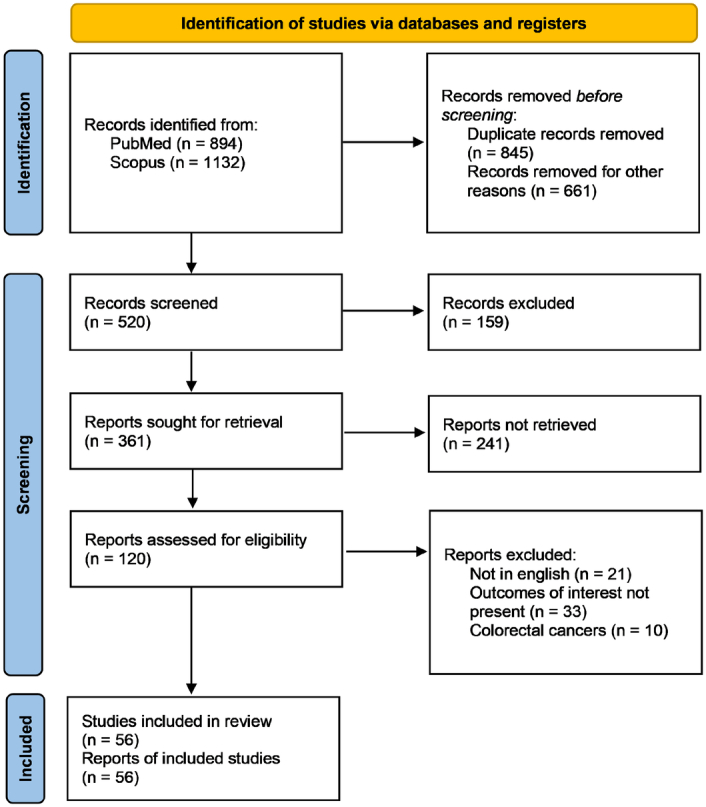
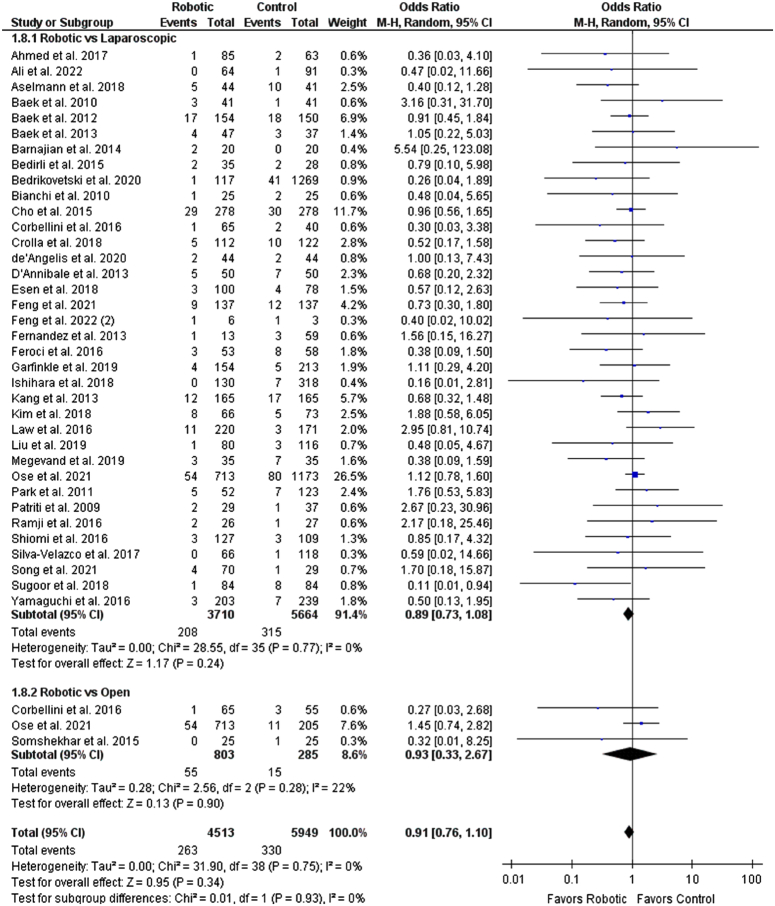
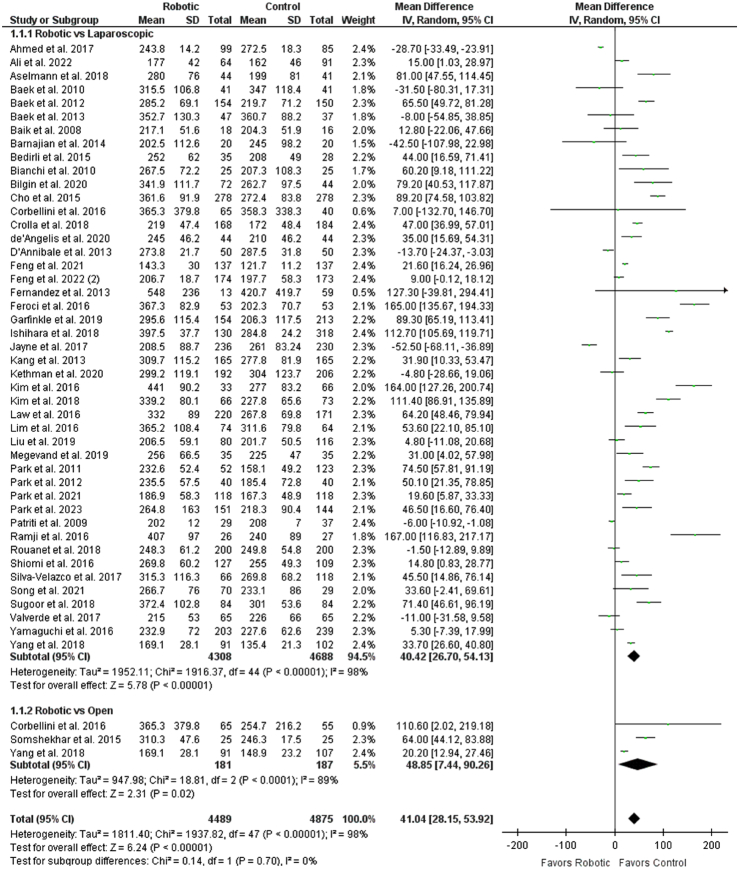
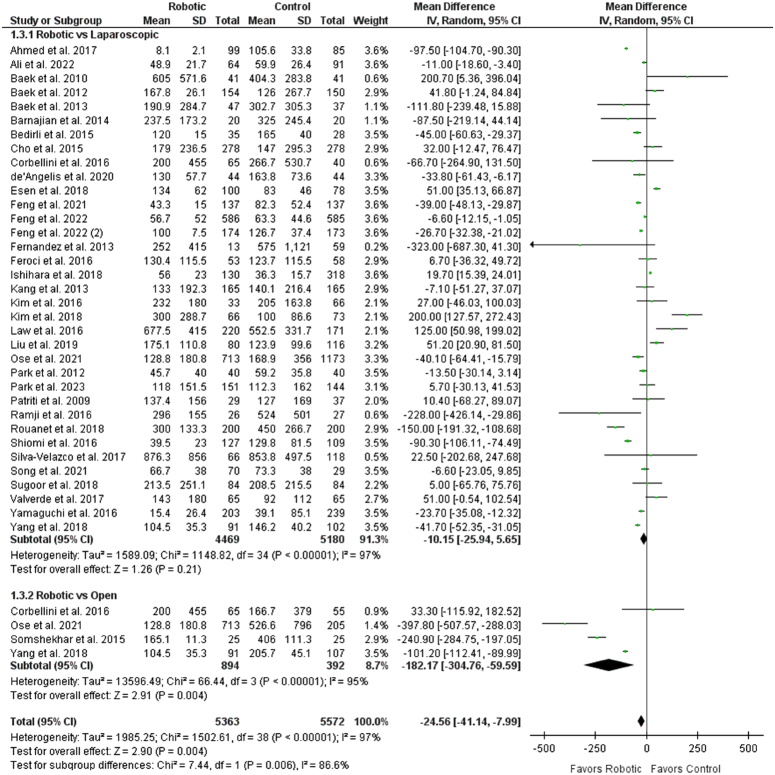
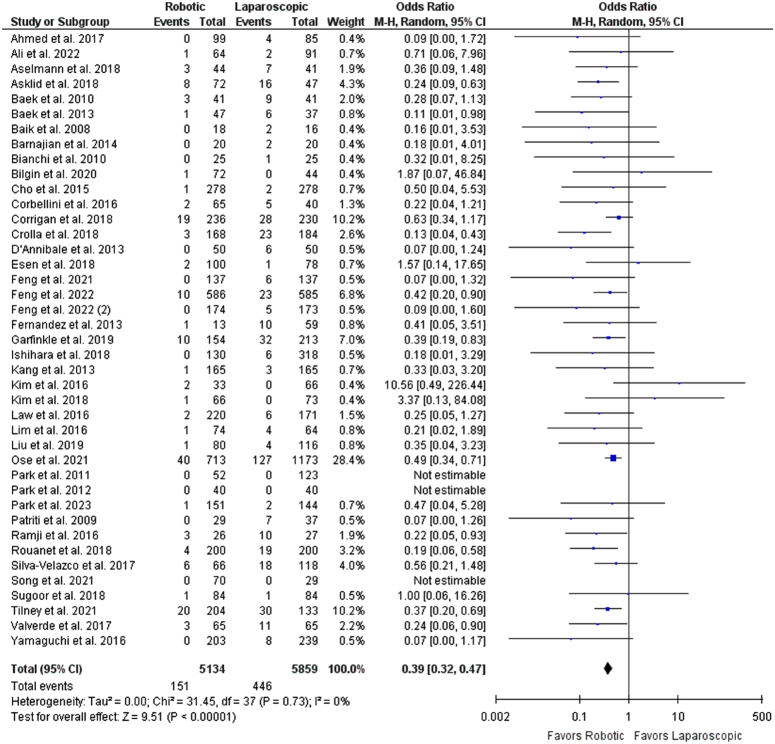
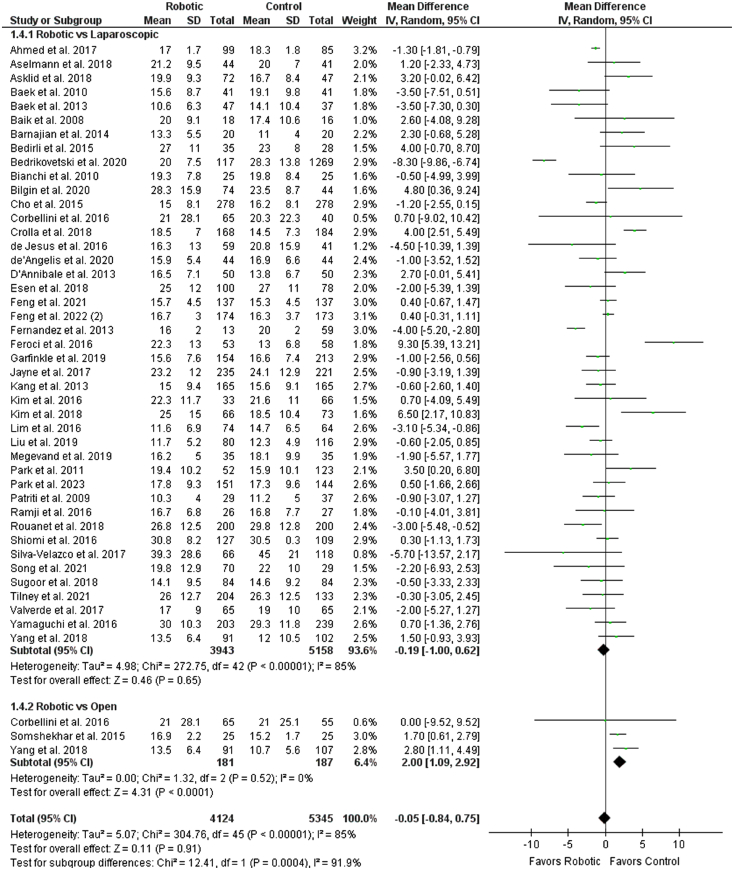
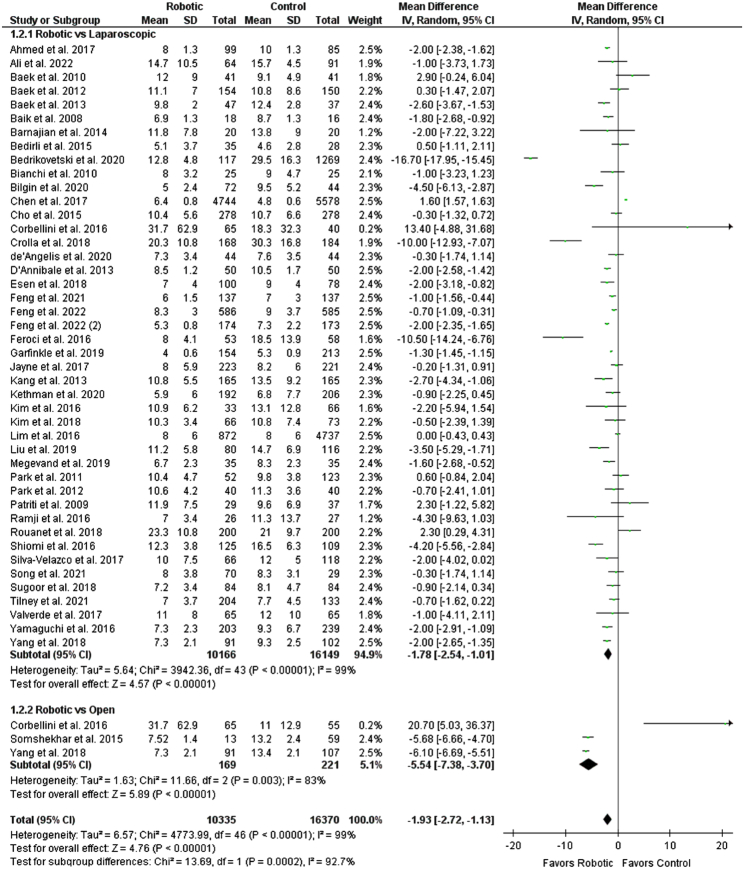
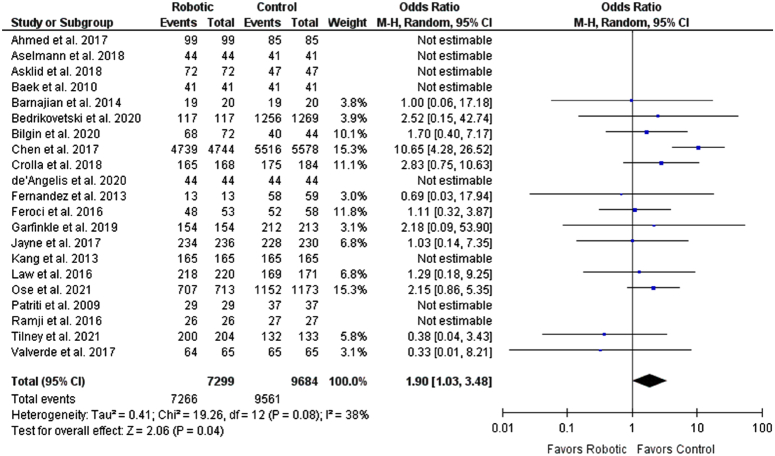
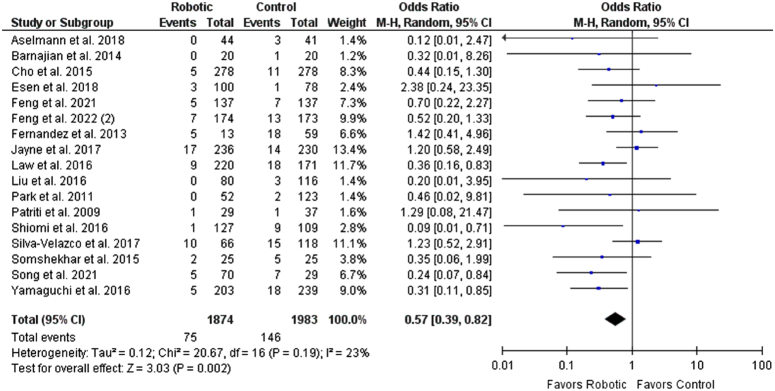
A total of 56 studies were shortlisted after the study selection process with a total of 25 458 rectal cancer patients. From the intraoperative outcomes, RAS was significantly associated with an increased operative time (WMD: 41.04, P <0.00001), decreased blood loss (WMD: -24.56, P <0.00001), decreased conversion rates (OR: 0.39, P <0.00001), lesser stay at the hospital (WMD: -1.93, P <0.00001), and no difference was found in lymph nodes harvested. Similarly, RAS group had a significantly greater survival to hospital discharge (OR: 1.90, P =0.04), decreased urinary retention rate (OR: 0.59, P =0.002), and no difference was seen in anastomotic leakage rate.
RAS demonstrates favorable outcomes for rectal cancer patients, contributing to global prevention and control efforts, health promotion, and addressing non-communicable disease risk factors. Further research and public awareness are needed to optimize RAS utilization in this context.
直肠癌给全球带来了沉重的健康负担。与腹腔镜手术和开放手术相比,关于机器人辅助手术(RAS)在直肠癌手术中的益处,目前缺乏确凿证据。为填补这一空白,我们进行了一项荟萃分析,以评估在此背景下机器人手术的术中、术后及安全性结果。
检索了MEDLINE、Scopus和Cochrane图书馆。纳入截至2024年2月2日比较机器人手术与腹腔镜或开放手术治疗直肠癌的随机和非随机研究。感兴趣的结果包括手术时间、失血量、获取的淋巴结数量、中转率、术后住院时间、出院生存率、尿潴留率和吻合口漏率。采用随机效应荟萃分析来汇总均值和二分数据,分别得出加权平均差和比值比。
经过研究筛选过程,共入围56项研究,涉及25458例直肠癌患者。从术中结果来看,机器人辅助手术与手术时间延长显著相关(加权平均差:41.04,P<0.00001),失血量减少(加权平均差:-24.56,P<0.00001),中转率降低(比值比:0.39,P<0.00001),住院时间缩短(加权平均差:-1.93,P<0.00001),获取的淋巴结数量无差异。同样,机器人辅助手术组出院生存率显著更高(比值比:1.90,P=0.04),尿潴留率降低(比值比:0.59,P=0.002),吻合口漏率无差异。
机器人辅助手术对直肠癌患者显示出良好的结果,有助于全球预防和控制工作、健康促进以及应对非传染性疾病风险因素。在此背景下,需要进一步研究并提高公众意识,以优化机器人辅助手术的应用。