Biomedical Research Foundation Hospital 12 de Octubre, Instituto de Investigación 12 de Octubre (imas12), Madrid, Spain.
Department of Public Health and Maternal Child Health, Faculty of Medicine, Complutense University of Madrid, Pza. Ramón y Cajal, s/n. Ciudad Universitaria, 28040, Madrid, Spain.
Sci Rep. 2024 Mar 27;14(1):7275. doi: 10.1038/s41598-024-57880-8.
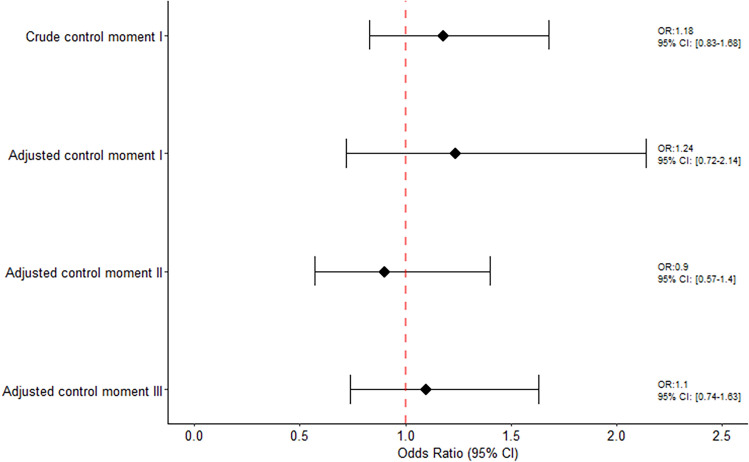
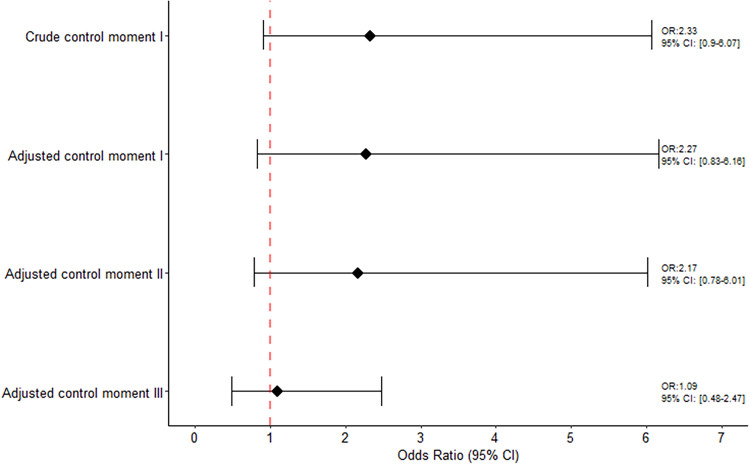
Pregnant women might have an increased risk of SARS-COV-2 infection. Although evidence towards the efficacy and safety of COVID-19 is growing still there is room for improvement on the knowledge towards pregnancy adverse events, such as miscarriage. We explored the association of COVID-19 vaccine with the risk of miscarriages using the Real-World. We identified a cohort of vaccinated pregnancies using the BIFAP database which contains systematically recorded data on care patients in Spain (N = 4054). We then restricted it to those women who had a miscarriage using a validated algorithm (N = 607). Among them, we performed a case-crossover design to evaluate the effect of intermittent exposures on the risk of miscarriage. Adjusted Odds Ratio with their confidence intervals were calculated using two analytical approaches: conditional logistic regression and Generalized Linear Mixed-Effects Models. A total of 225 (37.1%) were aged 35-39 years. The most common comorbidities were asthma, migraine, gastritis, and hypothyroidism. A total of 14.7% received only one dose of COVID-19 and 85.3% two doses, respectively. A total of 36.8% of women with one dose and 27.6% with two doses received the vaccine 7 days prior to the miscarriage. Corresponding adjusted estimates for the risk of miscarriage using the conditional logistic regression where as follows: 1.65 (95% CI 0.85-3.23) when using as the sum of 3 control moments among women with one dose, 1.02 (95% CI 0.72-1.46) among women with two doses and 1.03 (95% CI 0.72, 1.46) using the whole study population. Very similar results were obtained when conducting the Generalized Linear Mixed-Effects Models. There was no overall increased risk of miscarriage onset associated with COVID-19 vaccine although contradictory results were found according to the number of doses. Further studies are required with larger sample sizes to assess this association.
孕妇感染 SARS-CoV-2 的风险可能会增加。虽然 COVID-19 的疗效和安全性证据不断增加,但对于妊娠不良事件(如流产)的认知仍有改进空间。我们使用真实世界研究探索了 COVID-19 疫苗与流产风险之间的关联。我们使用 BIFAP 数据库识别了接种疫苗的妊娠队列,该数据库包含西班牙患者护理的系统记录数据(N=4054)。然后,我们使用经过验证的算法将其限制在发生流产的女性(N=607)中。在其中,我们进行了病例交叉设计,以评估间歇性暴露对流产风险的影响。使用两种分析方法(条件逻辑回归和广义线性混合效应模型)计算调整后的优势比及其置信区间。共有 225 名(37.1%)年龄在 35-39 岁之间。最常见的合并症是哮喘、偏头痛、胃炎和甲状腺功能减退症。共有 14.7%的人仅接受了一剂 COVID-19 疫苗,85.3%的人接受了两剂。共有 36.8%接受一剂疫苗和 27.6%接受两剂疫苗的女性在流产前 7 天内接种了疫苗。使用条件逻辑回归的风险校正估计值如下:1.65(95%CI 0.85-3.23),在一剂疫苗的女性中,使用 3 个对照时刻的总和,1.02(95%CI 0.72-1.46),在两剂疫苗的女性中,以及在整个研究人群中使用 1.03(95%CI 0.72,1.46)。当使用广义线性混合效应模型时,得到了非常相似的结果。虽然根据剂量数得出了相互矛盾的结果,但 COVID-19 疫苗接种与流产发作风险之间没有总体增加的风险。需要进一步进行更大样本量的研究以评估这种关联。